How to Stop Puppy Biting and Jumping on People: Complete Guide for New Dog Owners
One of the most common struggles for new dog owners is figuring out how to stop puppy biting and jumping on people. At first, it might look like harmless play, but this behavior can quickly become unpleasant or even dangerous as your puppy grows. Luckily, with consistent training, patience, and understanding, you can teach your puppy polite manners and build a calm, confident companion.
In this article, we’ll cover why puppies bite and jump, what mistakes owners should avoid, and the most effective step-by-step methods to stop these habits for good.
Many new dog owners search for how to stop puppy biting and jumping on people because these behaviors often begin early and can become difficult if ignored.
Understanding Why Puppies Bite and Jump
Before solving the problem, it’s important to understand why it happens. Puppies don’t bite and jump because they are “bad” — they’re simply communicating and exploring the world around them.
1. Natural play behavior
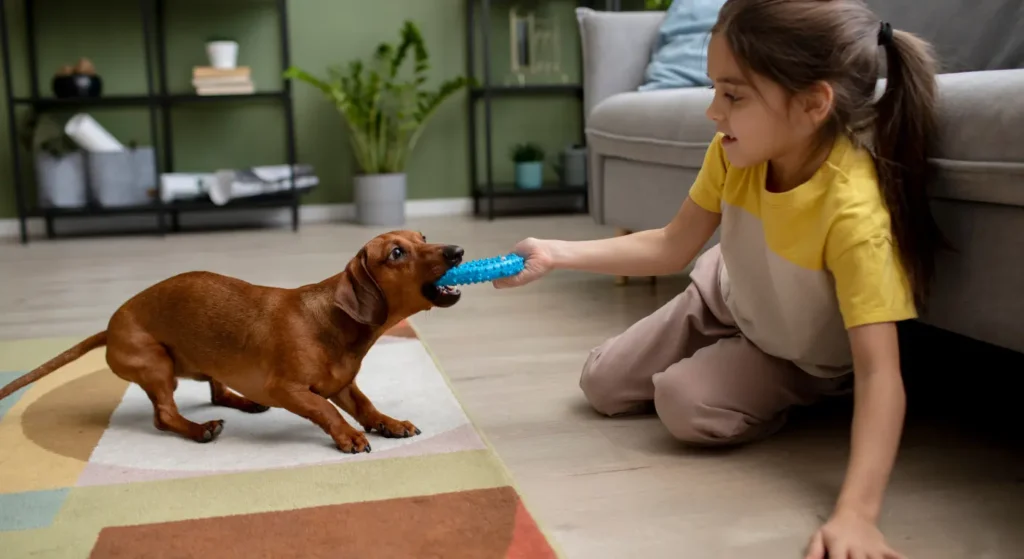
Biting and mouthing are normal parts of a puppy’s play style. In a litter, puppies bite each other gently to learn bite inhibition. When playing with humans, they often continue the same behavior unless corrected.
2. Teething discomfort
Between two and six months of age, puppies go through teething. Chewing, biting, and nipping help relieve gum pain, which makes them more likely to mouth your hands or clothes.
3. Seeking attention
Jumping is often an attention-seeking behavior. When puppies jump, they naturally want to reach your face — it’s how they interact with littermates and people they love.
4. Lack of boundaries
If you laugh or pet your puppy after it jumps or nips, you’re unintentionally rewarding bad behavior. Puppies quickly learn that biting or jumping grabs your attention.
The Wrong Ways to Handle Biting and Jumping
When trying to figure out how to stop puppy biting and jumping on people, many owners make common mistakes that worsen the problem.
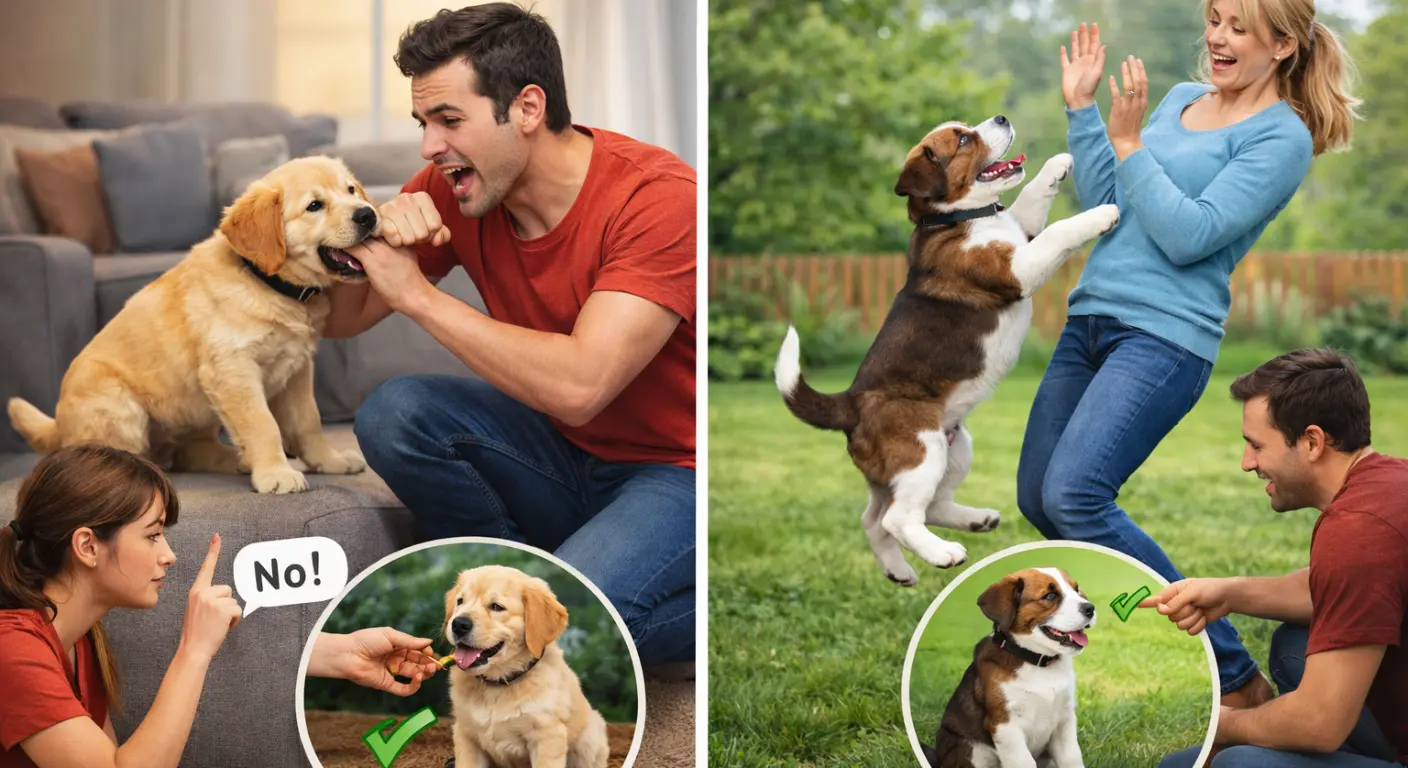
- Shouting or punishment: Scolding or hitting your puppy creates fear and damages trust. Fear-based training can lead to anxiety or aggression later.
- Physical restraint: Grabbing your puppy’s muzzle or pushing it away may stop the action temporarily, but it doesn’t teach the correct behavior.
- Encouraging excitement: Rough play or encouraging jumping (“Come here, good boy!”) teaches your puppy that excitement equals reward.
Instead of punishment, successful training focuses on clear signals, calm energy, and positive reinforcement.
Step-by-Step Guide: How to Stop Puppy Biting
Step 1: Use voice control
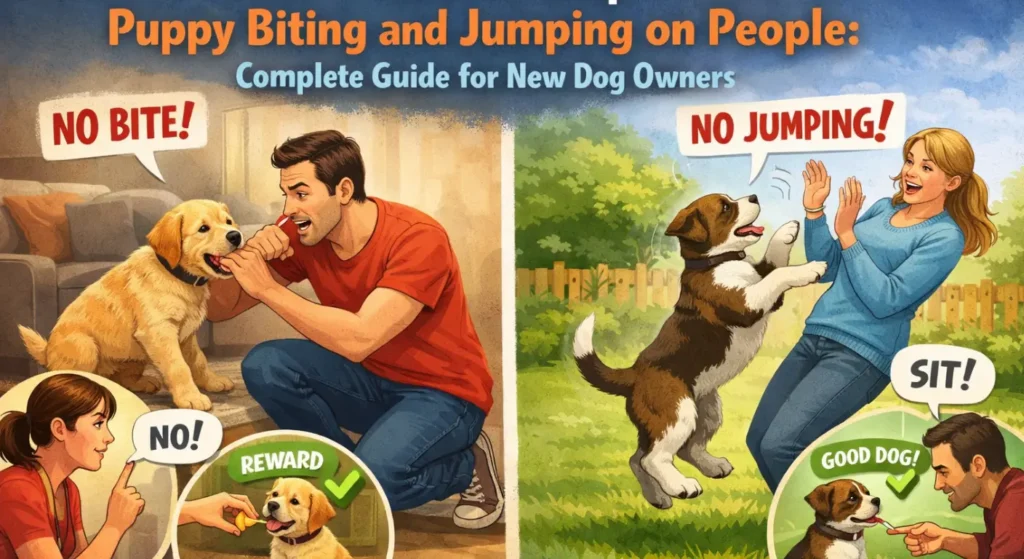
When your puppy bites too hard during play, say a firm “No” or “Ouch” and immediately stop the play. This mimics how puppies stop playing when a littermate bites too hard, teaching bite inhibition naturally.
Step 2: Redirect the behavior
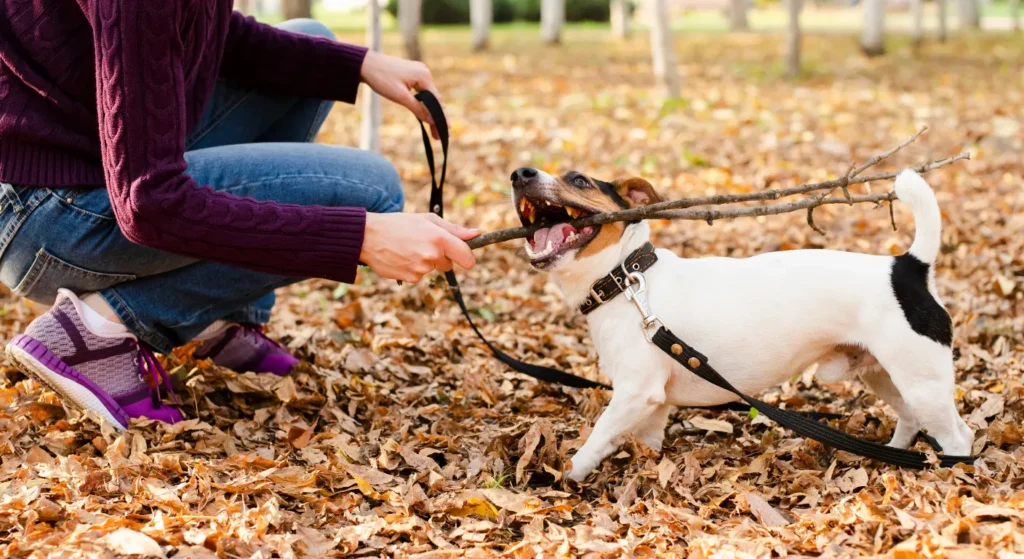
Always keep chew toys nearby. When your puppy tries to bite your hand, gently replace it with a toy. Encourage chewing the toy instead — then praise your dog calmly.
Step 3: Reward calmness
The moment your puppy stops biting and behaves gently, reward it with treats or calm affection. This helps it associate gentle interaction with positive outcomes.
Step 4: Maintain consistency
Consistency is the golden rule. Everyone in the household must follow the same rules and commands. Mixed signals — such as sometimes allowing rough play — will confuse your puppy.
Step 5: Control teething pain
Offer teething toys, frozen carrots, or puppy-safe chews to soothe sore gums. Relief reduces the urge to bite out of discomfort.
How to Stop Puppy Biting and Jumping on People at Home
If you are still wondering how to stop puppy biting and jumping on people, the key is to combine redirection, calm greetings, and consistent daily practice.
Step-by-Step Guide: How to Stop Your Puppy from Jumping on People
Step 1: Ignore unwanted behavior
When your puppy jumps, do not touch, speak, or make eye contact. Turn your back or step aside calmly. The lack of attention removes the reward that fuels the behavior.
Step 2: Reward four paws on the ground
As soon as your puppy sits or keeps all paws down, give a treat and calmly say “Good sit.” Over time, your dog learns that calmness earns attention, not jumping.
Step 3: Train a “sit for greeting” habit
Teach your puppy that sitting politely gets positive interaction. Ask friends and family to participate in short “greeting training” sessions, rewarding calm behavior each time.
Step 4: Use a leash for control
When guests arrive, keep your puppy on a leash so you can guide it calmly. This prevents impulsive jumping while reinforcing structure and boundaries.
Step 5: Be patient and consistent
Remember, jumping is self-rewarding — dogs enjoy physical contact and excitement. It may take several weeks of consistent training before the habit disappears completely.
Socialization and Early Training
Socialization plays a huge role in preventing behavioral issues. Well-socialized puppies are less likely to become overly excited or anxious in new situations.
Expose your puppy to different people and environments
Gradually introduce your pup to calm adults, children, and other dogs. Reward calm curiosity and avoid overwhelming situations that trigger biting or jumping.
Enroll in puppy training classes
Professional classes provide structured learning and exposure to other dogs. Trainers often have valuable tips for how to stop puppy biting and jumping on people through fun, reward-based methods.
Using Positive Reinforcement for Long-Term Success
Positive reinforcement means rewarding good behavior instead of punishing bad actions.
Examples include:
- Treats and praise when your puppy sits quietly
- Petting or toys for calm greetings
- Calm voice and eye contact for relaxed behavior
This builds trust and loyalty while making training enjoyable for both you and your dog.
Common Questions About Puppy Training
How long does it take to stop puppy biting and jumping?
Most puppies learn to manage biting and jumping within a few weeks to a few months, depending on consistency and breed energy levels.
Is biting normal for older puppies?
Mild mouthing can continue up to eight months old, especially during teething, but excessive biting should be redirected with training and toys.
Can crate training help?
Yes. A crate gives your puppy a safe space to calm down after excitement. It also helps regulate energy and prevents overstimulation that triggers jumping or biting.
Final Tips for Calm, Well-Behaved Puppies
To successfully stop puppy biting and jumping:
- Stay patient and consistent; never train in anger.
- Use simple verbal cues like “sit,” “stay,” and “no bite.”
- Provide daily exercise to release energy positively.
- Reward calm greetings and ignore unwanted behavior.
- Keep training sessions short (5–10 minutes) and positive.
With time, your puppy will learn that calm, gentle interaction brings joy and attention — the key to a peaceful life together.
Conclusion
Learning how to stop puppy biting and jumping on people is part of every dog owner’s early journey. It requires time, consistency, and empathy — not punishment. Understanding your puppy’s needs, offering positive reinforcement, and maintaining clear boundaries will lay the foundation for a well-behaved, loving companion.
With these techniques, your playful biter will grow into a polite partner who greets guests calmly and enjoys your company without chaos or stress.
How to Stop Puppy Biting and Jumping on People: Complete Guide for New Dog Owners
How do I stop my puppy from biting my hands?
Redirect your puppy to a chew toy every time it targets your hands. If the biting continues, stop play immediately and resume only when the puppy is calm.
Why does my puppy jump on guests?
Puppies usually jump on guests because they are excited and want attention. If guests respond to the jumping, the behavior becomes stronger.
At what age do puppies stop biting?
Most puppies reduce biting as they finish teething and learn bite inhibition, often between 4 and 8 months. Training and consistency affect how quickly this improves.
Can I train my puppy not to jump on people?
Yes. The most effective method is to ignore jumping completely and reward calm greetings such as sitting or standing with four paws on the floor.
Should I punish my puppy for biting and jumping?
No. Punishment can create fear and confusion. Positive reinforcement and redirection are safer and more effective long-term methods.
What is the fastest way to teach a puppy not to jump?
Teach a reliable “sit” command and reward it every time someone greets the puppy. Consistent practice with family and visitors brings the best results.
Do puppies grow out of biting and jumping naturally?
Some puppies improve with age, but many continue the behavior if it has been rewarded. Training is necessary to build lasting polite habits.