Why Does My Cat Sleep on My Chest? 5 Comforting Reasons
Why does my cat sleep on my chest? If your cat curls up over your heartbeat every time you sit down, you may wonder whether the habit means love, comfort, or something else. The answer is usually reassuring, but context matters.
In this guide, we explain the most common reasons for chest sleeping, how to read your cat’s body language, and when a sudden change deserves attention.
Why Does My Cat Sleep on My Chest? The Main Reasons
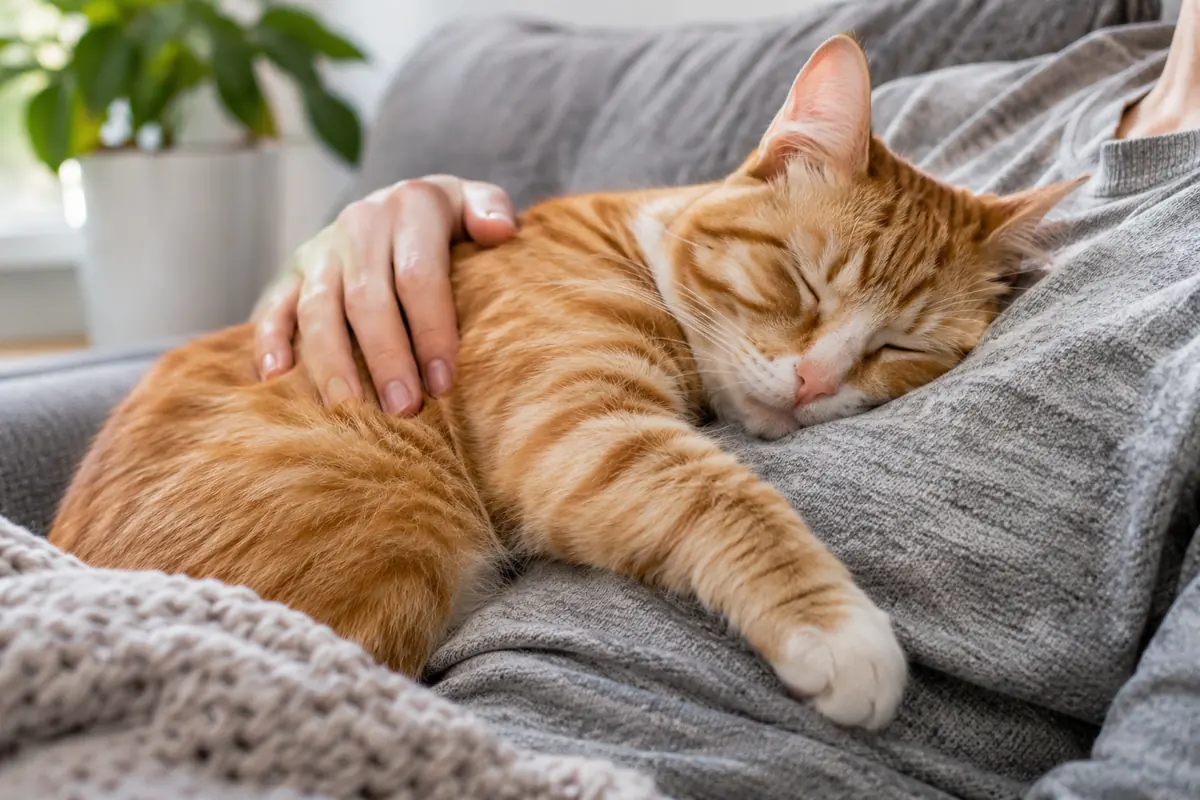
If you have ever wondered why does my cat sleep on my chest, the answer is usually a combination of warmth, comfort, familiarity, and a desire to be close. Cats choose resting spots that feel safe. Your chest can provide a warm surface, your familiar scent, and the gentle movement of your breathing.
No single behavior proves that a cat loves someone, and each cat has different preferences. Still, a relaxed cat voluntarily curling up on you often suggests that being nearby feels reassuring. Look at the rest of your cat’s body language rather than assuming every cuddle means the same thing.
1. Your Body Heat Makes a Cozy Bed
Cats frequently seek warm places, from sunny windowsills to soft blankets. A person’s chest is another comfortable spot, particularly when the room is cool. Your cat may simply discover that it is warmer than the sofa beside you.
Provide a comfortable cat bed or folded blanket nearby so your pet has a choice. If your cat always seeks unusually warm spots while also acting lethargic or unwell, speak with your veterinarian rather than interpreting warmth-seeking alone as a diagnosis.
2. Your Scent and Breathing Feel Familiar
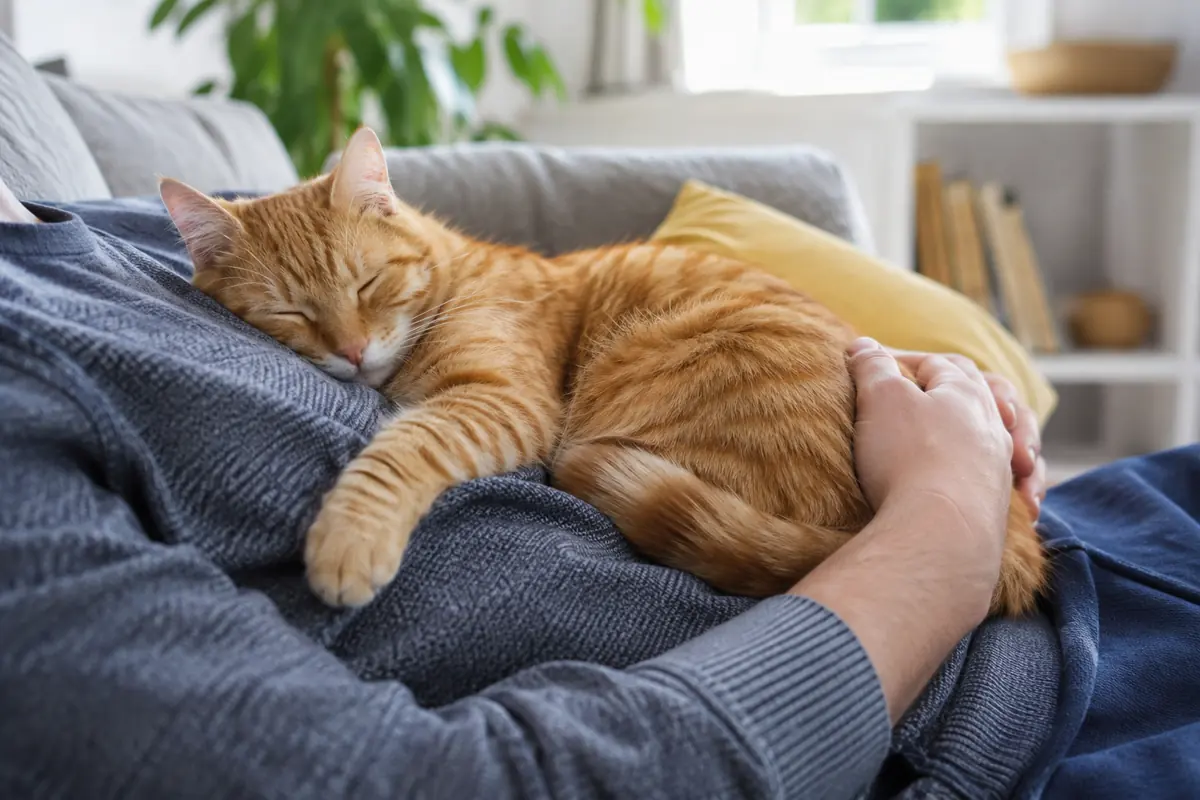
Your clothes and skin carry scents your cat recognizes. The rhythmic rise and fall of your chest may also be part of a predictable, calming routine, although we cannot know exactly how an individual cat experiences it.
For many owners, why does my cat sleep on my chest becomes an especially common question during quiet evenings. Cats learn daily patterns: when you sit down, they know you may stay still long enough for a comfortable nap.
3. Sleeping Close May Signal Trust
Cats are vulnerable when they sleep, so choosing to rest on you can be consistent with feeling secure in your presence. A cat that settles with loose muscles, neutral ears, and slow blinking is generally more relaxed than one with a stiff body or twitching tail.
However, cats express trust in different ways. A pet that sleeps at the foot of your bed or in another room may still have a strong bond with you. If you want to understand your cat’s adjustment to a new home, read our new cat owner checklist.
4. Your Cat Enjoys Attention and Routine
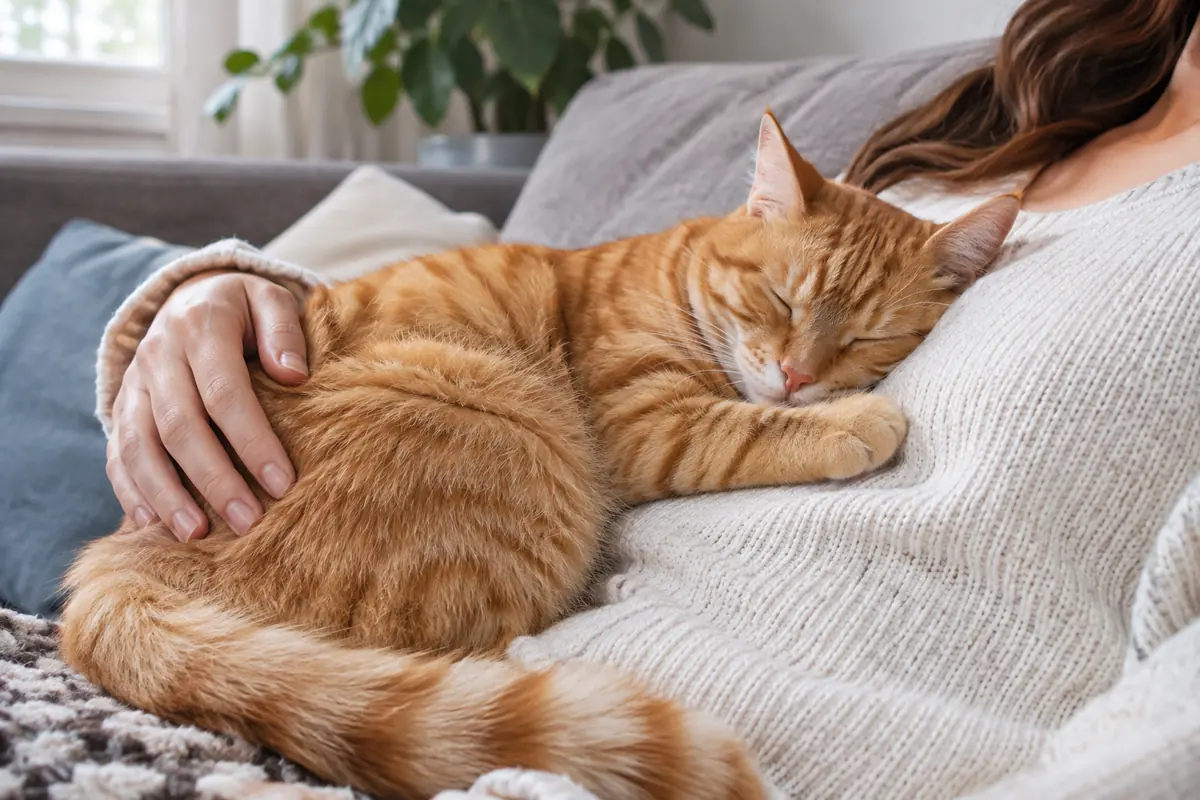
Some cats learn that climbing onto a person’s chest leads to gentle petting, warmth, or uninterrupted time together. If you regularly reward this behavior with affection, it can become part of your shared routine.
The question why does my cat sleep on my chest does not always have a complicated answer. Your cat may simply prefer your company. Let the cat approach voluntarily, pet areas it enjoys, and pause if it moves away.
5. Your Cat May Be Seeking Reassurance
A change in the household, unfamiliar visitors, or a noisy environment can encourage some cats to stay close to a trusted person. But sudden clinginess should be considered alongside appetite, litter-box habits, energy, and other changes.
If your cat seems restless or unusually active, our guide to calming a hyper cat covers practical ways to support a calmer environment. Do not treat persistent distress as something cuddles alone can solve.
Why Does My Cat Sleep on My Chest and Purr?
Purring commonly occurs during pleasant interactions, including resting and petting, but cats may also purr when stressed or uncomfortable. It is not a foolproof sign of happiness. Check whether your cat appears comfortable, breathes normally, and can move away freely.
Kneading with the front paws may accompany purring. Place a soft blanket between your skin and the paws if claws are uncomfortable, and avoid punishing a natural behavior.
Is It Safe to Let Your Cat Sleep on Your Chest?
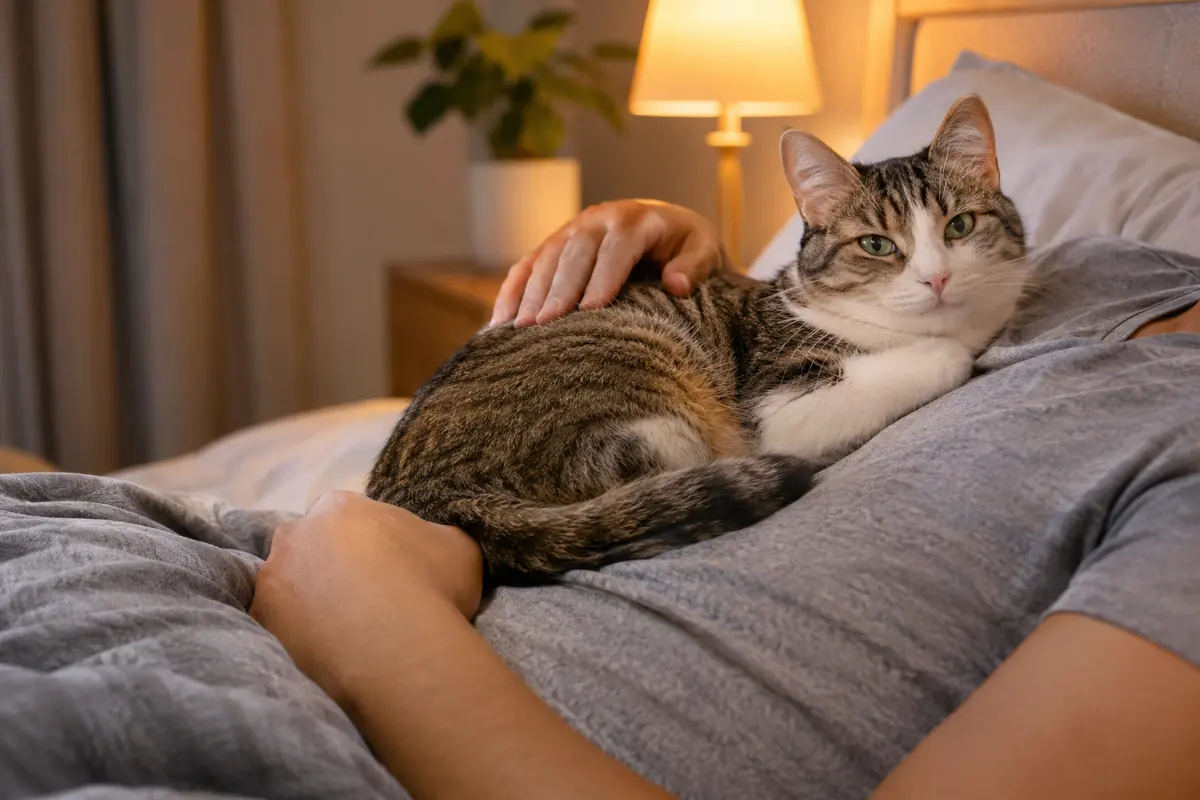
For a healthy adult who is awake and comfortable, supervised cuddling is generally a personal choice. Move your cat gently if its weight makes breathing uncomfortable, if you have allergies, or if you need to change position.
Do not let a cat sleep on an infant’s chest or face, and keep cats out of an infant’s sleep space. Babies need a separate, clear sleeping area. Adults with breathing difficulties or limited mobility should also avoid situations where they cannot move the cat safely.
If your cat lies near your face, keep its nose and mouth unobstructed. Wash bedding regularly, maintain flea prevention as advised by your veterinarian, and keep claws trimmed appropriately.
How to Encourage Your Cat to Sleep Nearby Instead
If you love your pet but need personal space, you can set a kind boundary without damaging your relationship. Place a soft cat bed next to your usual seat or near the foot of your bed. Add a familiar blanket, then reward your cat when it settles there.
Avoid pushing or startling the cat. Instead, calmly guide it to the alternative spot and be consistent. Interactive play before bedtime and a predictable evening routine may help some cats settle. If your cat is new to the home, allow time to adjust.
When a Change in Sleeping Habits Needs Attention
A cat that suddenly becomes unusually clingy, hides more, avoids touch, or sleeps much more than normal may be responding to stress or illness. Watch for appetite changes, vomiting, difficulty breathing, pain, or changes in bathroom habits.
Contact your veterinarian if these signs persist or concern you. Difficulty breathing is urgent. If appetite has changed, see our guide on what to do when your cat is not eating. You can also review general feline behavior resources from the ASPCA.
Frequently Asked Questions
Why does my cat sleep on my chest but not my partner’s? Your cat may prefer your warmth, scent, posture, or routine. Preferences can change and do not necessarily measure affection.
Why does my cat sleep on my chest every night? Repeated cuddling often reflects a comfortable habit. Make sure your cat has alternative sleeping spots and monitor any sudden behavior changes.
Why does my cat sleep on my chest facing me? Position alone does not establish a specific meaning. Look for relaxed muscles, calm breathing, and voluntary contact.
Should I move my cat if I need to sleep? Yes. Gently relocate your cat to a nearby bed if you cannot rest comfortably or safely.
Final Thoughts
So, why does my cat sleep on my chest? Most often, the simplest explanations are warmth, familiarity, security, and companionship. Enjoy the moment if it is comfortable for both of you, but remember that cats show affection in many different ways.
Give your pet the freedom to choose where to rest, respect its body language, and pay attention to sudden changes. Those habits support a healthy relationship far more than any single sleeping position.