Do Dogs Dream? What Happens When Your Dog Sleeps
Do dogs dream? If you have ever watched your sleeping dog twitch its paws or make a tiny barking sound, you have probably wondered what is happening inside its mind. Research on mammalian sleep suggests that dogs likely experience dreams, although nobody can know exactly what an individual dog is dreaming about.
Do Dogs Dream? The Science Behind Canine Sleep
Dogs cycle through different stages of sleep, including rapid eye movement (REM) sleep. During REM, brain activity changes and most skeletal muscles become relatively inactive. Humans frequently report vivid dreams after waking from this stage. Similar sleep physiology in dogs provides evidence for dreaming, but a sleeping dog’s movements cannot reveal the precise content of its experience. Dreams may also occur outside REM sleep. Researchers can measure brain activity and behavior, but cannot ask dogs to describe their dreams.
Veterinarians at VCA Animal Hospitals explain that canine sleep includes periods of slow-wave activity and REM sleep. During the latter, you may notice movements beneath the eyelids or small muscle twitches. These observations support the possibility of dreaming, rather than providing a window into a specific dream.

What Might Dogs Dream About?
Do dogs dream about their owners, toys, or favorite walks? Everyday experiences are plausible material for animal dreams, especially because sleep contributes to memory processing. However, a dog moving its paws does not prove it is chasing a squirrel in a dream. Treat such interpretations as possibilities rather than facts. A day spent exploring, learning a cue, or playing provides experiences that the brain may process during sleep.
A 2017 study published in Scientific Reports recorded dogs’ brain activity after they learned commands. The researchers found associations between sleep-related electrical activity and improvements in performance after sleep. This suggests a role for sleep in learning and memory, but does not prove that dogs consciously replay particular training sessions in dreams.
Why Dogs Twitch and Make Sounds During Sleep
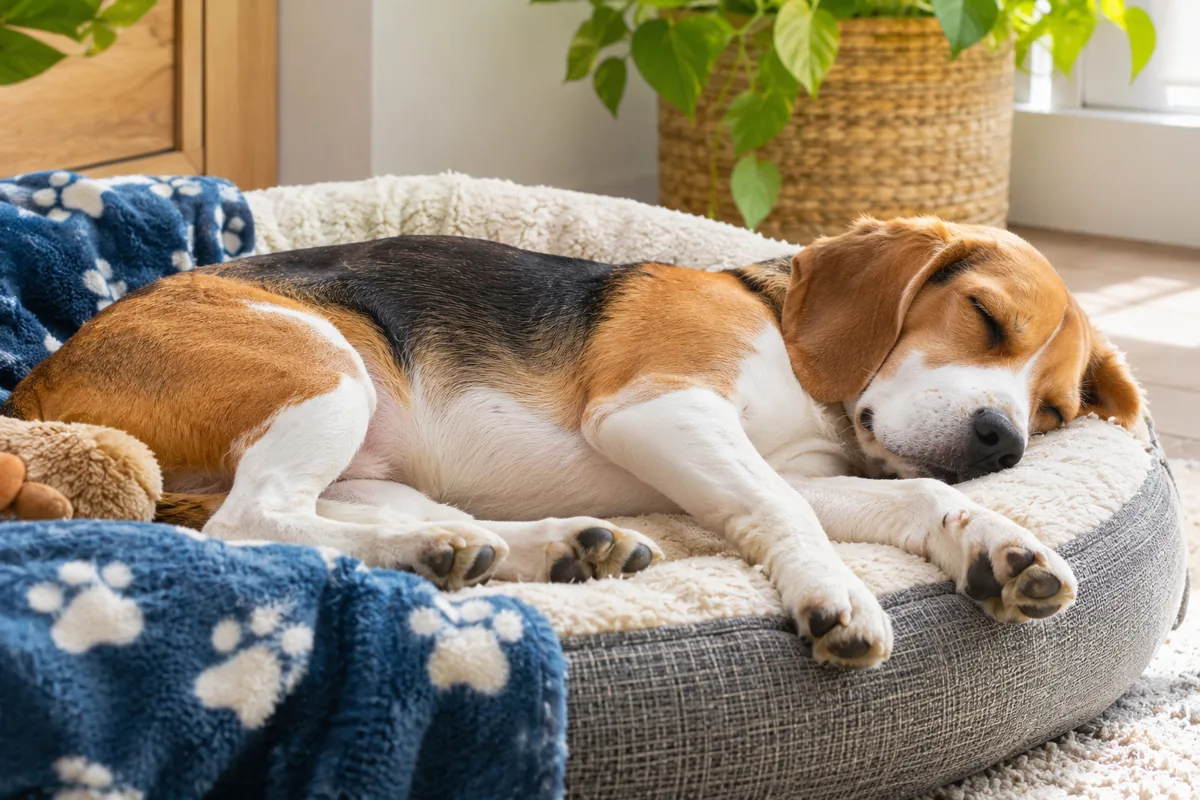
Small movements of the paws, whiskers, ears, or face can occur during normal sleep. A dog may also make quiet whimpers or brief barking sounds. These movements often stop naturally as the dog changes sleep stages. Look at the overall pattern rather than interpreting every sound as distress. A relaxed dog that wakes normally and resumes its usual activities is generally reassuring. Do not deliberately provoke movements to test whether your dog is dreaming.
Can Dogs Have Nightmares?
Do dogs dream about frightening experiences? It is possible that dreams have unpleasant emotional content, but we cannot verify a nightmare from a dog’s sounds alone. Whimpering is not proof of fear. If your dog regularly wakes in distress, seems disoriented, or has unusual movements, record observations and consult your veterinarian. Avoid assuming that a rescued dog is reliving a specific past experience simply because it vocalizes in sleep.
Dreaming or a Seizure?
Normal sleep movements tend to be brief and may involve small twitches. Seizures can involve sustained stiffening, repeated forceful movements, drooling, or abnormal awareness afterward, but appearances can overlap. Never put your hands near a dog’s mouth during an episode. Clear nearby hazards and time the event. Seek emergency veterinary help for an episode lasting five minutes or longer, repeated seizures without recovery, breathing difficulty, or serious injury. A video taken safely can help a veterinarian evaluate an unfamiliar episode.
| Observation | Suggested response |
|---|---|
| Occasional light paw twitches during sleep | Allow undisturbed rest |
| Brief quiet vocalizations | Observe without startling the dog |
| Unusual forceful movements or confusion afterward | Contact your veterinarian promptly |
| Suspected seizure lasting five minutes or repeated seizures without recovery | Seek emergency veterinary care |
The distinction is not always obvious. VCA’s guidance on unusual sleep behavior notes that certain REM sleep disorders can resemble seizures. This comparison is a guide to seeking help, not a diagnostic test.
Should You Wake a Dreaming Dog?
Usually, allow a comfortably sleeping dog to rest. Touching a sleeping dog suddenly can startle it and may lead to a defensive reaction. Teach children to leave sleeping pets alone. If you need to wake your dog for an ordinary reason, speak gently from a distance and allow it to orient before approaching. If you suspect a medical emergency, contact a veterinarian rather than relying on whether your dog responds to your voice.
How to Support Healthy Sleep
Provide a quiet, comfortable sleeping area where your dog can choose to rest undisturbed. Regular opportunities for sniffing, appropriate exercise, and predictable routines can support wellbeing. Try our indoor dog enrichment ideas on days when outdoor activity is limited. Older dogs may need more accessible bedding and help managing discomfort; our senior dog care guide explains additional considerations. Sudden changes in sleep patterns deserve attention rather than being attributed automatically to age.
Keep a simple sleep diary if you notice changes: record approximate sleeping times, nighttime restlessness, unusual movements, and daytime energy. A 2023 study of aging dogs found associations between cognitive difficulties and changes in sleep patterns. This makes new nighttime restlessness in senior dogs worth discussing with a veterinarian.

Frequently Asked Questions
Do dogs dream every night?
Dogs regularly experience sleep stages associated with dreaming, but we cannot establish how often an individual dog experiences a dream.
Do dogs dream when their eyes move?
Eye movements can accompany REM sleep, but they do not reveal dream content.
Do dogs dream more as puppies?
Puppies experience active sleep and may twitch frequently. Persistent unusual movements or other signs of illness should be assessed by a veterinarian.
Final Thoughts
So, do dogs dream? The available evidence strongly suggests that they do. Enjoy observing your dog’s peaceful sleep without assigning a definite story to every twitch. Give your pet a comfortable place to rest and seek professional advice when sleep-related behavior changes significantly.