Why Do Cats Bury Their Poop? 6 Fascinating Reasons
Why do cats bury their poop? The familiar routine of digging, squatting, and covering waste looks like a lesson in cleanliness, but it is also connected to feline scent communication and individual preferences. Understanding this behavior can help you make the litter box more comfortable and recognize changes that deserve attention.
1. Why Do Cats Bury Their Poop? An Inherited Behavior
Many cats naturally investigate loose material, dig a shallow depression, eliminate, and cover the area. This sequence can appear even in young cats without deliberate human training. Experience still matters: kittens learn about suitable surfaces and may develop preferences as they grow. Not every cat performs every step. Some dig before eliminating but leave immediately afterward, while others spend considerable time covering the area.
The Merck Veterinary Manual describes burying waste as a natural feline tendency. Nevertheless, a cat does not need to cover every stool to be considered healthy. Look for consistent, comfortable toileting rather than a perfectly buried result.
2. Reducing Detectable Odors
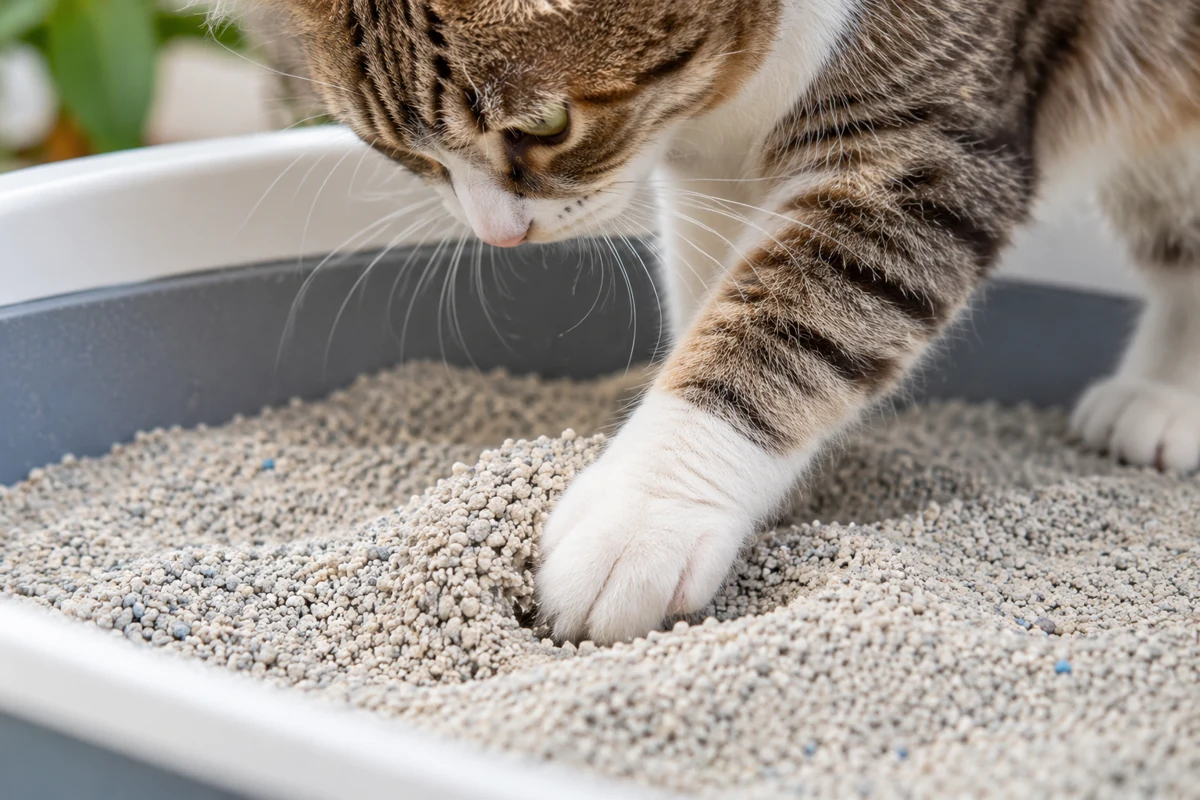
Covering feces with loose substrate can reduce the immediate exposure of waste and some associated odors. In natural environments, scent carries information about animals that have passed through an area. Concealing waste may therefore have advantages in certain circumstances. It is difficult to assign a single evolutionary purpose to every domestic cat’s behavior, however. Your indoor cat is not necessarily consciously trying to hide from a predator each time it uses the litter box.
3. Scent Communication
Why do cats bury their poop while some leave it exposed? Feces can carry chemical information, and elimination behavior varies with environment and social context. Some free-ranging cats leave waste in conspicuous locations, potentially contributing to scent communication. This does not mean every uncovered stool in a home is a declaration of dominance. Avoid labeling a cat as spiteful or territorial without considering litter preferences, health, and access to resources.
4. A Preference for Diggable Surfaces
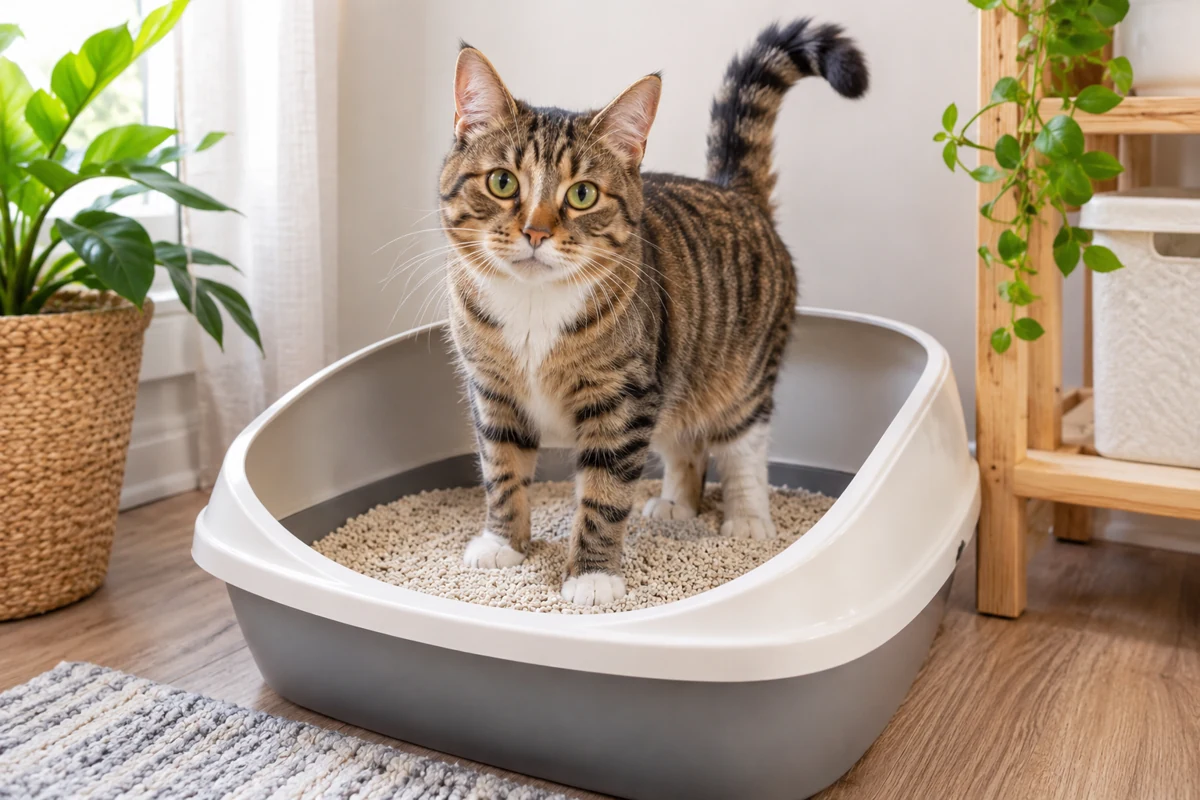
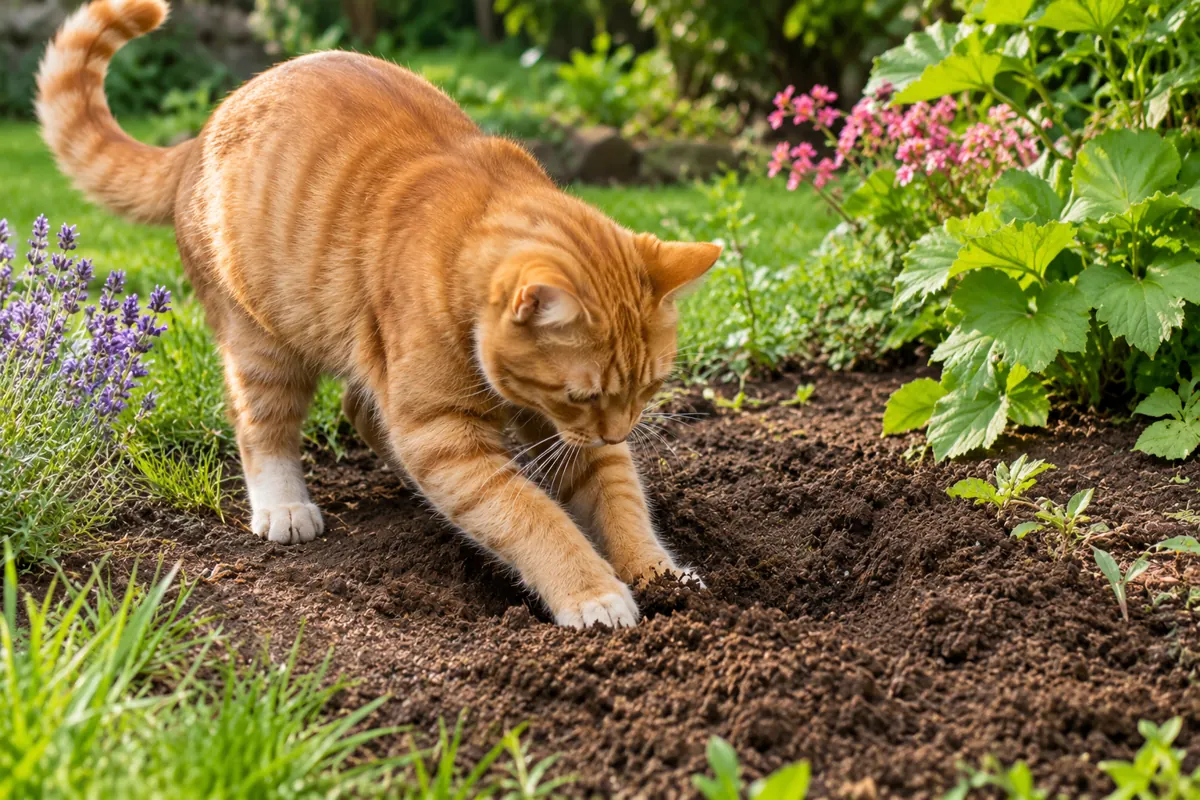
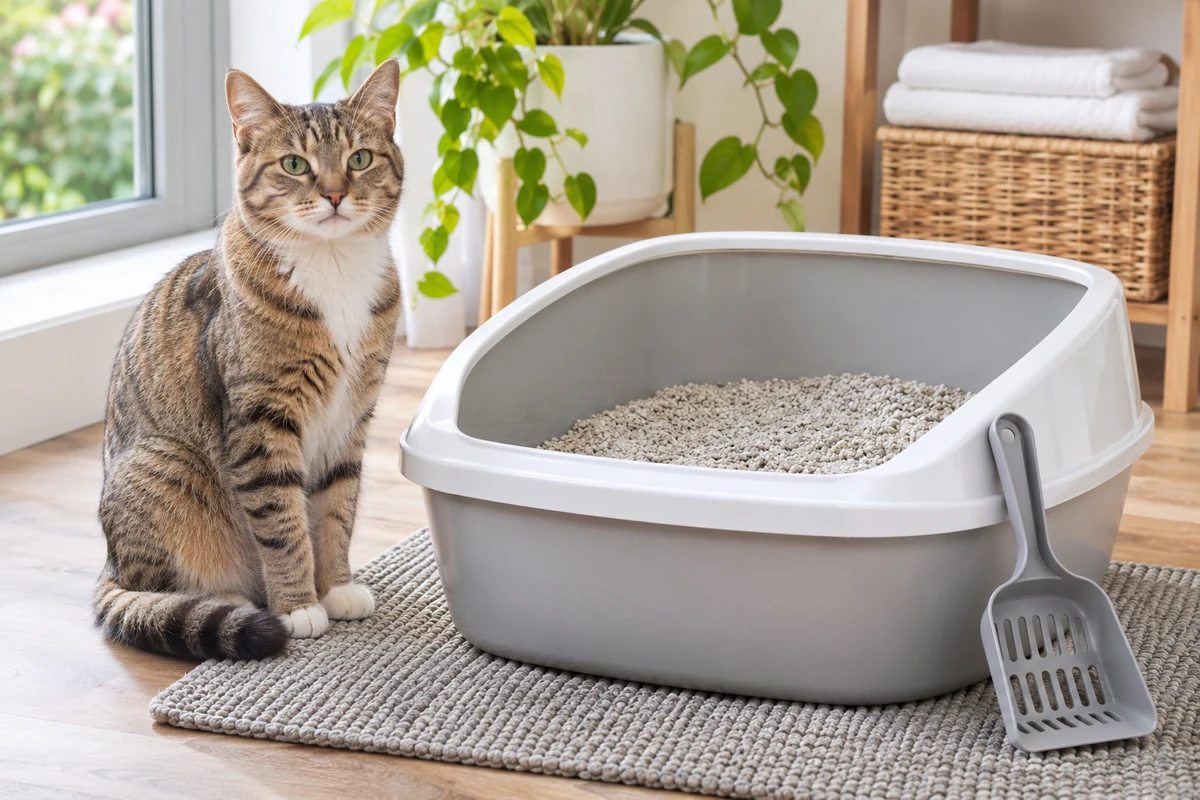
Cats often prefer a substrate that is comfortable beneath their paws and easy to manipulate. Fine, unscented litter is a reasonable starting point for many cats, although preferences differ. A litter box that is too small can make turning and digging awkward. Offer a spacious box and observe whether your cat can enter, turn around, and cover waste comfortably. Our litter tracking guide offers ways to manage scattered litter without discouraging normal digging.
A practical starting point is a rectangular box about one and a half times your cat’s length from nose to tail base, as recommended in the AAFP and ISFM house-soiling guidelines. Watch for your cat balancing on the rim or repeatedly hitting the sides while turning. These observations can help you decide whether to offer a larger box.
5. Individual Habits and Learning
Why do cats bury their poop differently even when they share a home? Early experience, physical comfort, and individual preferences can influence the routine. One cat may scratch the litter carefully, while another scratches the wall beside the box. A cat that has always left feces uncovered may simply have a different habit. A sudden change from its established pattern is more informative than comparing it with another cat.
6. Feeling Comfortable at the Litter Box
Covering waste takes time. A cat that feels threatened by another pet, loud appliances, or frequent interruptions may leave quickly. Provide quiet locations with easy access and an unobstructed exit. In multi-cat households, a useful starting point is one litter box per cat plus one extra, distributed in separate locations. Avoid positioning all boxes together, where another cat could block access to the entire resource.
Why a Cat May Suddenly Stop Covering Waste
A new litter texture, dirty box, painful joints, constipation, or discomfort during elimination can change litter box behavior. Watch for straining, hard stools, blood, appetite changes, or repeated trips to the box. A cat that repeatedly strains without producing urine may have a life-threatening urinary obstruction and needs emergency veterinary care. Do not assume the problem is behavioral. Never punish a cat for uncovered waste or accidents.
The Cornell Feline Health Center identifies litter aversion, medical conditions, and unsuitable box locations as possible contributors to toileting problems. If a cat suddenly stops covering waste, note any recent household changes and contact your veterinarian if the change persists or other symptoms appear.
| What you notice | What to do |
|---|---|
| Long-standing habit of leaving stool exposed | Observe overall comfort and maintain a clean box |
| Scratching the rim rather than the litter | Offer a larger box or a different substrate |
| Leaving rapidly when another pet approaches | Offer a separate quiet toileting location |
| Repeated straining with little or no urine | Seek emergency veterinary care |
How to Make the Litter Box More Appealing
Scoop waste at least daily, choose a comfortable unscented substrate, and provide a box large enough for natural movement. Introduce litter changes gradually by offering a second box with the new material. For a cat with mobility limitations, a low entrance may help. Keep food and water separate from toileting areas. Our new cat owner checklist explains other important home resources.
Why do cats bury their poop in one box but not another? Try a simple preference test: offer two similarly sized clean boxes in accessible locations, changing only the litter texture. Keep the familiar option available. The AAHA feline life stage guidelines support offering litter choices in separate boxes. Observe which option your cat uses voluntarily rather than moving its paws or forcing it inside.
Frequently Asked Questions
Why do cats bury their poop but not always their urine?
Covering habits vary by cat and substrate. Urine marking is also distinct from ordinary toileting.
Why do cats bury their poop outside?
Loose soil allows natural digging and covering behavior, although outdoor cats may also leave waste exposed.
Should I teach my cat to cover its poop?
Do not force its paws to dig. Improve the litter environment and investigate new changes.
Final Thoughts
Why do cats bury their poop? Inherited behavior, scent management, learning, and environmental comfort all offer plausible explanations. Focus on providing a suitable litter box rather than demanding a particular covering routine.