How to Stop Cat Litter Tracking: 9 Practical Solutions
Finding litter in the hallway, bedroom, and even on the sofa can be frustrating. The secret to how to stop cat litter tracking is not a single magic product. Instead, identify how litter leaves the box and make small, cat-friendly changes that reduce scattering without disrupting bathroom habits.
Why Litter Travels
Tiny particles stick to damp paws, collect between toes, and scatter during digging. Lightweight litter may travel farther than heavier granules. Long-haired cats can carry litter in paw fur, while a cramped box makes kicking granules over the edge more likely. Watch where litter first appears before buying accessories. If grains land immediately beside the box, improve containment; if they travel down a hallway, focus on the exit path and mat.
1. Choose a Larger Litter Mat
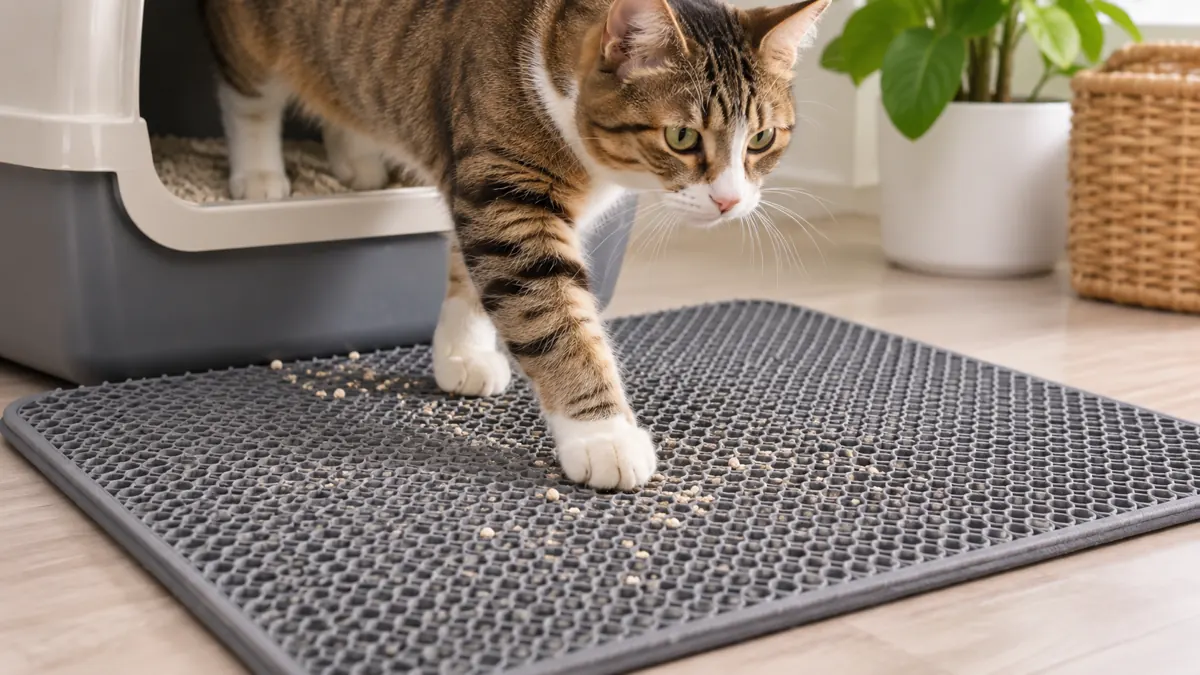
To understand how to stop cat litter tracking, observe the route your cat takes after leaving the box. Place a comfortable, washable mat along that route so it catches granules before they spread.
Use a stable, washable mat that extends beyond the exit. Some cats step sideways, so a narrow rectangle may miss their preferred route. Look for a surface that traps grains without irritating sensitive paws. Shake out and wash the mat regularly, and replace it if edges curl or become slippery. A mat works best when the cat naturally crosses it rather than having to navigate an uncomfortable obstacle.
2. Test a Low-Tracking Litter
Unscented, slightly larger granules may cling less than very fine or lightweight litter. Change gradually by mixing a little new litter with the familiar substrate. Observe whether your cat still digs and eliminates normally. If your cat refuses the box, return to the previous litter. A clean floor is not worth creating litter-box avoidance. The best litter is one your cat accepts and you can maintain consistently.
3. Use a Spacious Box with Higher Sides
Another part of how to stop cat litter tracking is distinguishing litter kicked over the rim from grains carried on paws. A roomy box helps with scattering, while a suitable mat helps with paw tracking.
A roomy box gives your cat space to turn and dig. Higher sides can contain enthusiastic digging, but the entrance must remain accessible for kittens, seniors, and cats with mobility problems. Covered boxes are not automatically superior; some cats dislike confined spaces and trapped odors. Try a spacious open box with a lower entry point if accessibility matters. Never force a reluctant cat into a new design.
4. Rethink the Location
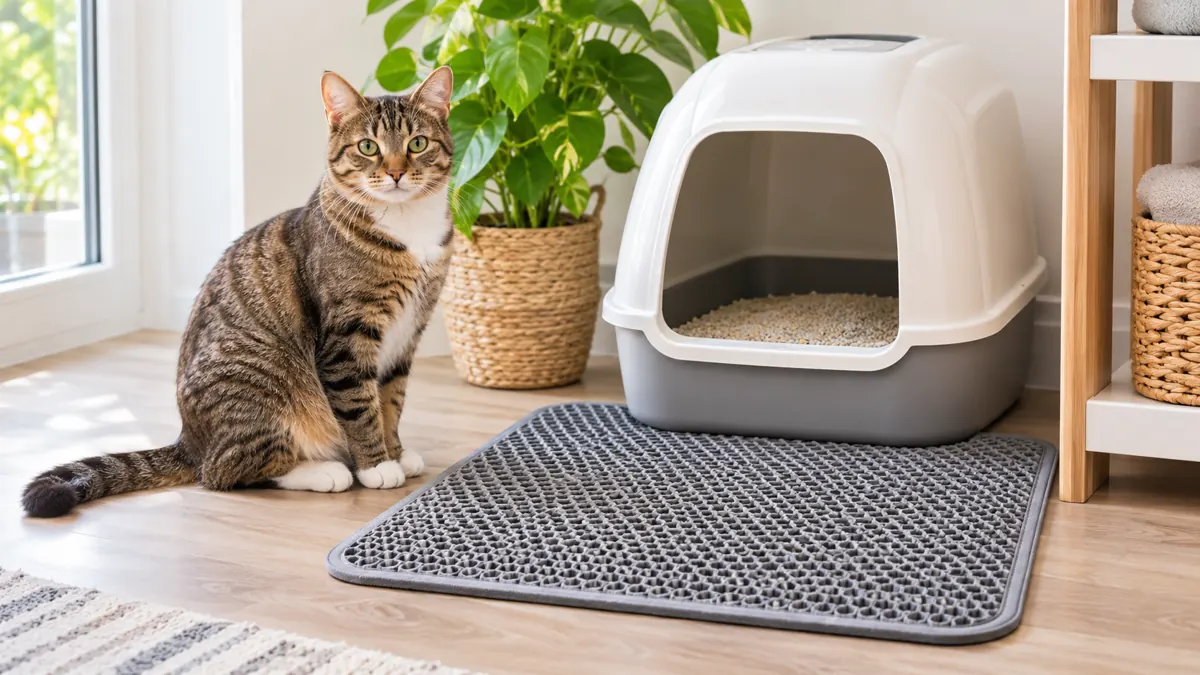
Place the box in a quiet, accessible area with an easy-to-clean floor. Position the exit toward the mat rather than directly onto carpet. Avoid blocking escape routes or placing boxes beside noisy appliances. In multi-cat households, distribute boxes across different locations. Cats should be able to use the bathroom without feeling trapped or ambushed. A comfortable location supports both cleanliness and reliable litter-box use.
5. Maintain a Sensible Litter Depth
When deciding how to stop cat litter tracking, keep the litter depth comfortable rather than filling the box excessively. Check your cat’s response to each small change.
Excessively deep litter can be kicked over the rim, while too little can discourage digging. Follow the product instructions and adapt to your cat’s preferences. Scoop at least daily, top up when needed, and wash the box with a suitable unscented cleaner. Rinse thoroughly. Strong perfumes can make a box less appealing. Consistent maintenance reduces scattered waste and helps you see whether the litter itself needs changing.
6. Check Long Paw Fur
Some long-haired cats collect granules around their feet. Gentle grooming may help. If trimming seems necessary, ask a professional groomer or veterinarian; scissors near paw pads can cause injury. Do not use adhesive products or scented sprays on paws. Sudden changes in walking, grooming, or litter habits deserve attention because painful feet or other health issues can affect how your cat exits the box.
7. Clean the Exit Zone Daily
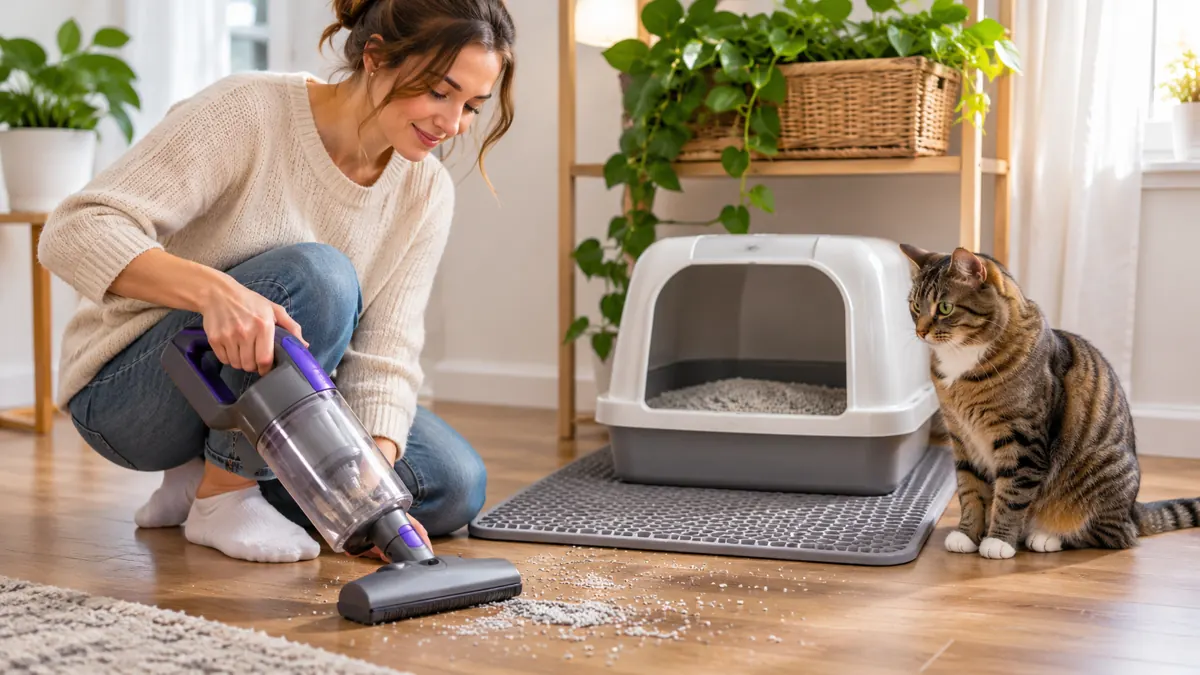
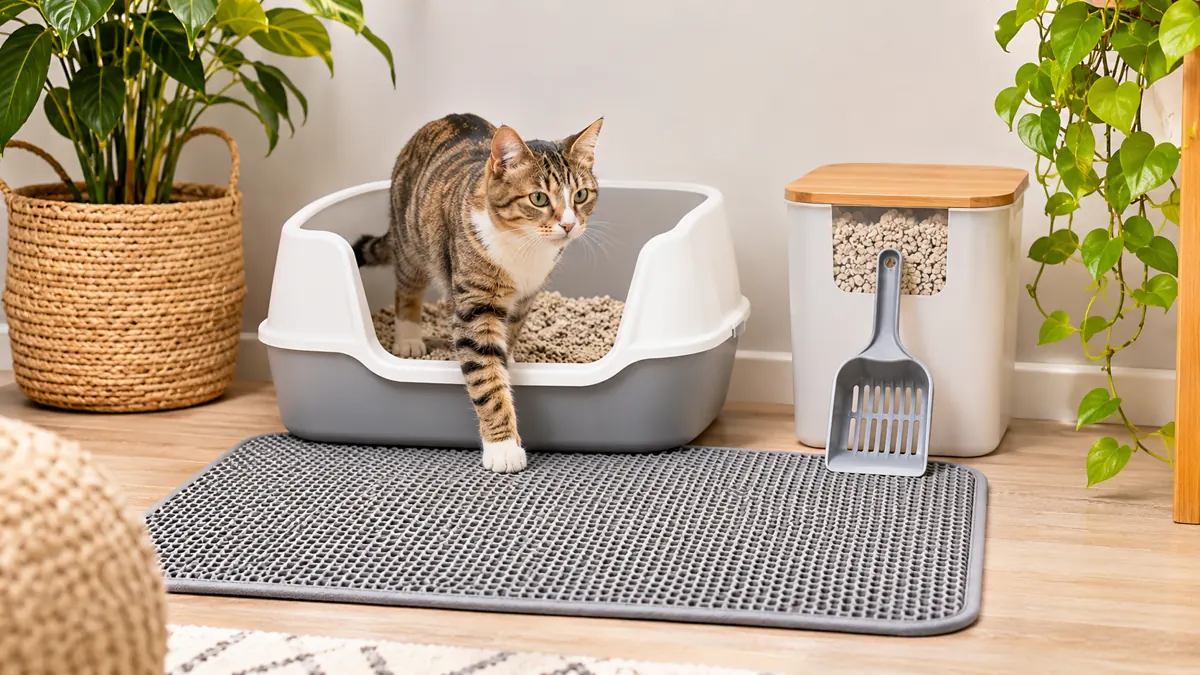
Daily cleanup is a useful part of how to stop cat litter tracking because loose granules are less likely to be carried into other rooms. A quick sweep also helps you see whether the mat is working.
A handheld vacuum or soft broom beside the box makes cleanup quick. Focus on the first few feet, where most litter falls. A removable floor protector can help on carpet. Keep electrical cords and cleaning chemicals away from curious pets. Small daily cleanups prevent granules being carried throughout the house. They also make it easier to compare the effectiveness of each adjustment.
8. Avoid Uncomfortable Gadgets
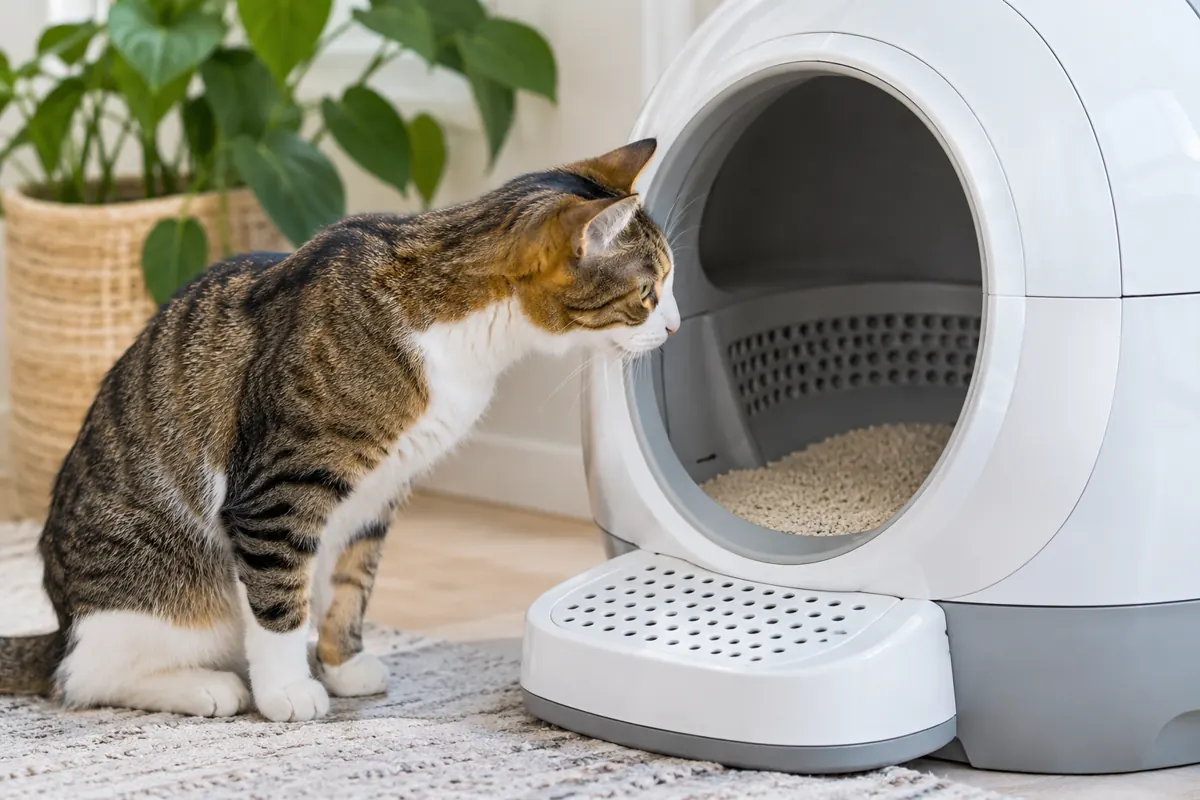
Top-entry boxes, tight cabinets, rough mats, and heavily fragranced litter may look convenient but can discourage use. Never punish your cat for tracking litter. If accidents, straining, bloody urine, or frequent unsuccessful bathroom visits occur, contact a veterinarian promptly. For a gentle box transition, read our automatic litter box guide.
9. Change One Thing at a Time
The most reliable approach to how to stop cat litter tracking is to test one cat-friendly adjustment at a time and note where litter appears over several days.
To discover how to stop cat litter tracking in your home, begin with a larger mat, then evaluate the box and litter texture if needed. Give your cat time to adapt. Track where grains appear each evening for a week. Avoid changing litter, location, and box shape simultaneously, because you will not know which adjustment helped or upset your cat. A little tracking is normal; aim for improvement rather than perfection.
Frequently Asked Questions
Will a covered box stop tracking? Not completely; grains can still stick to paws. Are litter mats safe? Usually, if nonslip, washable, and comfortable. Can I eliminate every grain? Probably not. Prioritize a box your cat uses reliably. If you are setting up a new home, see our new cat owner checklist.
Final Thoughts
Learning how to stop cat litter tracking takes a few thoughtful experiments. Combine a generous mat, comfortable box, appropriate litter, and simple cleaning. Keep your cat’s preferences central. For guidance on litter-box behavior, consult the ASPCA’s cat behavior resources.