
New Cat Owner Checklist: How to Prepare Your Home and Welcome Your First Cat
Bringing home your first cat is exciting, but it can also feel a little overwhelming. What should you buy? Where should the litter box go? And how will you know if your new companion needs help?
This new cat owner checklist walks you through everything you need to prepare your home, welcome your cat, and make those first days together as comfortable as possible.
Whether you are adopting a playful kitten or an adult cat, a little preparation can make a big difference.
A well-organized New Cat Owner Checklist can help you avoid common mistakes and make sure you have everything ready before your new companion arrives.
Table of Contents
Why Preparation Matters for First-Time Cat Owners
Cats are sensitive to changes in their surroundings. A new home introduces unfamiliar smells, sounds, people, and routines. As a result, some cats may feel anxious or hide during their first few days.
Preparing a quiet, safe environment before your cat arrives helps reduce stress and gives your new companion the time and space needed to adjust.
Let’s go through the essential steps in the right order.
Your New Cat Owner Checklist: Prepare Your Home
1. Create a Quiet Transition Room
Before bringing your cat home, prepare a quiet room where it can settle in without being disturbed.
The American Association of Feline Practitioners (AAFP) recommends a gradual introduction process and a dedicated space with essential resources.
Your transition room should include:
- Food and fresh water.
- A clean litter box.
- A comfortable bed and hiding places.
- A scratching post.
- A few safe toys.
- A comfortable place to rest and observe the surroundings.
A spare bedroom or quiet bathroom with a secure door can work well.
2. Cat-Proof Your Home
Cats are naturally curious and love exploring their surroundings. Before your new companion arrives, check every room for potential hazards.
- Secure electrical cords and remove dangling strings.
- Store medications and cleaning products safely.
- Check windows and balconies for gaps or unsecured screens.
- Remove small objects that could be swallowed.
- Keep fragile decorations out of reach.
- Check your houseplants using the ASPCA list of toxic and non-toxic plants for cats.
If you suspect your cat has swallowed something harmful, contact your veterinarian or an emergency veterinary clinic immediately.
3. Gather Essential Cat Supplies
You do not need to purchase every possible accessory before adoption. However, certain essentials should be ready on your cat’s first day.
Use this New Cat Owner Checklist to organize your shopping and make sure you have all the essential items your cat needs from day one.
Essential Supplies Checklist
| Essential item | Why you need it |
|---|---|
| Litter box and litter | Provides a clean and comfortable toilet area. |
| Food and water bowls | Choose stable, easy-to-clean bowls. |
| Age-appropriate cat food | Supports your cat’s nutritional needs. |
| Secure cat carrier | Essential for safe transportation and veterinary visits. |
| Scratching post | Encourages healthy scratching behavior. |
| Bed and hiding spots | Provide comfort, security, and privacy. |
| Interactive toys | Encourage exercise and mental stimulation. |
| Grooming supplies | Help maintain coat condition and basic hygiene. |

If you have multiple cats, the AAFP recommends providing one of each essential resource per cat, plus one extra litter box, with resources distributed in separate locations.
The First 48 Hours: Helping Your New Cat Settle In
4. Let Your Cat Explore at Its Own Pace
When you arrive home, place the carrier in the prepared room and open its door. Allow your cat to come out voluntarily rather than pulling it out or forcing interaction.
Sit quietly nearby, speak gently, and allow your cat to approach when it feels comfortable.
Some cats begin exploring within minutes, while others may hide for several days. Patience is essential during this adjustment period.
Following a New Cat Owner Checklist during the first 48 hours can help you establish healthy routines while giving your cat enough time to feel safe and comfortable.
5. Establish a Predictable Daily Routine
Cats generally benefit from consistent daily routines. Try to feed your cat, clean its litter box, and schedule playtime at similar times each day.
Interactive play using wand toys can provide physical exercise and mental stimulation.
For more practical ideas, read our guide on how to calm a hyper cat.
Also, remember that not every human food is suitable for cats. Before offering unfamiliar treats, read our article about whether cats can eat yogurt.
Cat Health Basics: Schedule Your First Vet Visit
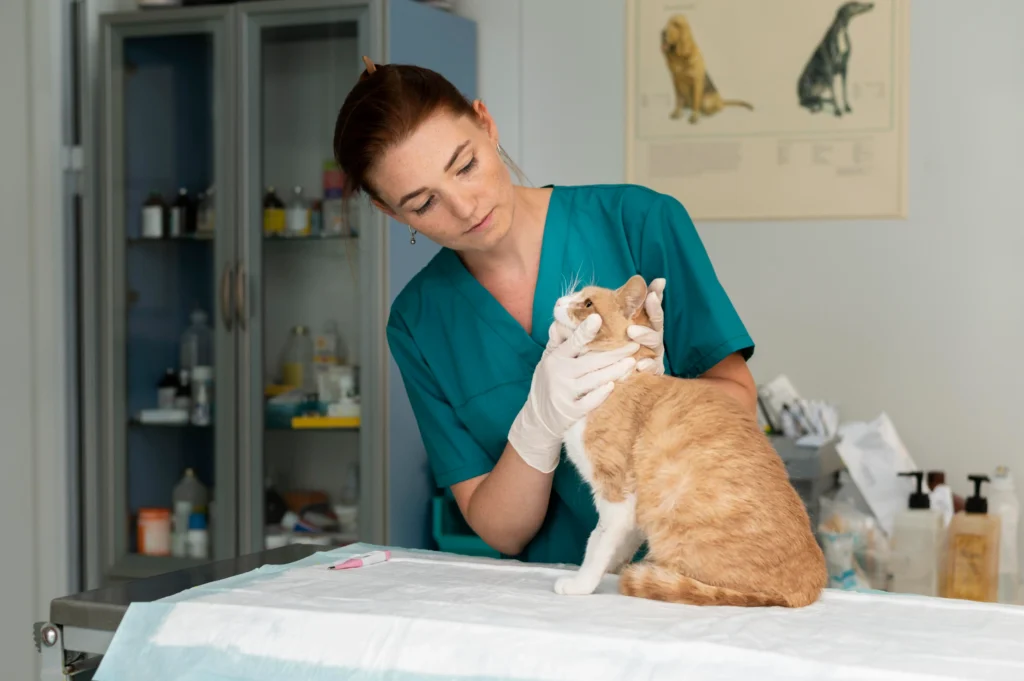
Arrange a veterinary check-up soon after adoption, even if your cat appears healthy.
Your veterinarian can assess your cat’s general health, discuss vaccinations, parasite prevention, nutrition, and any additional care your new companion may need.
The Cornell Feline Health Center vaccination resources explain the importance of vaccination, including for cats that live indoors.
If you are adopting a kitten, International Cat Care’s kitten guide offers additional information about early development and responsible kitten care.
6. Know the Warning Signs
Learning to recognize changes in your cat’s behavior and health is an important responsibility for every new owner.
Contact your veterinarian promptly if you notice:
- A sudden loss of appetite or refusal to eat.
- Repeated vomiting or diarrhea.
- Difficulty breathing.
- Straining or crying while using the litter box.
- Unusual weakness, lethargy, or persistent hiding.
Important: Difficulty breathing or an inability to pass urine requires emergency veterinary attention.
For additional information, see our guide on what to do when your cat is not eating.
Common First-Time Cat Owner Mistakes to Avoid
Even with the best intentions, new cat owners sometimes make mistakes that can make the adjustment period more difficult.
- Introducing too many people too quickly: Give your cat time to become comfortable with its new surroundings.
- Placing the litter box near food: Keep toilet areas separate from feeding areas.
- Skipping veterinary visits: Early health checks help establish a suitable care plan.
- Changing food suddenly: Introduce dietary changes gradually with veterinary guidance.
- Ignoring daily playtime: Interactive activities help support physical and mental well-being.
Make Your First Weeks Easier with the NEW CAT OWNER STARTER KIT
Preparing for a new cat involves many small details. Remembering every supply, routine, and health consideration can feel overwhelming, especially when you are a first-time owner.
That is why we created the NEW CAT OWNER STARTER KIT — a practical digital guide designed to help you organize your cat’s care from the very beginning.
What Will You Find Inside?
- Home preparation before bringing your cat home.
- Essential supplies and shopping guidance.
- Feeding and everyday cat care.
- Healthy routines and adjustment tips.
- Basic grooming and hygiene guidance.
- Important health warning signs.
- Preparation for veterinary visits.
- Common first-time cat owner mistakes.
The guide also includes practical checklists to help you stay organized and keep track of important tasks.
It is designed to make learning easier, reduce unnecessary guesswork, and help you become a more confident and prepared cat owner.
Once you have completed your New Cat Owner Checklist, you can use a structured care guide to keep track of feeding, grooming, hygiene, and veterinary appointments.

Ready to welcome your cat with confidence?
Discover the NEW CAT OWNER STARTER KIT and get practical guidance for welcoming, caring for, and understanding your new companion.
Final Thoughts: Give Your New Cat the Best Possible Start
Welcoming your first cat does not require perfection. What matters most is providing a safe environment, essential supplies, a predictable routine, patience, and appropriate veterinary care.
Use this new cat owner checklist as your starting point, and remember that every cat has its own personality and adjustment pace.
For more practical advice, explore our Cat Care articles or discover the NEW CAT OWNER STARTER KIT to make your first weeks as a cat owner easier and more organized.
Keep your New Cat Owner Checklist somewhere accessible so you can return to it whenever you need guidance during your first weeks together.