Why Does My Dog Stretch So Much? 7 Reasons and When to Worry
Why does my dog stretch so much? Most stretches are harmless, but repeated stretching can sometimes signal discomfort. This guide explains seven possible reasons, how to recognize warning signs, and when your dog needs veterinary care.
Why Does My Dog Stretch So Much? What Is Normal?
A normal stretch is usually brief, relaxed, and followed by ordinary activity. Your dog may extend its front legs, lower its chest, or stretch its hind legs after resting. Look at the whole picture: appetite, energy, movement, and whether your dog seems comfortable. A new pattern of repeated stretching is more important than an occasional stretch.
1. Waking Up After a Nap
Dogs often stretch after sleeping or lying in one position for a long time. Much like people, they may extend their limbs before getting up and moving around. You might notice this first thing in the morning or after a long afternoon nap. If your dog walks normally afterward, eats well, and behaves as usual, this is generally reassuring. If you are wondering why does my dog stretch so much after sleeping, pay attention to how easily your dog rises rather than simply counting stretches.

2. Inviting You to Play
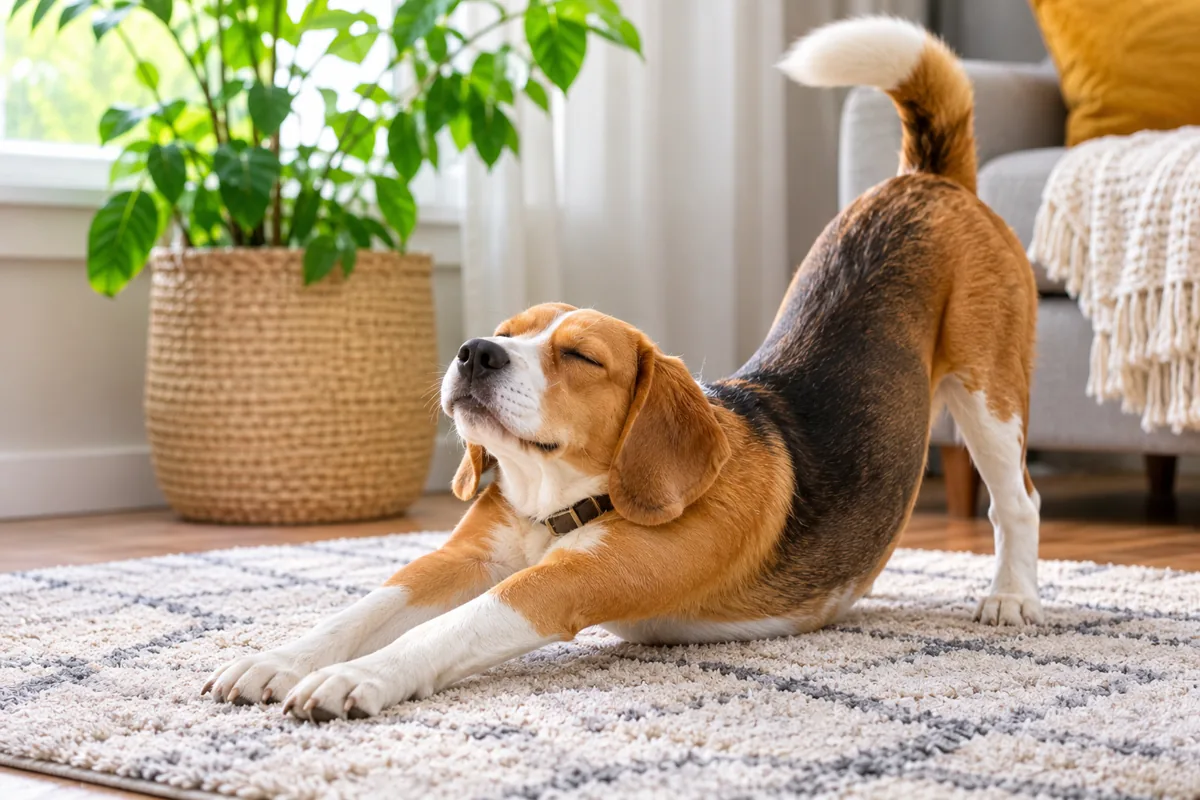
A play bow looks like a stretch: the front legs extend, the chest lowers, and the hindquarters remain raised. A loose body, lively movements, and a willingness to engage often accompany this invitation. Your dog may bounce away and return with a toy. A play bow is different from a sustained, uncomfortable posture. Learn more about these signals in our guide to dog behavior and needs.

3. Greeting You or Anticipating Activity
Some dogs stretch when their favorite person comes home or when they anticipate a walk. The movement may be part of a familiar greeting routine, especially if the dog has just risen from its bed. Observe whether your dog looks relaxed and resumes normal activity. Avoid interpreting every stretch as a request for attention; context matters.
4. Changing Position After Exercise
After a walk or a play session, a dog may stretch while settling down or changing position. A comfortable dog should be able to move freely without limping or guarding a limb. Do not pull your dog’s legs into a stretch or try to force a greater range of motion. If stretching becomes frequent after exercise, particularly alongside soreness or reluctance to move, stop strenuous activity and contact your veterinarian.
5. Joint Stiffness or Musculoskeletal Discomfort
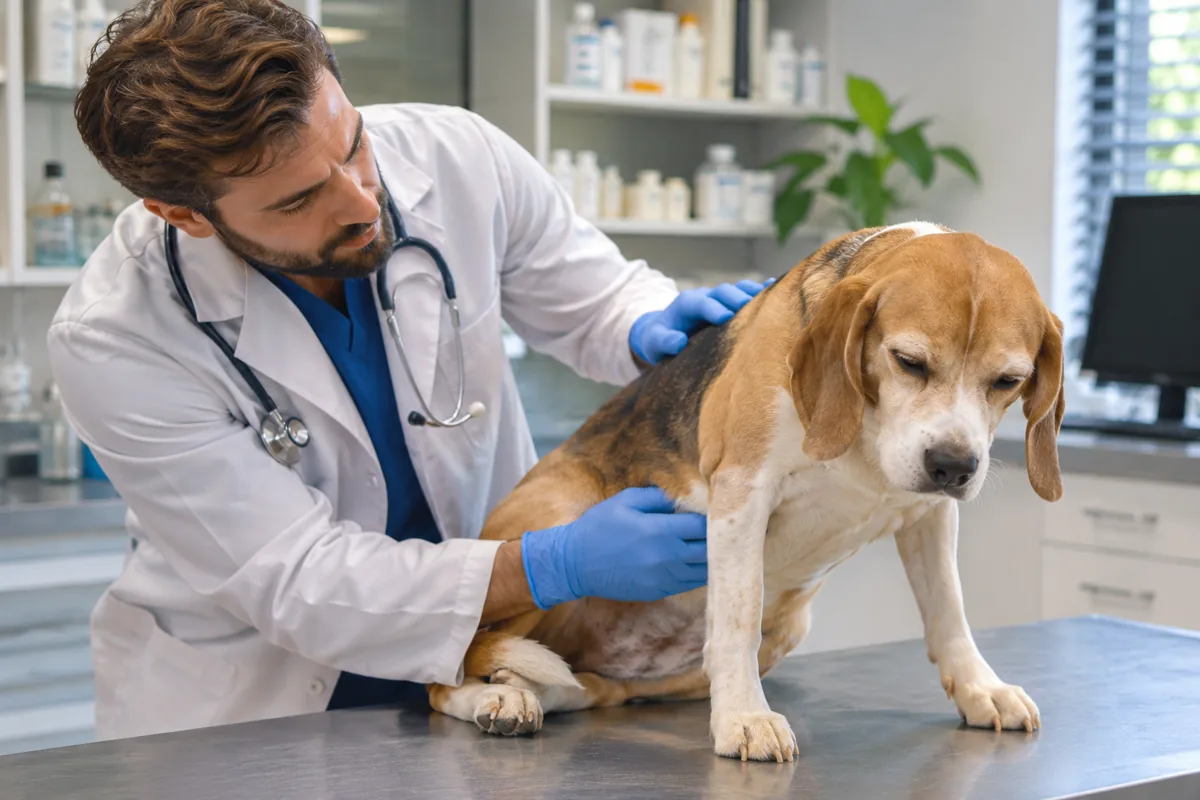
If you are asking why does my dog stretch so much and your dog is also struggling to stand, climb stairs, or jump into the car, discomfort may be involved. Older dogs and dogs with orthopedic conditions can develop changes in posture and movement. Stretching alone cannot diagnose arthritis or hip problems. Watch for limping, slower walks, and difficulty settling comfortably. Our guides to senior dog care and hip dysplasia in dogs explain related mobility concerns. A veterinarian can assess the joints and recommend appropriate treatment. Never give human painkillers without veterinary instructions.
6. Abdominal Pain and the Prayer Position
Repeatedly lowering the chest while keeping the hindquarters raised can sometimes indicate abdominal discomfort. This is often called the prayer position. Unlike a playful bow, it may be held for longer or repeated while the dog appears restless, tense, or unwilling to eat. Pancreatitis and other abdominal conditions are possible causes, but the posture alone cannot establish a diagnosis. If your dog repeatedly assumes this position or appears painful, seek prompt veterinary advice. A swollen abdomen, unsuccessful attempts to vomit, collapse, or severe distress may indicate a life-threatening emergency. Go to an emergency veterinary clinic immediately rather than waiting for the symptoms to pass.
7. Stress or Changes in Routine
A stretch can occur during a transition between activities or in an unfamiliar situation. However, stretching is not a reliable standalone sign of anxiety. Look for other changes such as pacing, trembling, avoidance, or difficulty relaxing. If you wonder why does my dog stretch so much around visitors or during changes at home, note what happens immediately before and afterward. Provide a quiet resting area and predictable routines. Persistent changes should be discussed with a veterinarian before assuming the cause is behavioral.
Normal Stretching vs. Warning Signs
| What you observe | Suggested response |
|---|---|
| Brief stretch after sleep, normal movement | Observe as part of the usual routine |
| Loose play bow followed by play | Normal interaction if comfortable |
| Repeated stretching with stiffness or limping | Arrange a veterinary assessment |
| Repeated prayer posture with reduced appetite or pain | Seek prompt veterinary advice |
| Swollen belly, unsuccessful retching, collapse | Emergency veterinary care immediately |
These observations are not diagnostic tests. A dog can have a serious illness without showing every warning sign.
What to Do When Your Dog Keeps Stretching
When the question why does my dog stretch so much becomes a daily concern, record a short video if doing so does not delay care. Note when the behavior started, how long each episode lasts, and whether it occurs around meals, sleep, or exercise. Check for changes in appetite, stool, vomiting, mobility, and energy. Share these details with your veterinarian. Do not press on a painful abdomen, force exercise, or administer medication at home. For emergency warning signs, consult the Merck Veterinary Manual and contact a veterinary clinic directly.
Frequently Asked Questions
Why does my dog stretch so much in the morning?
A brief stretch after sleep is often normal. Difficulty rising, persistent stiffness, or pain deserves assessment.
Why does my dog stretch so much after eating?
An occasional comfortable stretch may be harmless. Repeated prayer postures, restlessness, vomiting, or abdominal swelling require veterinary attention. Unproductive retching or collapse is an emergency.
Should I stretch my dog’s legs myself?
No forced stretching is recommended. Ask a veterinarian or qualified canine rehabilitation professional about exercises appropriate for your dog.
Final Thoughts
The answer to why does my dog stretch so much depends on the circumstances and your dog’s overall health. Brief, relaxed stretches are often part of normal life. New, repetitive, or uncomfortable postures deserve closer attention. When stretching accompanies pain, appetite changes, or mobility problems, seek veterinary advice rather than trying to diagnose the cause yourself.