Why Is My Budgie Fluffed Up? 5 Reasons and Warning Signs
Why is my budgie fluffed up? The answer depends on whether your bird is resting comfortably or showing other changes that could signal illness. This practical guide explains common causes, warning signs, and when to call an avian veterinarian.
Why Is My Budgie Fluffed Up? The Short Answer
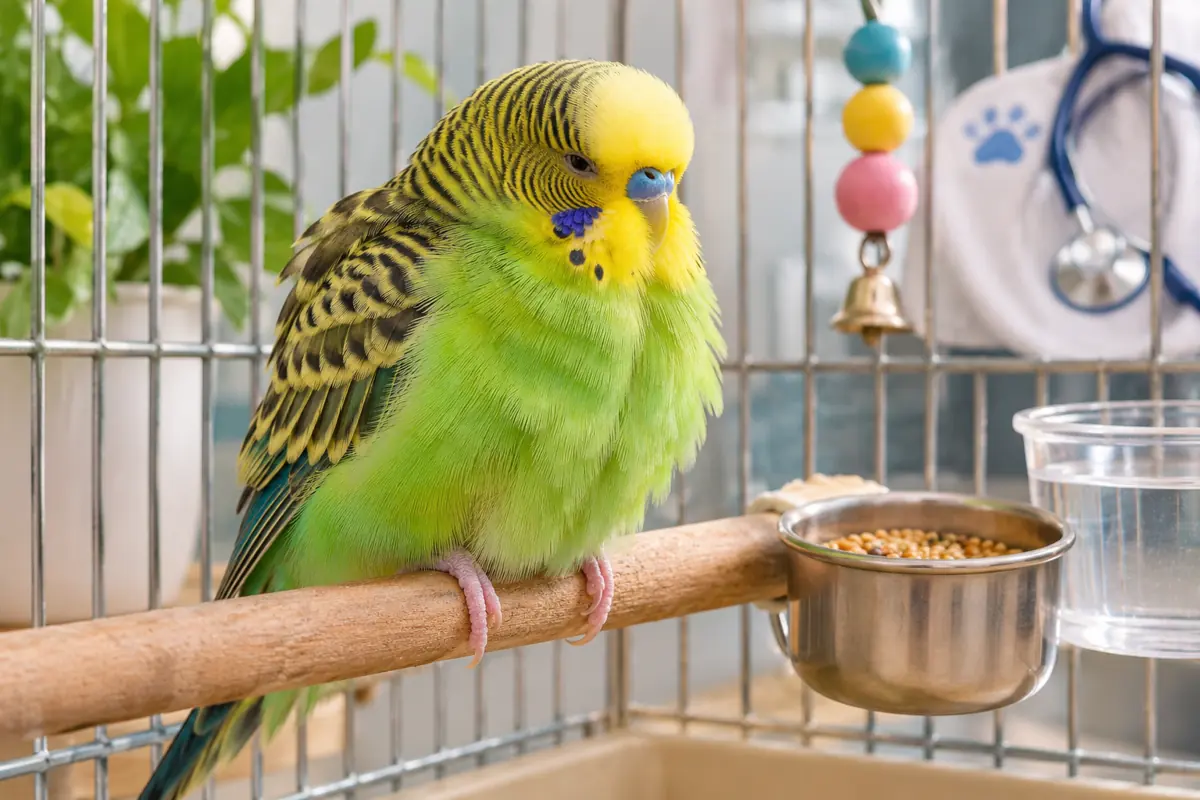
Why is my budgie fluffed up? A budgie may puff its feathers to stay warm, settle down for a nap, or relax after preening. But persistent fluffing can also be an early sign that a bird is unwell. The difference lies in what happens next: a comfortable budgie usually becomes alert and active again, while a sick bird may remain puffed up and quiet.
Because pet birds often conceal weakness, look at appetite, posture, droppings, breathing, and activity together rather than relying on feather position alone.
1. Your Budgie Is Keeping Warm
Fluffing traps a layer of air between feathers and skin, helping a bird conserve heat. You may notice it after a cool night or when the room temperature changes. Check for drafts near windows, air-conditioning vents, and doors. Keep the cage in a stable, comfortable location away from direct blasts of hot or cold air.
Do not place a heater against the cage or use an unmonitored heat lamp. If the bird is persistently cold, lethargic, or weak, contact an avian veterinarian instead of assuming room temperature is the only problem.
2. Your Budgie Is Sleepy or Relaxed
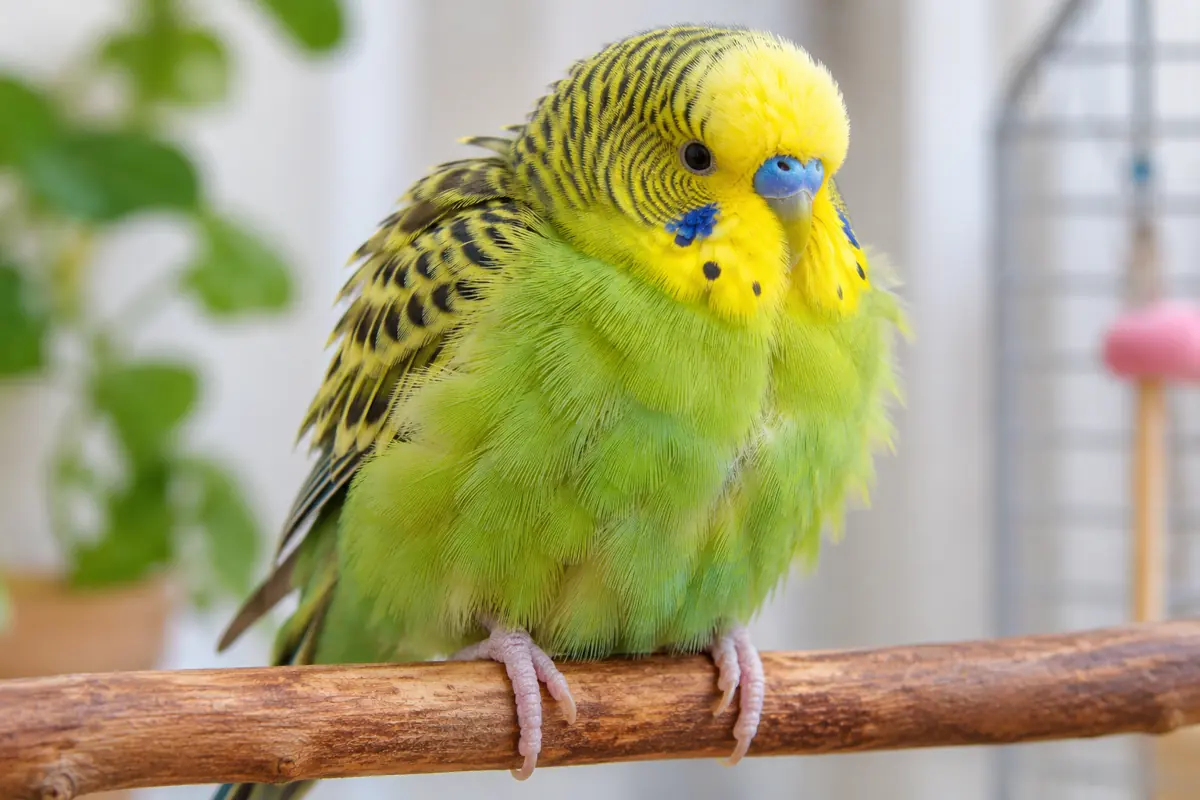
A resting budgie often sits with slightly fluffed feathers, relaxed eyes, and one foot tucked up. Some gently grind their beaks before sleep. This is generally less concerning when the bird has eaten normally, moves around during the day, and perks up when something interesting happens.
Watch the timing. A bird that fluffs up briefly at bedtime is different from one that stays motionless on its perch throughout the morning.
3. Your Budgie Has Just Finished Preening
After cleaning and aligning its feathers, a budgie may shake, puff up, and settle everything back into place. A quick feather shake after a bath can look dramatic but usually lasts only a moment. Healthy grooming is typically accompanied by normal curiosity, movement, and vocalization.
If your bird is constantly scratching, losing feathers in patches, or has irritated skin, ask an avian veterinarian to investigate rather than trying mite treatments without a diagnosis.
4. Your Budgie May Be Feeling Stressed
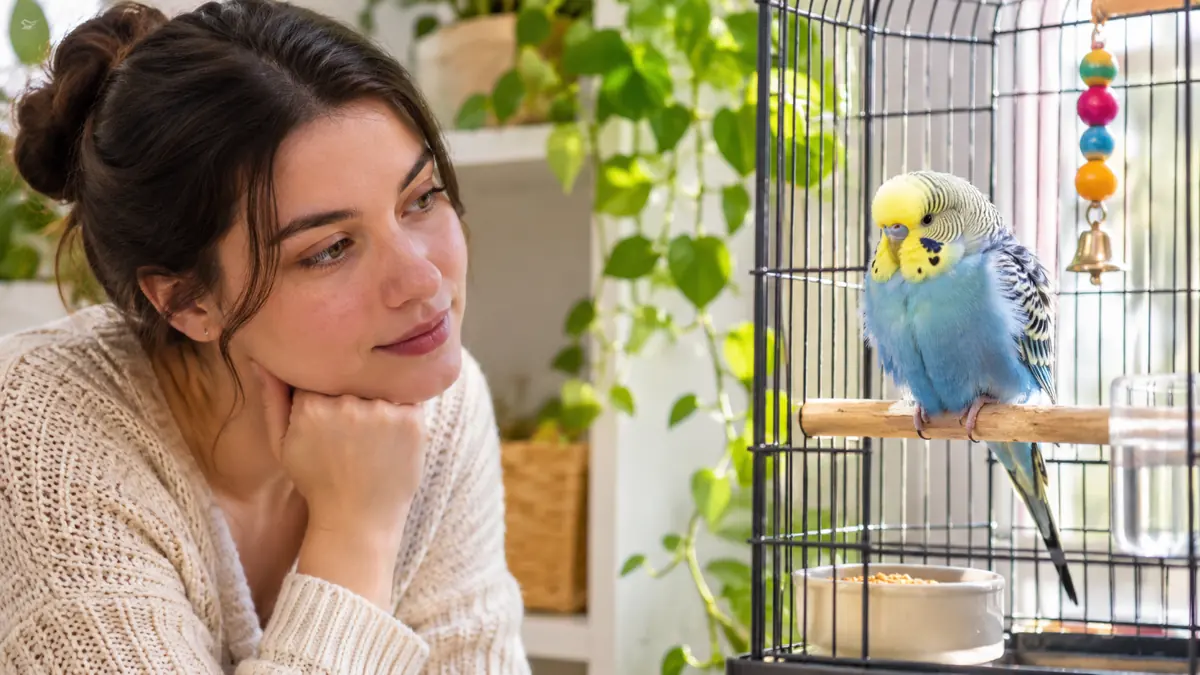
A new cage, loud household activity, unfamiliar visitors, or a change in routine can affect posture and behavior. A worried budgie might freeze, remain quiet, or sit fluffed up. Give it a predictable schedule, a calm environment, and a place to retreat without forcing interaction.
Stress should not become a catch-all explanation for illness. If the bird also eats less, has altered droppings, or seems weak, seek veterinary guidance promptly.
5. Persistent Fluffing Can Signal Illness
Why is my budgie fluffed up all day? That is a more important question than occasional puffing. A budgie that stays fluffed up, sits low on a perch or cage floor, sleeps unusually much, or stops interacting may be sick. Birds can deteriorate quickly, so do not wait several days to see whether the behavior passes.
Arrange prompt assessment by an avian veterinarian, especially if the bird is eating less or appears weak. Avoid over-the-counter antibiotics or home remedies unless prescribed for that bird.
Warning Signs That Need Urgent Veterinary Help
Seek urgent veterinary care if fluffing is accompanied by open-mouth breathing, pronounced tail bobbing with each breath, collapse, inability to perch, seizures, or severe weakness. Other concerning signs include persistent vomiting, blood in droppings, marked changes in droppings, and refusal to eat.
Keep the bird calm and minimize handling while arranging transport. An avian veterinarian can advise on safe temporary warmth and how to travel without adding stress. Never force-feed a weak or breathing-impaired bird.
What to Check at Home
- Duration: Is the bird briefly puffed up or fluffed for hours?
- Appetite: Is it actually eating, or only sitting beside its food?
- Droppings: Are the number and appearance different from normal?
- Breathing: Is it quiet and effortless, without obvious tail movement?
- Energy: Does it climb, chirp, and respond as usual?
- Environment: Has there been a draft, temperature change, or stressful event?
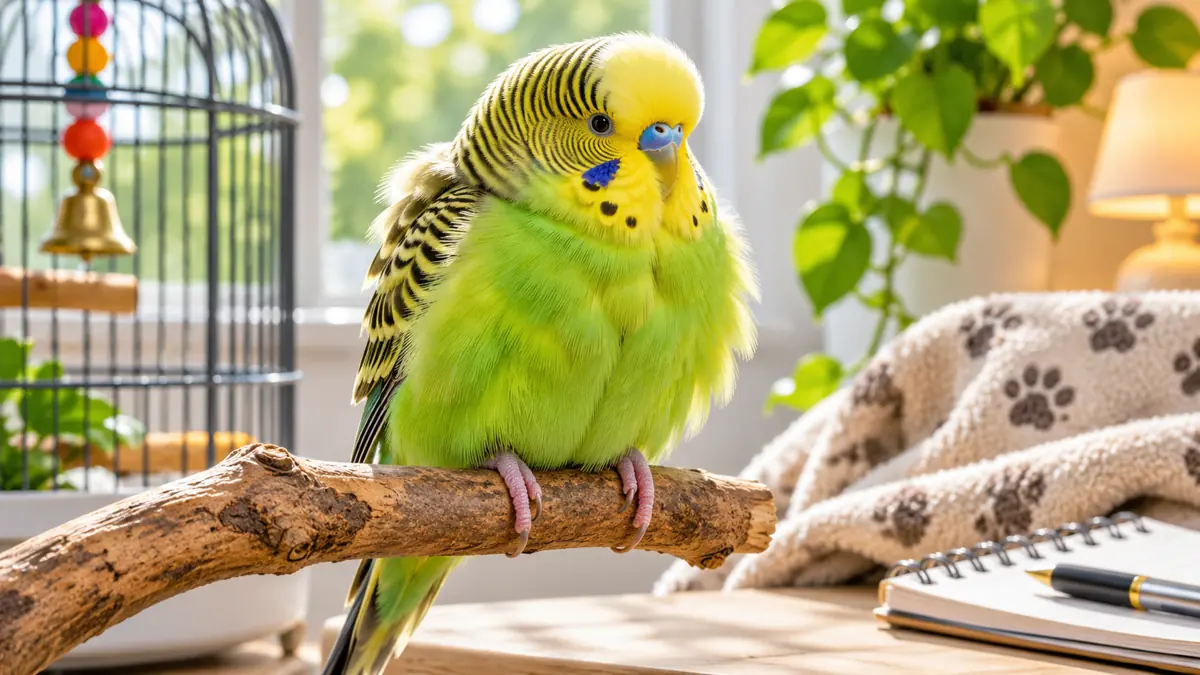
Write down what you observe and, if possible, record a short video for your veterinarian. This is useful because a bird may behave differently during an appointment.
How to Help a Comfortable Budgie Rest Safely
Offer a consistent sleep schedule, fresh water, a clean cage, and a balanced diet recommended for budgies. Keep the environment quiet at night and avoid sudden temperature swings. Make sure the bird can move away from any optional warmth source and never overheat the cage.
Our guide to how to tell if a budgie is happy explains additional relaxed behaviors. For general daily care, see our blue budgie care guide. These resources can help you recognize your bird’s usual behavior so changes stand out.
Frequently Asked Questions
Why is my budgie fluffed up but still eating?
Eating is reassuring, but it does not rule out illness. If fluffing persists or your bird seems unusually quiet, call an avian veterinarian.
Why is my budgie fluffed up and sleeping during the day?
Brief naps are normal. Prolonged daytime sleepiness together with constant puffing is concerning, particularly if appetite or droppings have changed.
Why is my budgie fluffed up after a bath?
Birds often puff and shake feathers while grooming and drying. Ensure the room is comfortably warm and draft-free. If the bird remains weak or puffed up afterward, seek advice.
Can a budgie fluff up because it is happy?
Yes, a relaxed bird may fluff briefly. Judge the whole picture: posture, alertness, breathing, and normal activity matter more than a single gesture.
Final Thoughts
So, why is my budgie fluffed up? Sometimes it is simply warm, sleepy, or finishing a grooming session. The warning sign is persistent fluffing paired with reduced activity, appetite changes, abnormal breathing, or other symptoms. Know your bird’s normal routine, observe changes carefully, and contact an avian veterinarian promptly when something seems wrong.
For further guidance on recognizing illness in pet birds, consult the VCA Animal Hospitals guide to signs of illness in pet birds.