How to Tell if a Budgie Is Happy: 12 Signs to Look For
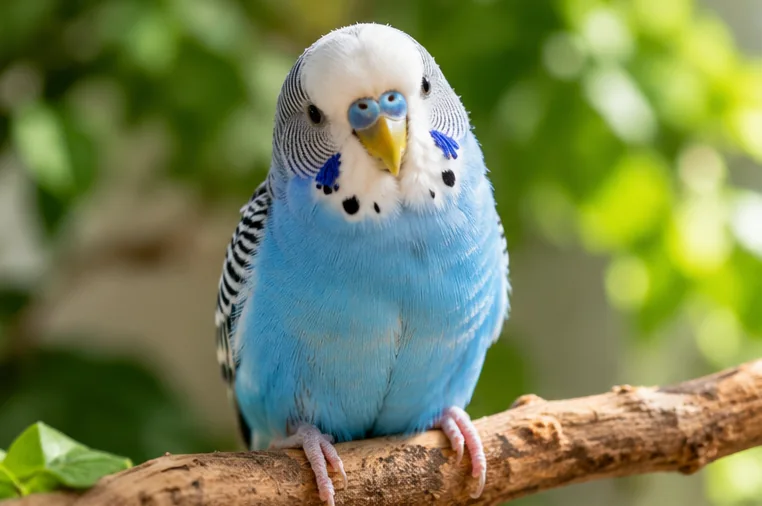
Learning how to tell if a budgie is happy starts with watching your bird’s everyday behavior, not relying on one chirp or pose. Budgies communicate through posture, sound, movement, and daily habits. A relaxed bird often shows a combination of curiosity, normal appetite, comfortable body language, and predictable rest. A quiet budgie can be content, while an active bird can still be unwell.
How to Tell if a Budgie Is Happy: Start with Normal Behavior
Every bird has a different personality. Observe appetite, droppings, activity, sleep, and responses to familiar people. Sudden changes can indicate illness rather than mood. Birds often hide sickness, so prolonged fluffing, weakness, or breathing changes need prompt attention from an avian veterinarian. Consider several signs together and compare them with your bird’s usual routine.
1. Relaxed Chirping
Comfortable budgies may chirp, chatter, whistle, or practice sounds during the day. Listen for varied, relaxed vocalizations. Sharp repetitive alarm calls paired with frantic movement can indicate distress. Some healthy birds are naturally quieter than others. Sound alone cannot establish happiness, so combine it with normal eating, curiosity, and comfortable posture.
When considering how to tell if a budgie is happy, relaxed chirping is one clue, but it matters most alongside healthy eating, curiosity, and easy movement.
2. Comfortable Feather Position
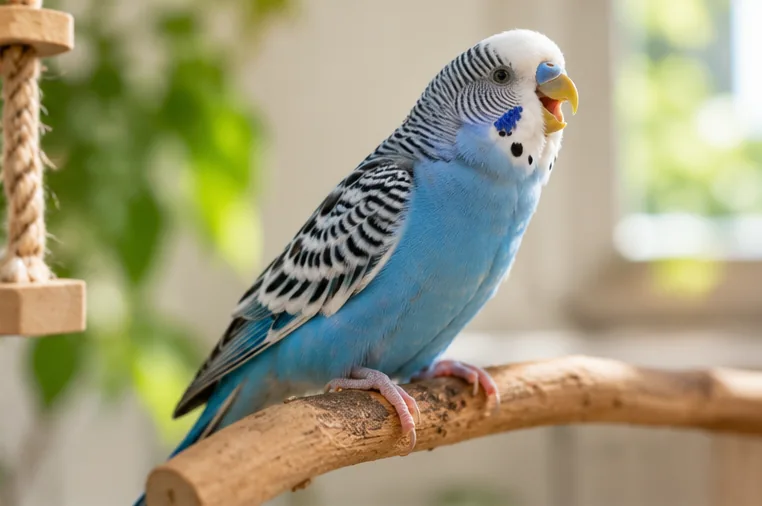
A resting budgie may loosen its feathers briefly and look softly rounded. It should remain responsive to the environment. Prolonged puffing, weakness, or sitting on the cage floor is not a reliable sign of contentment and can indicate illness. Observe breathing, movement, and appetite as well. Never delay veterinary care because a sick bird appears merely sleepy.
3. Gentle Beak Grinding
Some budgies softly grind their beaks while settling to rest. In an otherwise healthy bird, this can accompany relaxation. Distinguish it from abnormal clicking, wheezing, or open-mouth breathing. A predictable, quiet bedtime supports good welfare. Do not try to provoke grinding; it is simply one possible observation among many.
4. Curious Exploration
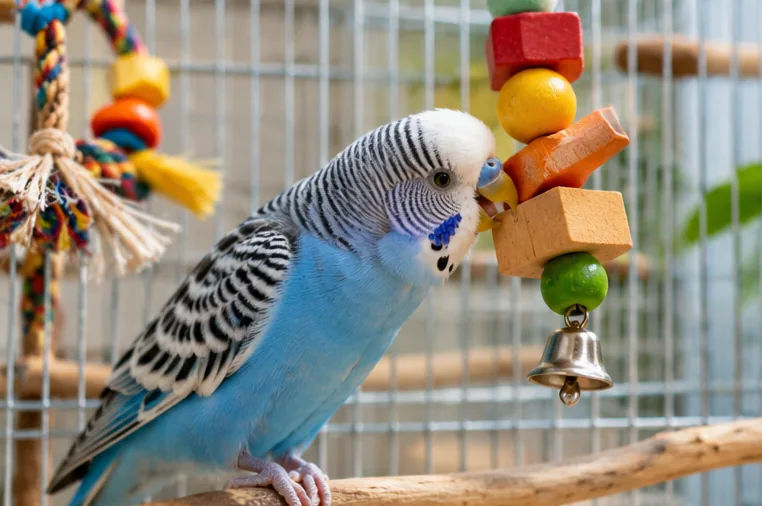
A confident budgie may lean toward a toy, climb to inspect a new perch, or explore a safe area. Introduce unfamiliar objects gradually, since sudden changes can frighten cautious birds. Provide bird-safe toys without overcrowding the cage. Curiosity is encouraging, but a bird that prefers familiar routines is not necessarily unhappy.
5. Playful Climbing
Hopping between perches, shredding suitable materials, and investigating toys can indicate engagement. Offer varied safe perches and supervised enrichment. Inspect toys for loose strings, swallowable pieces, and unsafe metals. Play should be voluntary. A bird that freezes or flees during handling needs more space and gentler interactions.
Another practical way to understand how to tell if a budgie is happy is to notice whether your bird willingly investigates safe toys and returns to familiar perches without signs of panic.
6. Normal Preening
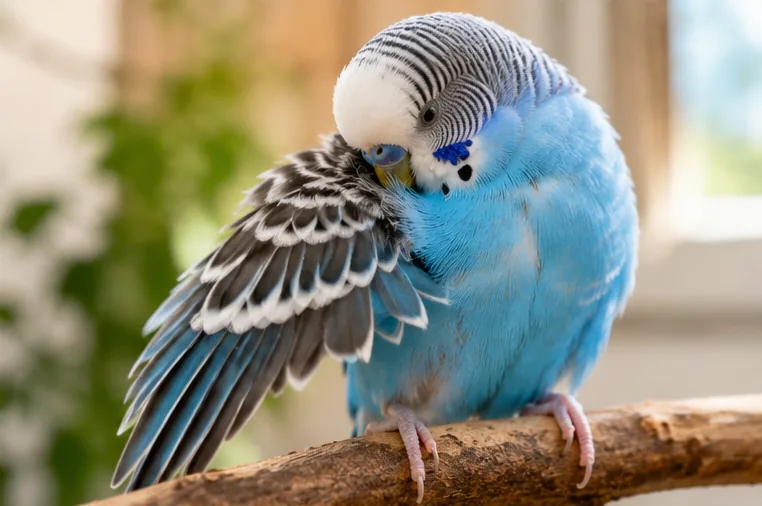
Healthy budgies spend time arranging feathers. Calm preening can occur in a safe environment. Feather damage, bald patches, repeated scratching, or a dirty vent should not be dismissed as ordinary grooming. Provide clean surroundings and bathing opportunities if your bird enjoys them. Avoid household perfumes and essential oils near birds.
If you are wondering how to tell if a budgie is happy, regular gentle preening can be reassuring when your bird is alert, eating normally, and maintaining healthy feathers.
7. Steady Appetite
Normal eating and drinking support health, though they do not prove happiness. Offer a veterinarian-recommended balanced diet and fresh water. Monitor weight when possible. A budgie that stops eating, loses weight, or has markedly changed droppings may need urgent care even if it still makes occasional sounds. Birds can become seriously ill quickly.
8. Voluntary Social Contact
A trusting budgie may approach a familiar person, accept a treat, or step onto a hand voluntarily. Some birds remain cautious despite excellent care. Never chase, grab, or force contact to make a bird appear affectionate. Short positive sessions build confidence. Read our blue budgie care guide for everyday husbandry.
9. Resting on One Foot
A budgie sometimes tucks one foot up while resting securely. This can be normal, particularly before sleep. Persistent limping, swelling, or difficulty gripping a perch is not normal. Check perch size and cleanliness, and contact an avian veterinarian about concerning changes. One resting posture is not a complete measure of emotional wellbeing.
10. Friendly Interest in Other Birds
Budgies are social and may enjoy calling to or sitting near compatible companions. Introduce new birds carefully with quarantine and veterinary guidance. Provide adequate space and multiple food stations. Not every pair gets along, so watch for bullying or exclusion. Voluntary, relaxed interactions matter more than constant closeness.
Learning how to tell if a budgie is happy also involves respecting social preferences. Some budgies enjoy close companionship, while others need more time and space to feel secure.
11. Confident Exercise
Many budgies enjoy flying and moving between perches when the environment is safe. Close doors and windows, switch off fans, and keep other pets separate during supervised flight. Do not force an unconfident bird to fly. Exercise and choice support welfare, but the right setup depends on the bird’s health and experience.
12. Predictable Rest and Activity
Budgies generally benefit from consistent periods of daylight activity and uninterrupted night rest. Excessive daytime sleepiness, lethargy, or reduced interest can signal illness. Keep the sleeping area quiet and predictable. Track changes over time rather than judging one slow afternoon. Good sleep is a foundation for a healthy routine.
As you learn how to tell if a budgie is happy, compare energy and sleep patterns over several days rather than interpreting a single quiet afternoon as a problem.
When to Call an Avian Veterinarian
Urgent signs include persistent fluffed posture, sitting on the cage floor, difficulty breathing, tail-bobbing with breaths, refusal to eat, and marked weakness. Do not treat these as mood problems or try human medicines. A veterinary examination is the safest response. For general care information, see VCA’s budgie overview.
Final Thoughts
To understand how to tell if a budgie is happy, look for a pattern of relaxed sounds, normal eating, curiosity, play, voluntary social contact, and adequate rest. No single behavior proves happiness. A safe, enriching routine and prompt veterinary attention to changes are more important than any checklist score.