How Often to Clean a Cat Water Fountain: Easy Care Schedule
How often to clean a cat water fountain is one of the most practical questions for anyone using a circulating water bowl. A fountain can make water appealing, but it still collects fur, saliva, and residue that need to be washed away.
Below, you’ll find a simple daily and weekly routine, a safe deep-cleaning method, and the warning signs that mean your cat’s fountain needs attention sooner.
How Often to Clean a Cat Water Fountain: Quick Schedule
The simplest answer to how often to clean a cat water fountain is to rinse and refresh the water daily, wash the fountain thoroughly about once a week, and check the pump and filter according to the manufacturer’s instructions. Some fountains need cleaning more frequently, especially in warm rooms or multi-cat homes.
These are practical starting points, not a universal rule. If you see slime, debris, cloudy water, an unusual odor, or reduced water flow, clean the fountain immediately rather than waiting for your scheduled wash.
Daily: empty stale water, rinse accessible surfaces, refill with fresh drinking water, and check the water level. Weekly: unplug the fountain, disassemble washable components, and scrub the basin and drinking surfaces. Periodically: clean the pump’s removable parts and replace filters on the schedule specified for your model.
Why Regular Fountain Cleaning Matters
Moving water may encourage some cats to drink, but circulation does not make a fountain self-cleaning. Saliva, dust, fur, food crumbs, and minerals can collect in the basin and around the pump. Moist surfaces may develop a slippery biofilm that ordinary refilling does not remove.
Wondering how often to clean a cat water fountain when it still looks clear? Appearance alone is not a reliable measure of cleanliness. A fountain can look tidy while residue builds up in hidden channels and the pump housing.
Clean water is one part of feline wellness. Keep multiple drinking options available, particularly when introducing a new fountain, and consult your veterinarian if your cat suddenly drinks much more or much less than usual.
Daily Cat Water Fountain Maintenance
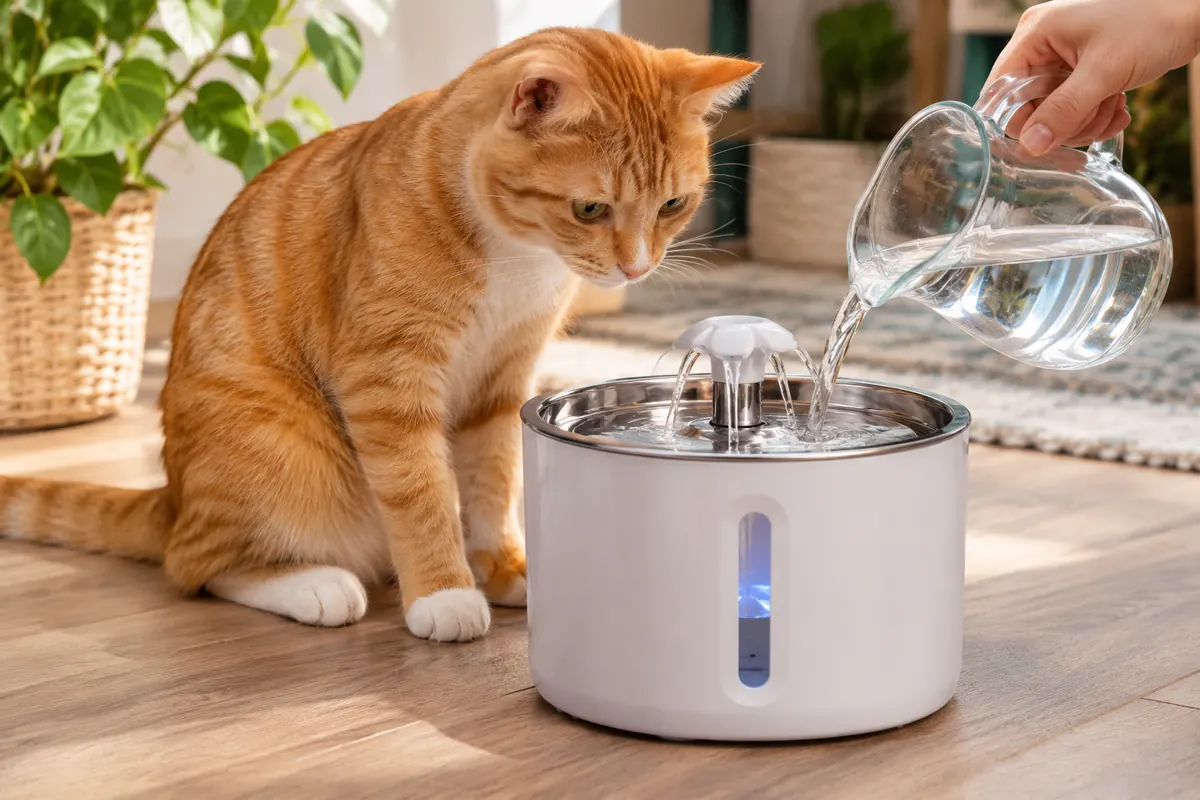
Spend a minute checking the fountain each day. Unplug it before handling parts near the electrical components. Remove visible fur or food particles, refresh the drinking water, and top up only with water suitable for your household’s drinking supply.
Inspect the water flow. A weak stream may mean the reservoir is low, the filter is clogged, or the pump needs attention. If your cat is hesitant to approach a noisy fountain, consider whether the unit is vibrating against the counter or floor.
Place the fountain away from litter boxes and ideally away from food bowls if your cat prefers separate resources. A quiet, accessible location can help make drinking feel comfortable.
How to Deep-Clean a Cat Water Fountain Step by Step
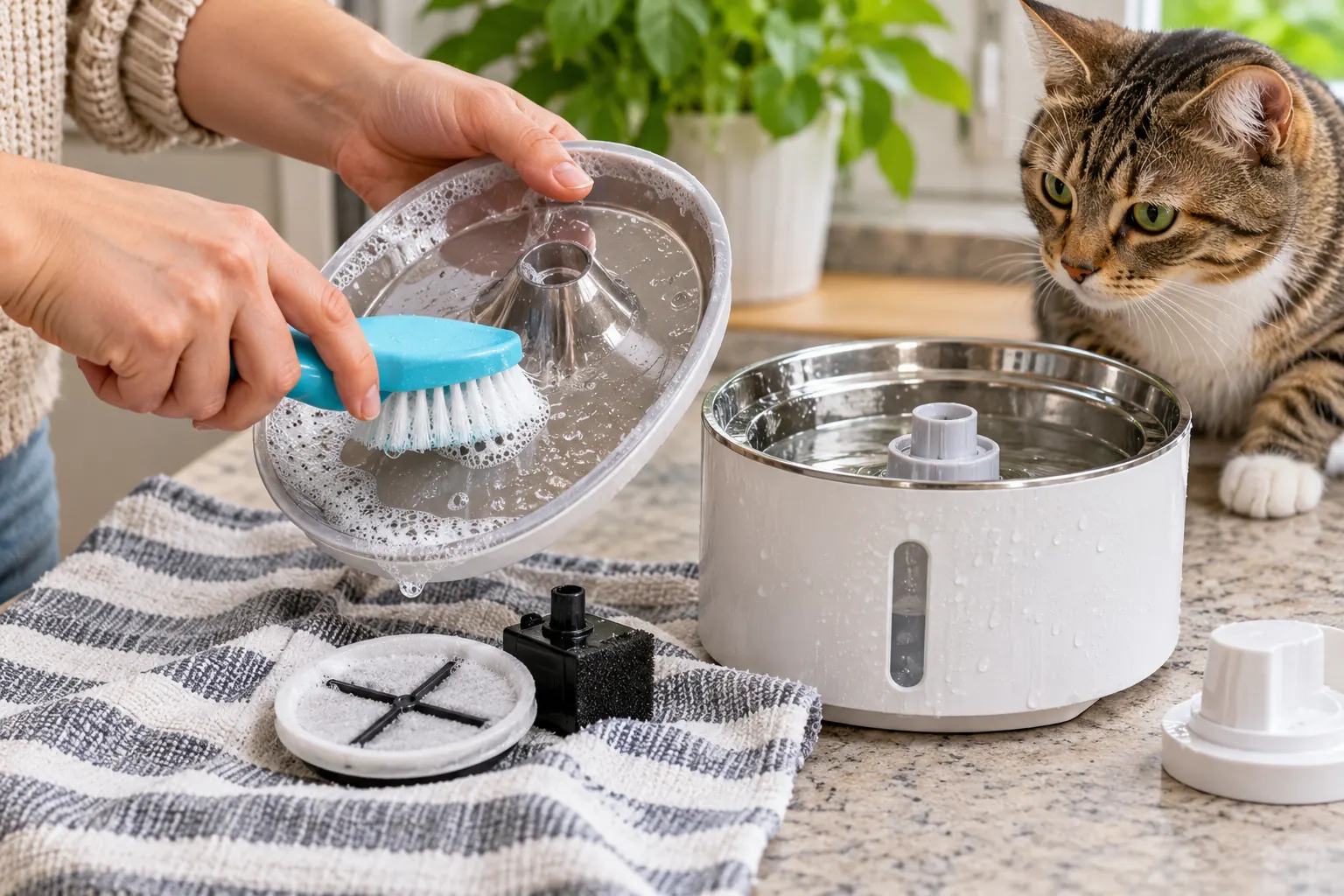
1. Unplug and disassemble. Disconnect the power supply before cleaning. Remove the lid, bowl, reservoir, spout, and any other parts the manufacturer says can be washed. Never immerse a power adapter or non-waterproof electrical component.
2. Remove the filter. Follow the manual to determine whether a filter should be rinsed or replaced. A disposable carbon filter is not a substitute for cleaning the fountain itself.
3. Wash with mild dish soap. Use warm water, a soft sponge, and a small brush for corners and narrow channels. Avoid abrasive pads that can scratch plastic and make buildup harder to remove.
4. Clean the pump safely. If your model allows it, remove the pump cover and impeller for gentle cleaning. A small soft brush can help remove trapped fur and mineral residue. Never force parts that are not designed to come apart.
5. Rinse thoroughly and reassemble. Remove every trace of detergent, let components dry if the instructions recommend it, refill, and verify normal water flow before offering it to your cat.
If your fountain is labeled dishwasher-safe, check exactly which parts qualify. The pump and electrical pieces generally require separate handling. Always prioritize your model’s instructions.
How Often Should You Change the Filter?
Filter replacement depends on the product, filter type, water quality, and number of pets using the fountain. Some manufacturers recommend changes every few weeks, but there is no single replacement interval that fits every device.
Read the packaging or owner’s manual and set a reminder. Replace a filter sooner if the instructions call for it or if it becomes damaged, discolored, or visibly clogged. Do not assume that replacing the filter removes the need to scrub the bowl and pump.
Knowing how often to clean a cat water fountain and how often to change its filter are related but separate tasks. Washing removes surface buildup; filtration is designed to handle particular particles or tastes according to the product.
What Changes the Cleaning Frequency?
Number of cats: More pets can introduce more fur and saliva into the same water source. Check shared fountains more often and consider extra drinking stations to reduce crowding.
Fountain material: Stainless steel and ceramic surfaces are often easier to inspect and clean than heavily scratched plastic, but every material needs regular washing.
Water hardness: Mineral deposits can form around spouts and pump parts. Follow the manufacturer’s approved descaling method; do not improvise strong cleaning chemicals.
Location and season: Dusty areas, nearby food, and warmer conditions may make the fountain dirty faster. Increase cleaning frequency whenever you notice buildup.
For a household with several pets, how often to clean a cat water fountain may mean washing it more than once a week. Let actual conditions guide you.
Signs Your Cat’s Fountain Needs Cleaning Now
Do not wait for the calendar if the water smells strange, becomes cloudy, develops a film, or contains visible debris. A slippery surface, gurgling or reduced flow, and an unusually noisy pump can also indicate that maintenance is overdue.
If your cat suddenly avoids the fountain, offer a clean bowl of fresh water immediately while you inspect the device. Avoid assuming that a fountain problem is the only explanation for reduced drinking.
Changes in appetite, urination, energy, or thirst deserve attention. Our guide on what to do when a cat is not eating discusses another important change to monitor.
How to Encourage Your Cat to Drink More Water
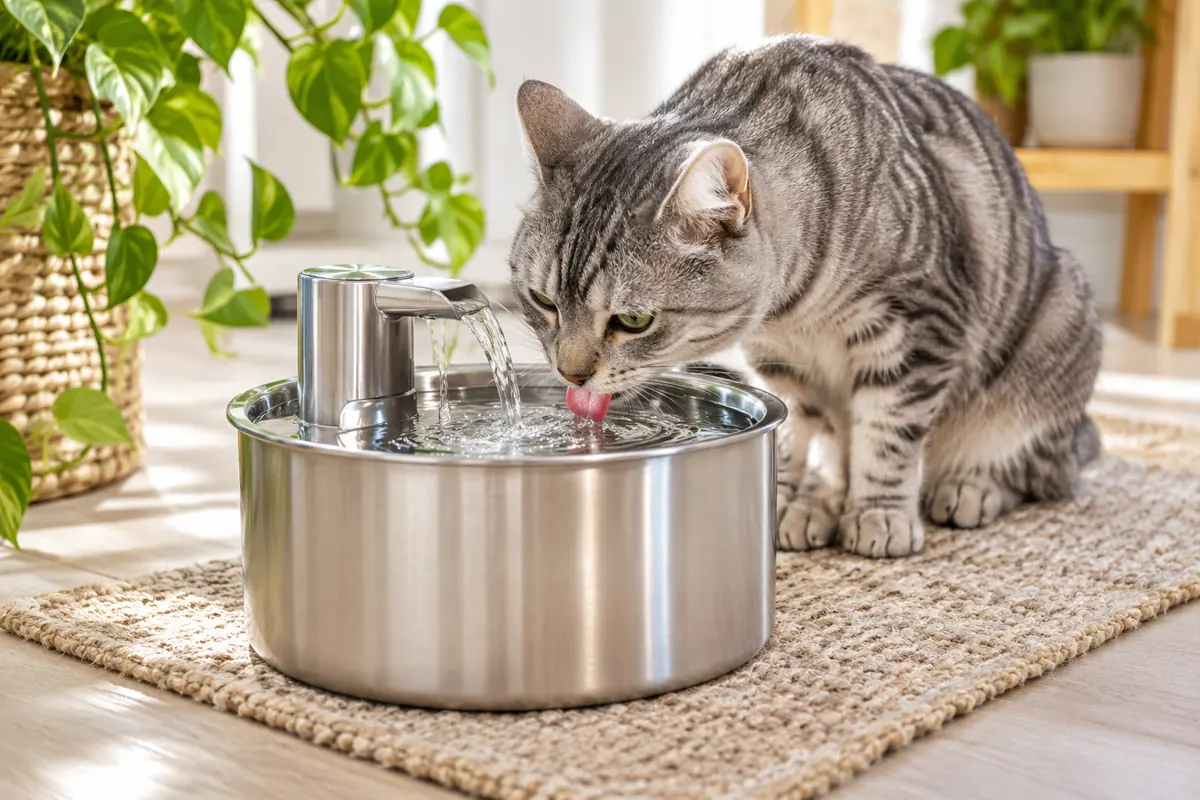
Provide fresh water in more than one location, and give your cat a choice between a fountain and a traditional bowl. Some cats enjoy running water, while others prefer a still, wide bowl that does not touch their whiskers.
Try a quiet location and introduce the fountain gradually. If your cat is new to your household, our new cat owner checklist can help you set up comfortable food and water stations.
Adding wet food may increase dietary moisture for some cats, but dietary changes should fit the animal’s health needs. For general cat-care guidance, see the ASPCA’s cat care resources.
Cleanliness is only one part of the picture: how often to clean a cat water fountain matters because a comfortable, reliable drinking station should be easy for your cat to use every day.
Frequently Asked Questions
Can I just add fresh water without washing the fountain? No. Topping up does not remove film or debris from the bowl, tubing, and pump. Refresh water daily and wash the fountain on a regular schedule.
Can I use vinegar to clean a cat fountain? Only if the manufacturer permits it. Some parts and materials may require specific care. Rinse thoroughly and never mix vinegar with bleach or other cleaners.
Is a cat water fountain safe to leave running overnight? Follow the manufacturer’s electrical and operating guidance, maintain the proper water level, and keep cords secure. Stop using a damaged or malfunctioning device.
How often to clean a cat water fountain if I have two cats? Check it daily and consider more frequent full washes than the usual weekly starting point if fur, saliva, or debris builds up quickly.
Final Thoughts
If you’re deciding how often to clean a cat water fountain, begin with fresh water every day and a thorough wash roughly once a week, then adjust for your cats, your water, and your specific fountain. Follow the manufacturer’s instructions for the pump and filter.
A little regular maintenance keeps the fountain pleasant to use and helps you notice problems early. Most importantly, make sure your cat always has access to clean drinking water, even while the fountain is being washed.