How to Keep Cats Off Kitchen Counters Without Punishment
A cat on the counter is usually looking for height, food, warmth, water, or attention. If you want to know how to keep cats off kitchen counters, replace the rewards the counter provides rather than frightening your pet. A predictable plan protects food preparation areas while respecting normal feline behavior.
Why Cats Jump on Counters
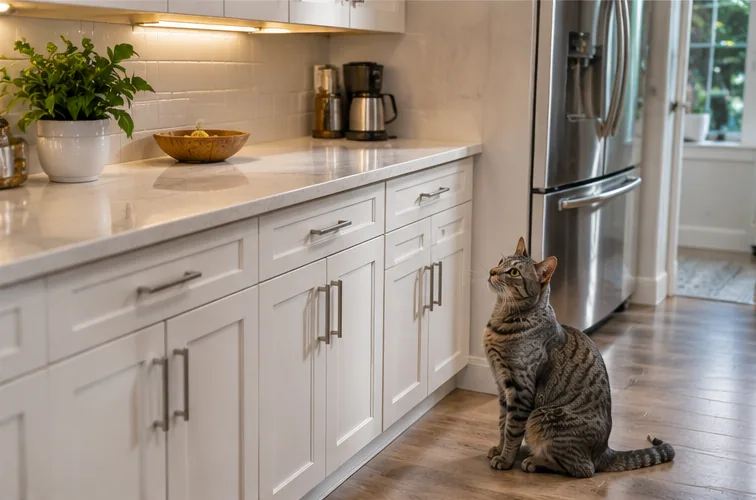
Cats naturally investigate elevated places. A counter offers a view, interesting smells, and access to people. Some cats have also learned that jumping up immediately attracts attention. Watch what your cat does once there: sniffing crumbs suggests food motivation, while watching from the edge suggests a desire for height. Understanding the reward helps you choose a practical alternative instead of repeatedly saying no.
1. Remove Tempting Food
Wipe crumbs and spills promptly. Store food in closed containers, put dishes away, and never leave raw meat or bones unattended. Keep medicines, chocolate, onions, knives, and hot cookware out of reach. A counter that occasionally provides an exciting snack reinforces repeat visits. Avoid offering treats to lure your cat down, because this can teach the sequence of jumping up first and getting rewarded afterward.
If you’re learning how to keep cats off kitchen counters, start by removing every edible reward. Even an occasional crumb or unattended dish can make the surface worth revisiting.
2. Provide a Better High Place
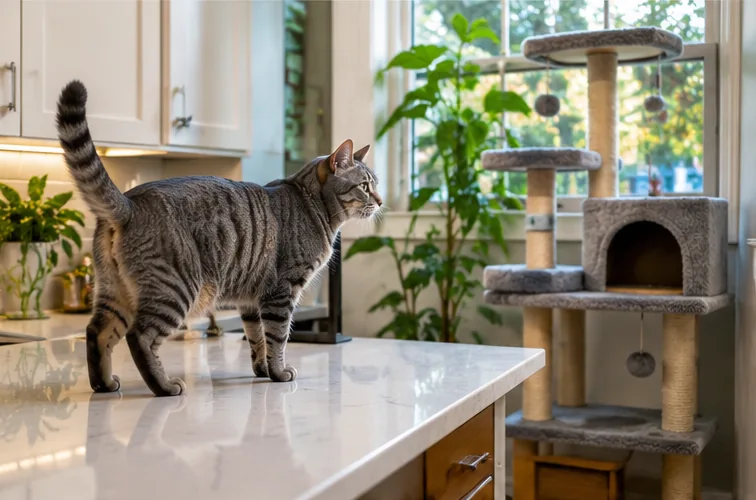
Position a stable cat tree or approved shelf near the family activity but away from burners and preparation surfaces. Make it comfortable and easy to access. Reward your cat for using it voluntarily. A perch near a window may be especially attractive. If the cat ignores the perch, try moving it closer to where people spend time. A good alternative meets the same need as the counter.
A useful answer to how to keep cats off kitchen counters is to offer a perch that gives your cat the same view without access to food or hot cookware. Choose a stable, easy-to-reach cat tree and reinforce its use.
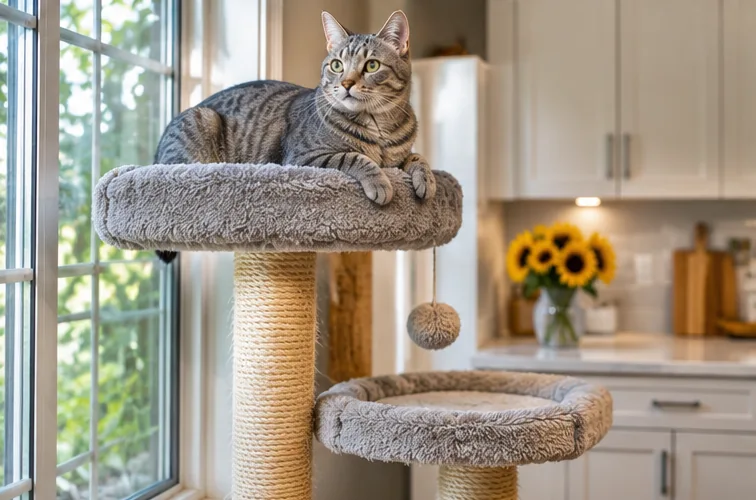
3. Train a ‘Go to Your Spot’ Cue
Toss a small treat onto the approved perch and reward when your cat steps onto it. Repeat in short sessions, then add a consistent cue such as ‘spot.’ Gradually reward longer periods of calm sitting. Practice when the kitchen is quiet before introducing meal preparation. If your cat jumps up, calmly redirect attention to the approved place. Never grab or chase the cat to force compliance.
When practicing how to keep cats off kitchen counters, reward your cat for choosing the designated spot before they attempt to jump up. This teaches a clear alternative instead of relying on punishment.
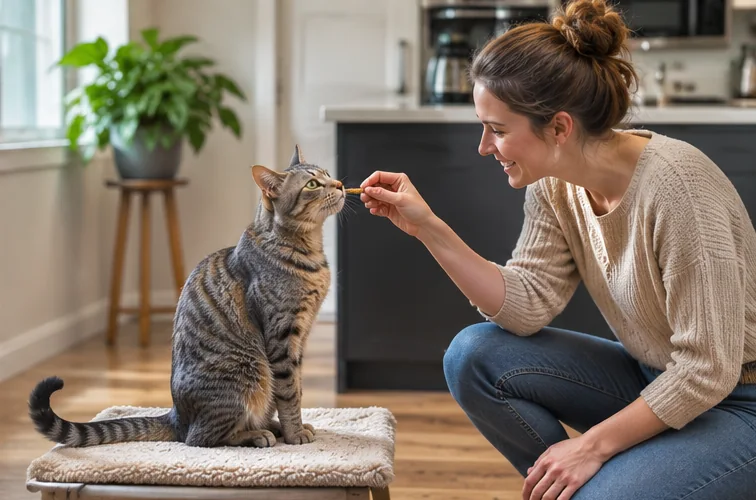
4. Keep Mealtimes Predictable
Provide a balanced diet on a consistent schedule. Food puzzles away from the kitchen can make meals more interesting. Avoid feeding scraps from the counter or dining table. When your cat waits calmly on the floor or approved perch, reinforce that choice. Sudden extreme hunger, increased thirst, or weight loss may indicate a medical problem, so consult a veterinarian instead of assuming the behavior is simply mischievous.
5. Manage Access While Cooking
Hot stoves, boiling water, and sharp utensils create immediate hazards. During cooking, close the kitchen door if possible or provide a safe room with water, a bed, and toys. Training should not be your only safety measure around heat. Reintroduce supervised kitchen time when the environment is calm. Management prevents your cat from rehearsing the unwanted habit while the new routine develops.
Kitchen safety is part of how to keep cats off kitchen counters: during meal preparation, use a closed door or another safe space when supervision is not possible. Never place a cat perch near a hot stove.
6. Avoid Spray Bottles and Startling Devices
Spraying water, shouting, or using painful deterrents may create fear without teaching a better choice. Essential oils and irritating sprays can also be hazardous to cats. A frightened cat may simply avoid the counter when you are present and return later. Reward-based training builds a behavior that works without surveillance. For high-energy cats, see our guide to calming a hyper cat.
7. Make the Rule Consistent
Everyone in the household should avoid feeding, playing, or giving attention on the counter. Use the same cue and approved perch. Short, frequent training sessions work better than occasional long lessons. Reward the behavior you want while your cat is already doing it. If one person welcomes the cat onto the counter and another discourages it, the mixed signals make learning harder.
Consistency matters when working out how to keep cats off kitchen counters. Agree on one household rule and reward the same alternative behavior every day.
8. Troubleshoot Persistent Jumping
Ask whether the perch is tall enough, comfortable, and close enough to the action. Check for crumbs, dripping taps, or other rewards still available on the counter. Offer daily interactive play and safe vertical territory elsewhere in the home. Some cats need several weeks to change a well-established habit. Keep sessions positive and reduce difficulty when your cat seems frustrated.
If progress stalls, revisit how to keep cats off kitchen counters by checking whether your cat has enough play, comfortable climbing options, and a reliable feeding routine. Adjust one factor at a time.
Frequently Asked Questions
Does foil work? It may startle some cats but does not teach a replacement behavior. How long will training take? Improvement varies with the cat and consistency. Can my cat watch me cook? Yes, from a safe perch away from food preparation and heat.
Final Thoughts
The key to how to keep cats off kitchen counters is making the counter unrewarding while making an approved perch rewarding. Pair consistent training with safe kitchen management. Read our new cat owner checklist and the ASPCA’s behavior resources for additional ideas.