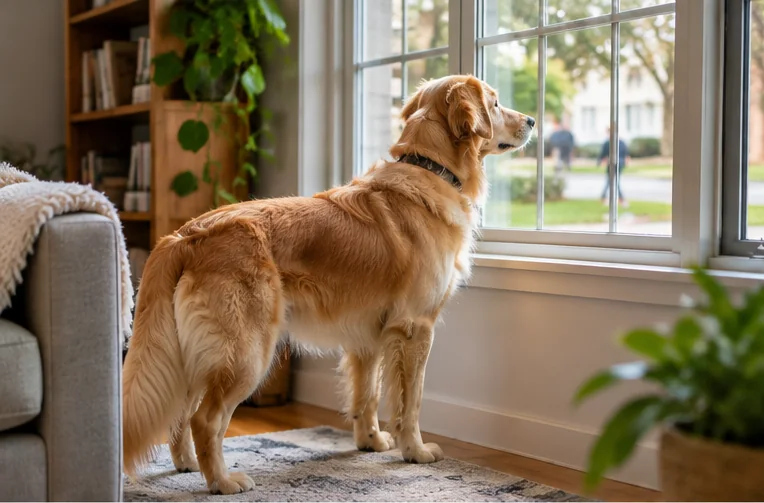
How to Stop Dog Barking at the Window: 7 Gentle Training Tips
Learning how to stop dog barking at the window starts with understanding what triggers your dog. A dog that barks at every passerby can make home feel noisy and tense. Whether the cause is fear, excitement, alerting, or frustration, a gentle plan reduces repeated triggers and teaches a calmer response.
How to Stop Dog Barking at the Window: Understand the Triggers
Dogs notice people, bicycles, other animals, and unfamiliar sounds outside. Barking can become a habit when passersby continue walking away, making the dog feel the alarm worked. Some dogs are curious, while others feel threatened. Look at the whole body: a loose wagging dog may be excited, while stiffness, lunging, and frantic pacing suggest distress. Different motivations call for different training speeds.
1. Block the View Temporarily
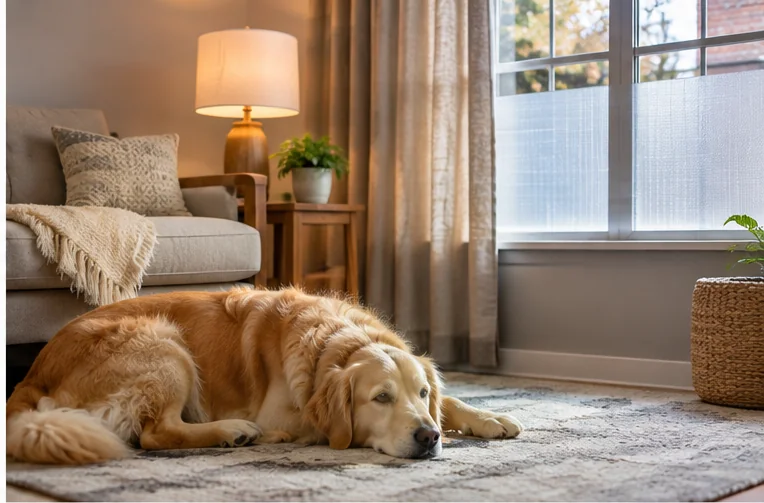
Use curtains, removable frosted film, or a different resting area to reduce exposure. You do not need to block the view forever; the immediate goal is to stop your dog practicing the same intense response repeatedly. Choose a comfortable space with water and a bed. If sounds still trigger barking, try low background noise. Managing the environment makes later training easier.
If you are learning how to stop dog barking at the window, begin by limiting the sights that repeatedly set off your dog. Temporary privacy film or a curtain can make the environment calmer while you train.
2. Reward Calm Noticing
Start far enough from the window that your dog can notice a passerby without barking. Mark the calm moment with a word such as ‘yes’ and give a small treat. Repeat in brief sessions. If barking starts, increase distance or close the curtain. Do not demand obedience when your dog is already overwhelmed. This approach gradually changes the association with outdoor movement.
An important step in how to stop dog barking at the window is rewarding the quiet moment before a full reaction begins. Start with easy situations and give your dog enough distance to feel comfortable.

3. Teach a Go-to-Mat Cue
Place a comfortable mat away from the window. Reward your dog for stepping onto it, then for lying down calmly. Add a cue once the behavior is familiar. Practice without distractions first. Later, cue the mat before a mild trigger appears and reward settling. Never use the mat as punishment or force your dog to remain there when frightened.
For owners wondering how to stop dog barking at the window without punishment, a comfortable mat provides a clear alternative. Build the mat behavior away from distractions before practicing near the window.

4. Keep Training Below Threshold
A dog that cannot take a treat, stares rigidly, or barks continuously is too close to the trigger. Make the situation easier by increasing distance or reducing the view. Begin with short, predictable sessions when the street is quiet. Gradually add difficulty only after repeated calm successes. Progress may vary from day to day, especially during deliveries or unusual outdoor activity.
When practicing how to stop dog barking at the window, your dog should still be able to notice a trigger and accept a treat. If they cannot disengage, increase the distance and lower the difficulty.
5. Offer Daily Enrichment
Appropriate walks, sniffing, food puzzles, and short training games give dogs other activities besides watching the street. Adjust exercise to age, health, and energy level. Exhaustion alone is not a treatment for anxiety. A predictable routine supports calm behavior. For dogs that react strongly to people or animals, see our reactive dog training guide.
6. Avoid Yelling and Harsh Collars
Shouting may sound like joining the alarm. Painful bark-control devices can worsen fear or create negative associations with passersby. Instead, quietly manage the view and reward an alternative behavior. Never punish a dog for showing fear. If your dog growls, lunges, or redirects aggression, seek qualified professional support rather than increasing pressure.
How to stop dog barking at the window should never depend on frightening the dog into silence. Calm management and reward-based training help address the underlying response instead.
7. Follow a Simple Weekly Routine
For several days, cover the busiest window when you cannot supervise. Practice two or three short calm-noticing sessions daily. Reward quiet observation and mat settling, then finish before frustration rises. Track how often barking occurs and how quickly your dog recovers. Once episodes become shorter, allow slightly more visual access. If progress stalls, return to an easier setup.
What should you do during an unexpected delivery? If the doorbell or sudden movement sends your dog racing toward the glass, calmly block the view and guide them toward a familiar resting area. Do not hold the dog at the window to force exposure. Wait until breathing and body posture relax before another training exercise. Keep visitors and delivery workers at a safe distance if your dog becomes intensely distressed. Over time, practicing easier situations can build confidence without overwhelming your pet.
Keep a short log as you work on how to stop dog barking at the window. Note the time, trigger, barking duration, and recovery so you can identify gradual improvement.
When to Seek Professional Help
Contact a veterinarian if barking starts suddenly or accompanies pain, hearing changes, or unusual anxiety. A qualified reward-based trainer or veterinary behaviorist can help when your dog panics, redirects aggression, or cannot relax. Prevent access to fragile glass and avoid leaving a distressed dog unsupervised at a window. Safety and welfare are more important than immediate silence.
Frequently Asked Questions
Will curtains fix the problem? They reduce practice, but training helps when the view returns. Should I ignore barking? Ignoring alone may not address the trigger. How long does improvement take? It varies; expect gradual progress rather than an overnight cure.
Final Thoughts
The most reliable approach to how to stop dog barking at the window combines visual management, rewards for calm behavior, and an alternative resting place. Follow humane training principles from the American Veterinary Society of Animal Behavior and explore our dog care guide.