Why Does My Cat Meow After Eating? 7 Possible Reasons
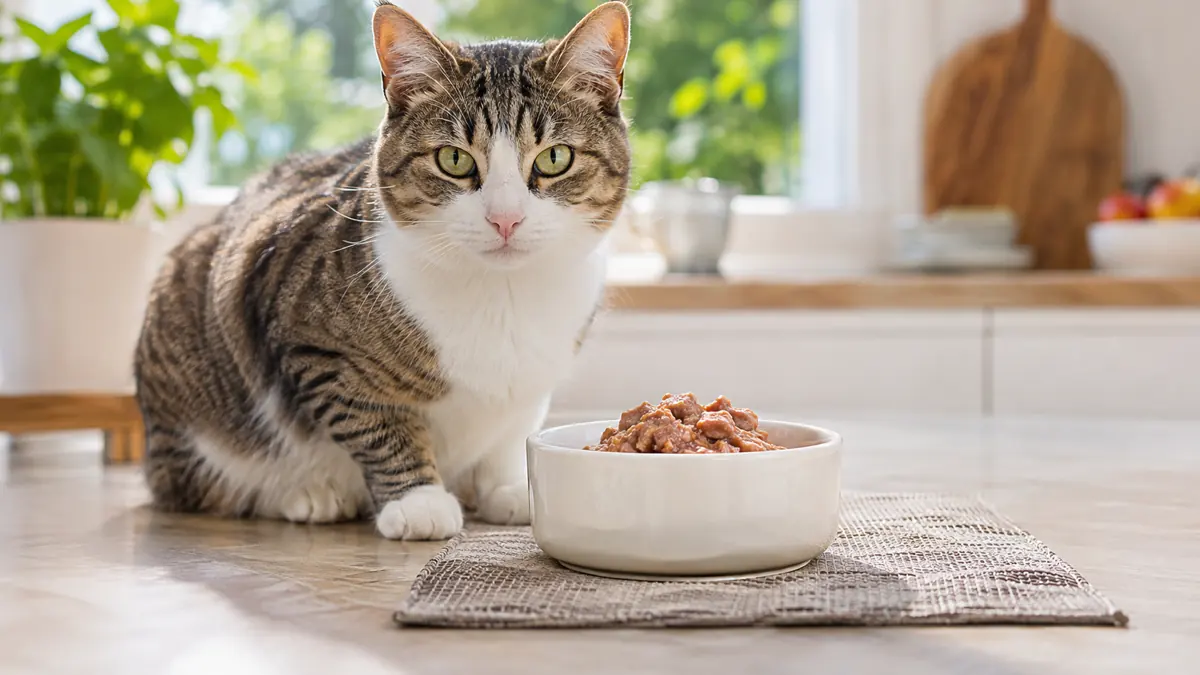
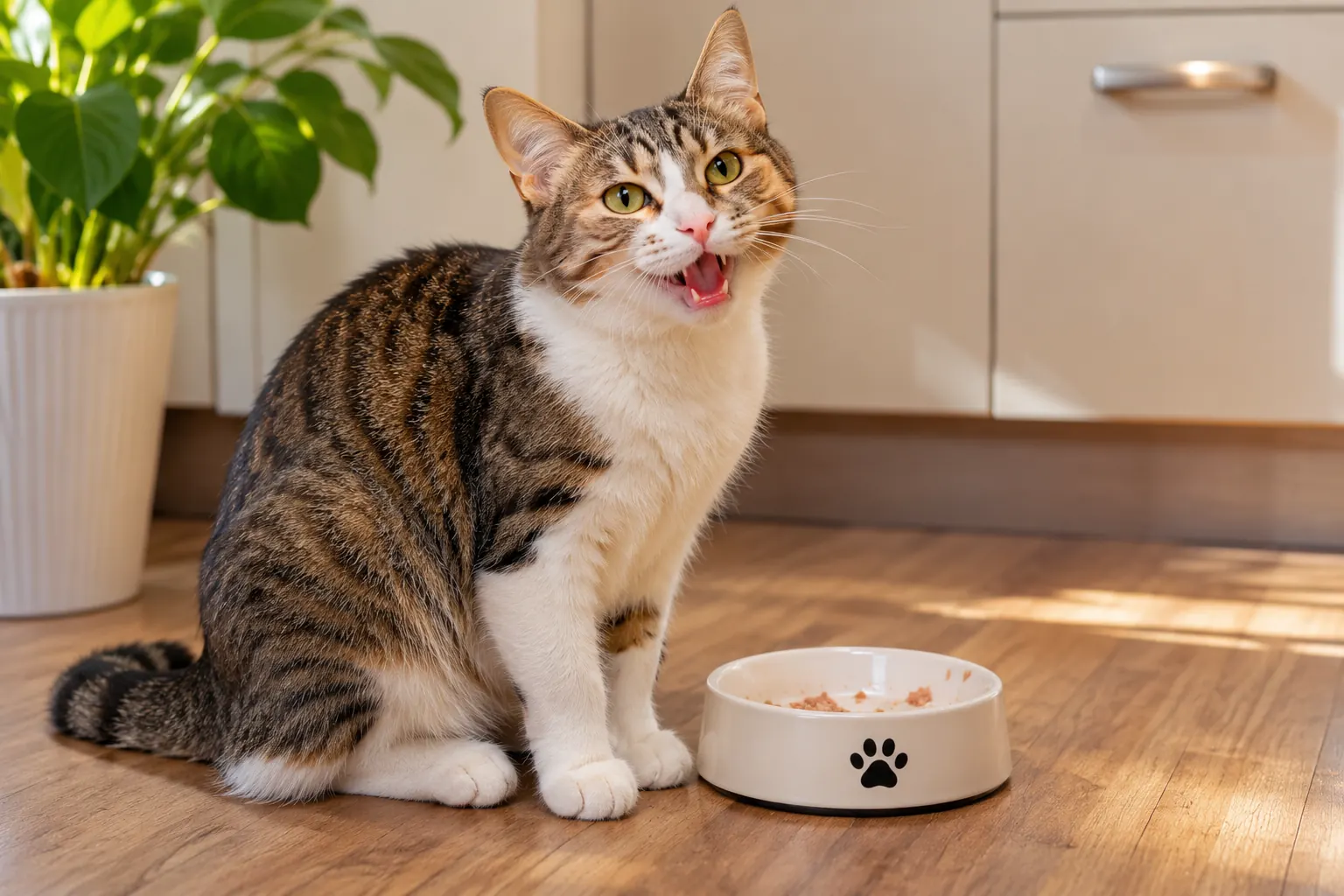
Why does my cat meow after eating? Maybe your cat finishes dinner, looks straight at you, and starts talking. A few post-meal meows can be perfectly ordinary, but the timing, tone, and your cat’s other behaviors matter.
Here are seven possible explanations, simple ways to respond, and signs that a veterinary check is the safer next step.
Why Does My Cat Meow After Eating? Start with Context
Before guessing what the sound means, notice when it happens. Is it a quick chirp after every meal, or a new, loud cry? Does your cat seem relaxed, continue playing, and use the litter box normally? Or does it pace, swallow repeatedly, hide, or seem uncomfortable?
There is no reliable way to translate every meow into one exact message. Comparing the behavior with your cat’s usual routine is more useful than assuming it always means hunger.
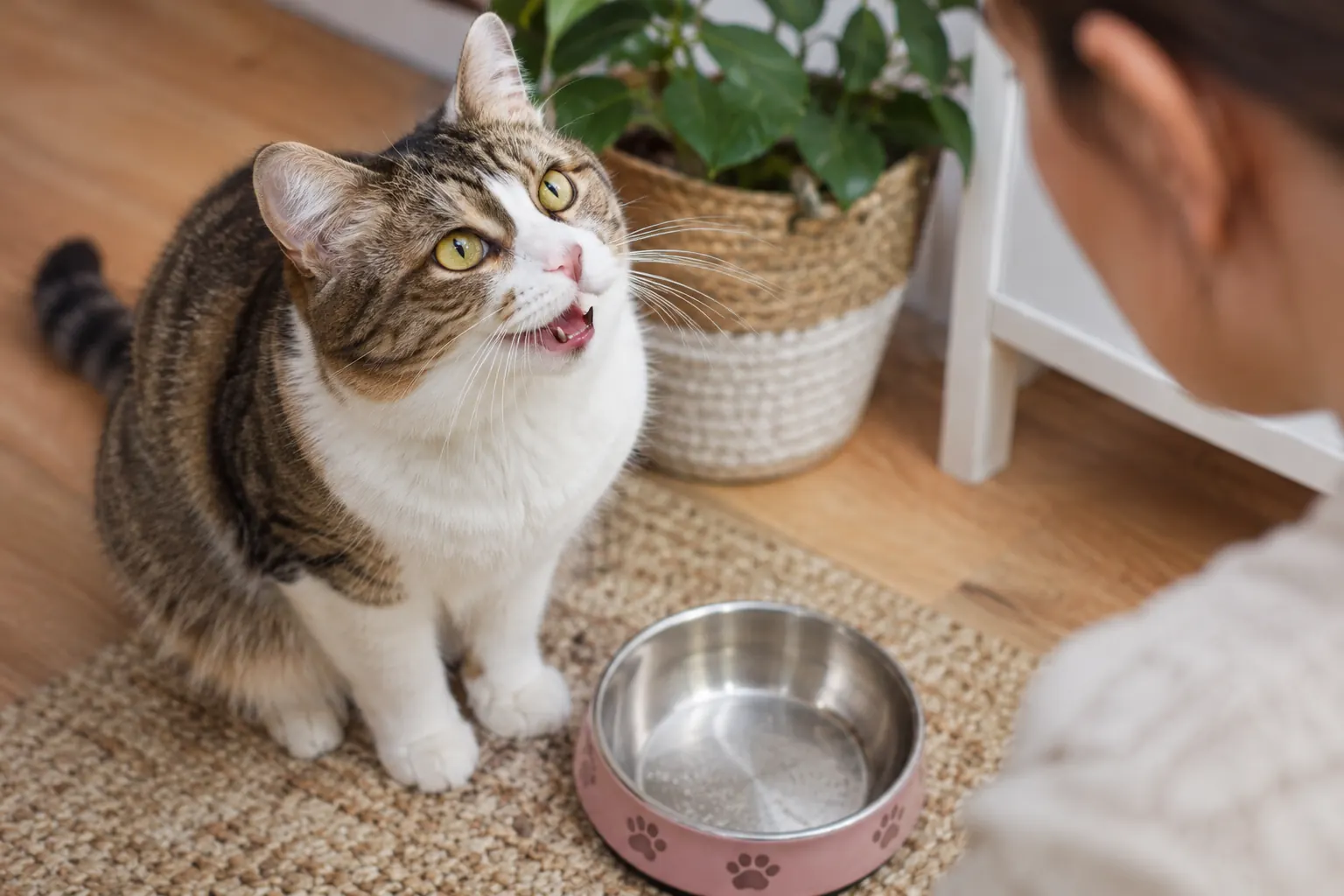
1. Your Cat Is Asking for Attention
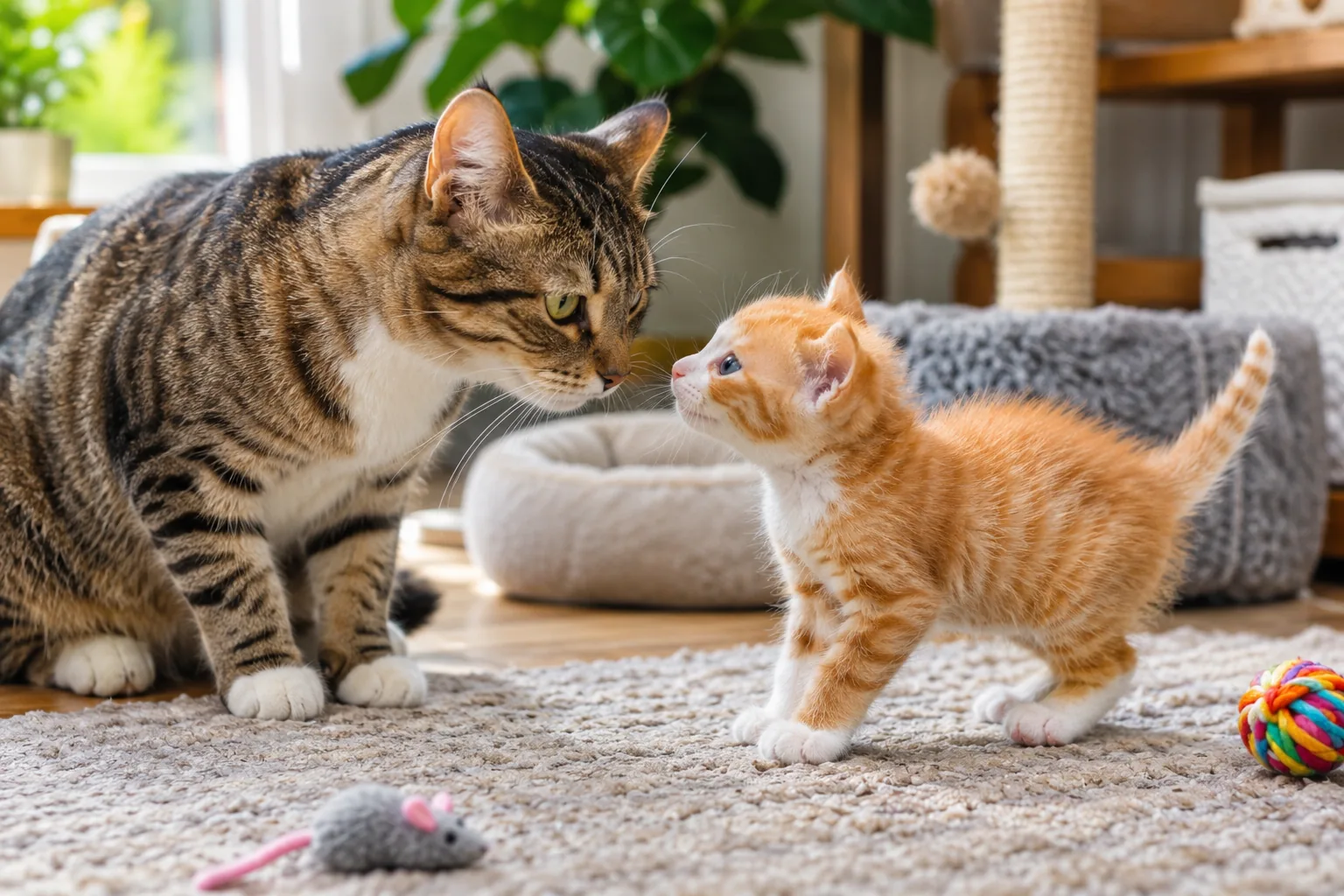
Some cats learn that meowing after dinner brings conversation, petting, or playtime. If your cat approaches with a relaxed tail, rubs against your legs, and settles after a little attention, this may be a social routine rather than a problem.
Offer a calm greeting or a short play session when appropriate. You do not need to respond with extra food every time.
2. Your Cat Wants More Food
A cat may still beg after eating because it likes the food, has learned that asking works, or receives portions that do not match its needs. But appetite varies with age, activity, body condition, and health.
Measure meals according to your veterinarian’s guidance and the food’s feeding instructions, then adjust based on body condition rather than the volume of meowing. Avoid repeatedly adding treats without considering total daily calories.
3. Mealtime Has Become a Learned Routine
If your cat meows and you immediately open another pouch, it may learn to repeat the behavior. This does not mean the cat is being manipulative; it is simply learning from predictable outcomes.
Try keeping mealtimes consistent. Reward calm behavior with attention or play instead of automatically serving a second helping. For cats that eat too fast, a puzzle feeder may make the meal more engaging.
4. Your Cat Is Excited or Socially Vocal
Some cats are naturally chatty. They vocalize before meals, after meals, and while moving from room to room. A brief post-dinner conversation with relaxed body language may be part of your cat’s personality.
Breed, individual temperament, and household routines can all affect how often a cat vocalizes. A new increase in vocalization is more important than whether a naturally talkative cat makes a few sounds.
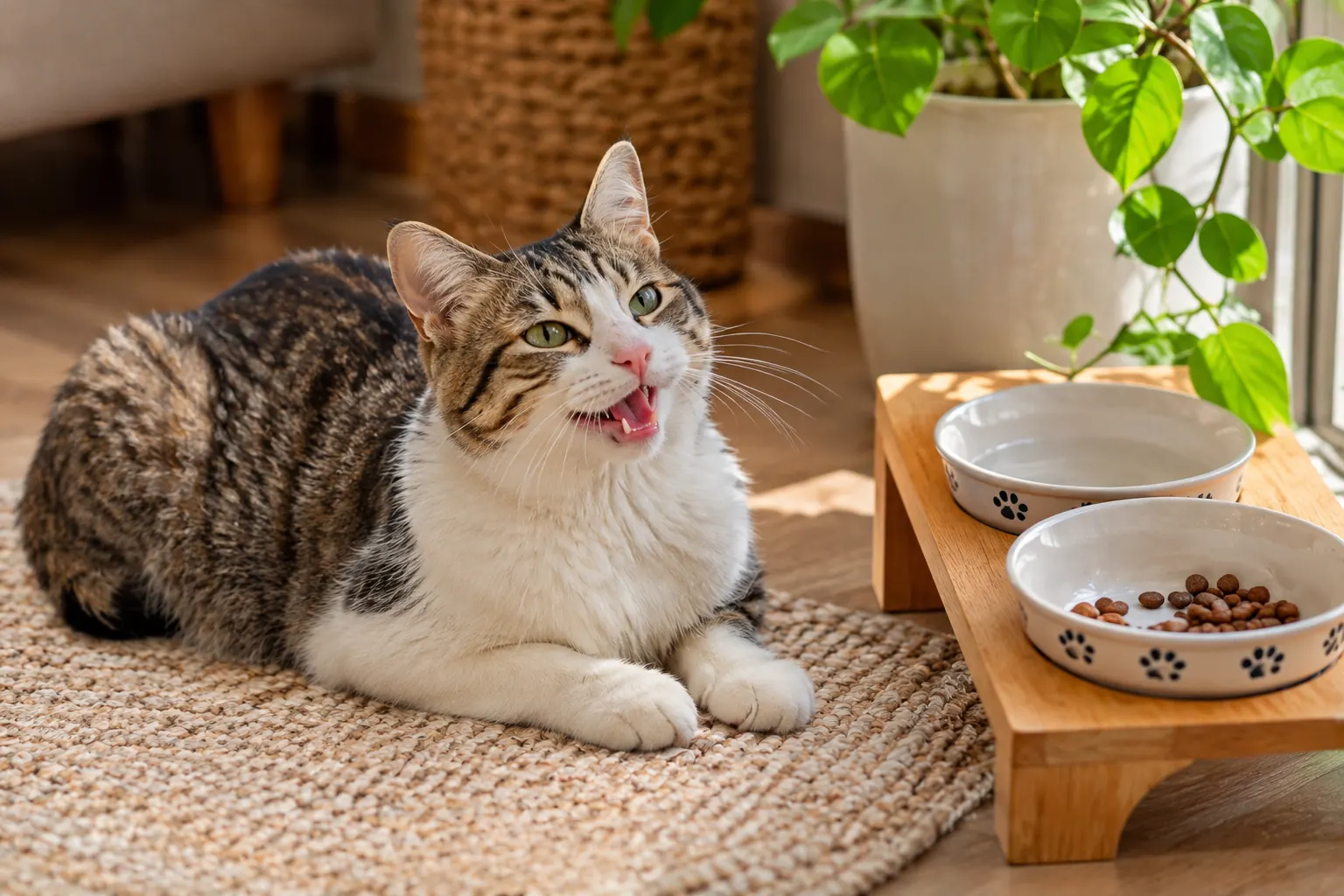
5. Eating Too Quickly May Cause Discomfort
A cat that gulps food may experience discomfort or regurgitate shortly afterward. Watch for repeated swallowing, lip licking, gagging, or food coming back up. Regurgitation and vomiting are not identical, and both can have several causes.
Discuss recurring episodes with your veterinarian. Smaller measured meals or an appropriate slow feeder may help some cats, but they do not replace medical assessment if symptoms persist.
6. Dental or Mouth Pain Could Be Involved
Dental disease, sore gums, and other oral problems can make chewing uncomfortable. A cat might vocalize around mealtime, drop kibble, chew on one side, paw at its mouth, or avoid crunchy food.
Do not try to inspect a painful mouth by force. Book a veterinary examination if you notice bad breath, drooling, bleeding, difficulty chewing, or a sudden change in food preference.
7. An Underlying Health Problem May Be Changing Appetite
Increased hunger and vocalization can sometimes accompany medical problems. Hyperthyroidism, for example, can cause increased appetite, weight loss, and behavioral changes in some older cats. Other illnesses may cause nausea, pain, or unusual restlessness.
If your cat is suddenly ravenous, losing weight, drinking or urinating more, or vocalizing much more than usual, arrange a veterinary appointment. These signs cannot be diagnosed from meowing alone.
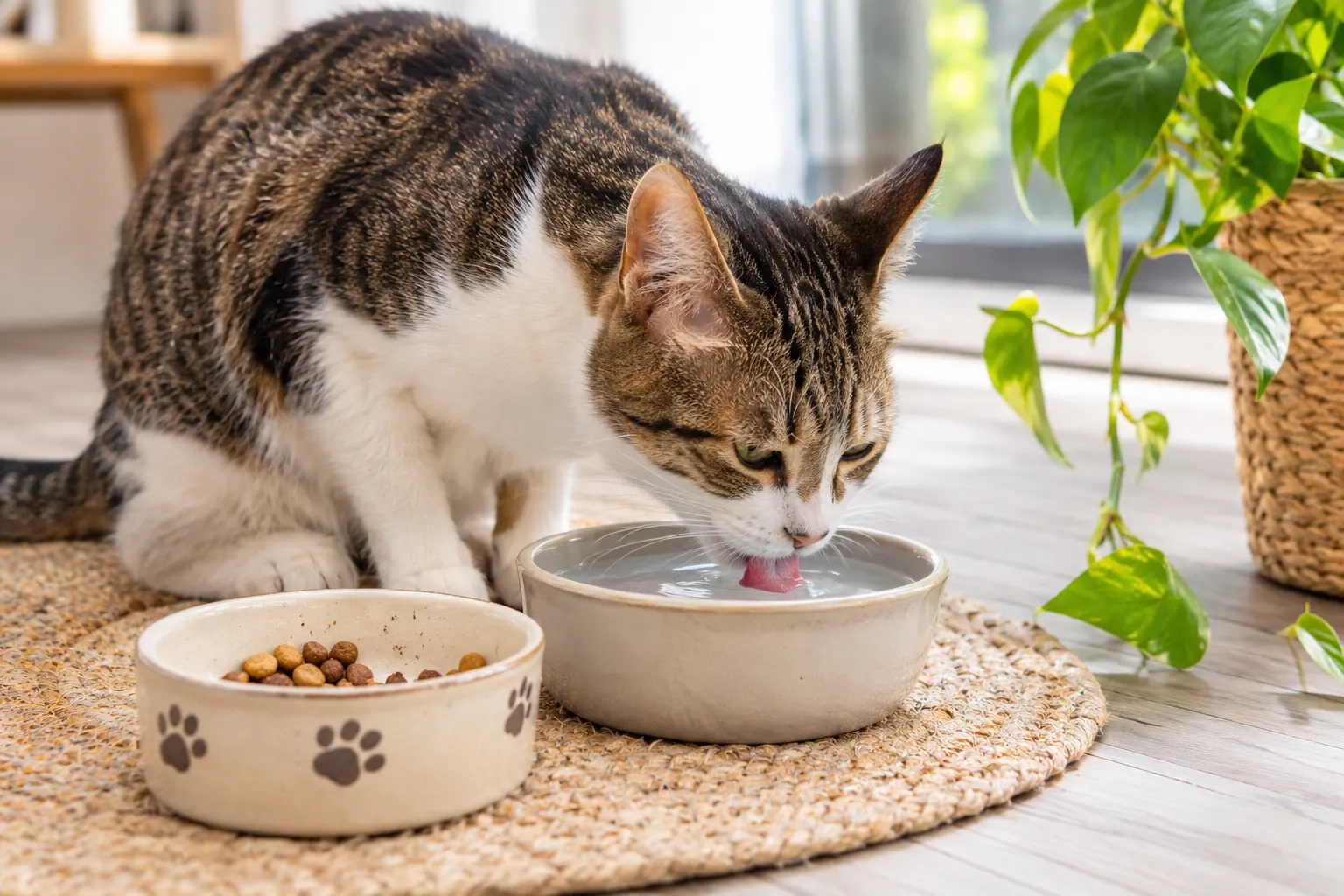
What to Do When Your Cat Meows After a Meal
- Observe the pattern. Note the time, food type, sound, and what your cat does next.
- Check the portion. Use a consistent feeding plan appropriate for your cat’s weight and health.
- Look for discomfort. Watch for drooling, vomiting, regurgitation, hiding, or changes in stool.
- Offer non-food attention. Try gentle play, enrichment, or a quiet resting spot.
- Record sudden changes. A short video can help your veterinarian assess unusual behavior.
- Ask your veterinarian. Get advice when the meowing is new, persistent, or accompanied by other symptoms.
These steps are more useful than assuming every answer to why does my cat meow after eating is “give more food.”
When to Call the Veterinarian
Schedule a veterinary visit for repeated vomiting, trouble chewing, unexplained weight loss, appetite changes, increased thirst, or a sudden rise in vocalization. Seek urgent care for severe pain, repeated unproductive retching, difficulty breathing, collapse, or inability to keep food down.
For related appetite concerns, see our article Cat Not Eating: What to Do. You can also explore general feline health information through VCA Animal Hospitals’ pet health library.
Frequently Asked Questions
Why does my cat meow after eating wet food?
It may be requesting attention or more food, or reacting to a routine. If the behavior is new or accompanied by discomfort, consult your veterinarian.
Why does my cat cry right after eating?
A distressed-sounding cry, especially with drooling, vomiting, or difficulty swallowing, deserves veterinary assessment.
Should I feed my cat again when it meows?
Not automatically. Check its daily feeding plan and body condition first; meowing is not a reliable measure of calorie needs.
Is meowing after meals normal in older cats?
Some older cats remain vocal, but new vocalization alongside weight or appetite changes should be discussed with a veterinarian.
Final Thoughts
So, why does my cat meow after eating? Often it is a familiar social habit, excitement, or a request for attention. But sudden, intense, or uncomfortable-sounding vocalization can point to a problem. Watch the whole pattern, keep meals consistent, and seek veterinary advice when your cat’s behavior or health changes.