Cockatiel Body Language: 12 Signs and What They Mean
Cockatiel body language can tell you a lot about how your bird feels—but no single crest position, whistle, or wing movement tells the whole story. To understand your cockatiel, look at its posture, sounds, environment, and usual routine together.
This guide explains common signals, how to respond calmly, and which changes deserve an avian veterinarian’s attention.
Cockatiel Body Language: Read the Whole Bird
Start by learning what is normal for your particular cockatiel. Watch it during meals, play, rest, and quiet time. A bird that usually chirps and explores may be communicating something important if it suddenly sits motionless and avoids food. By contrast, a calm, quiet bird may simply be resting.
Context matters. An upright crest can reflect curiosity or alarm depending on the rest of the body. Treat the signs below as clues rather than a fixed translation dictionary.
1. Crest Raised High: Alert or Interested
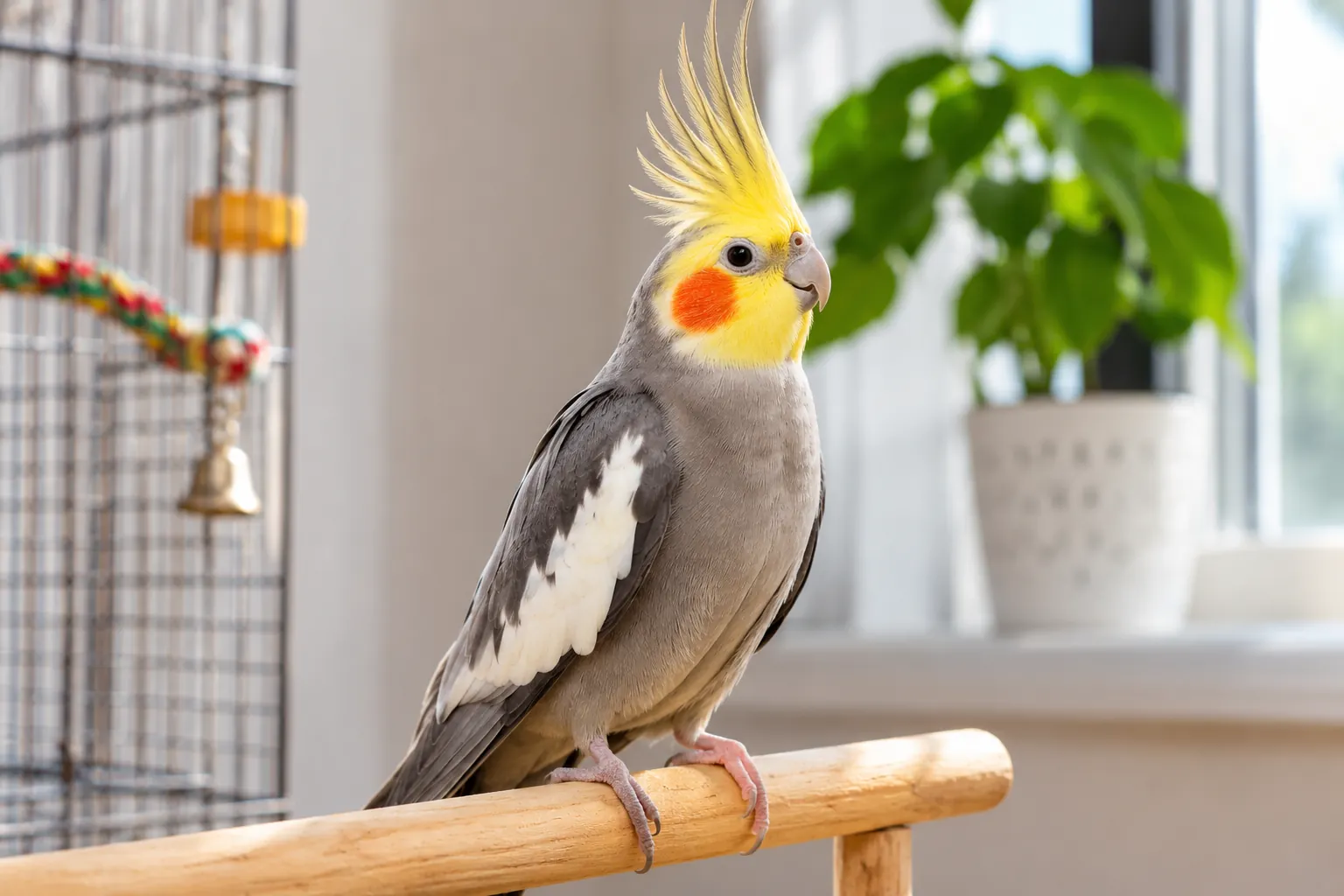
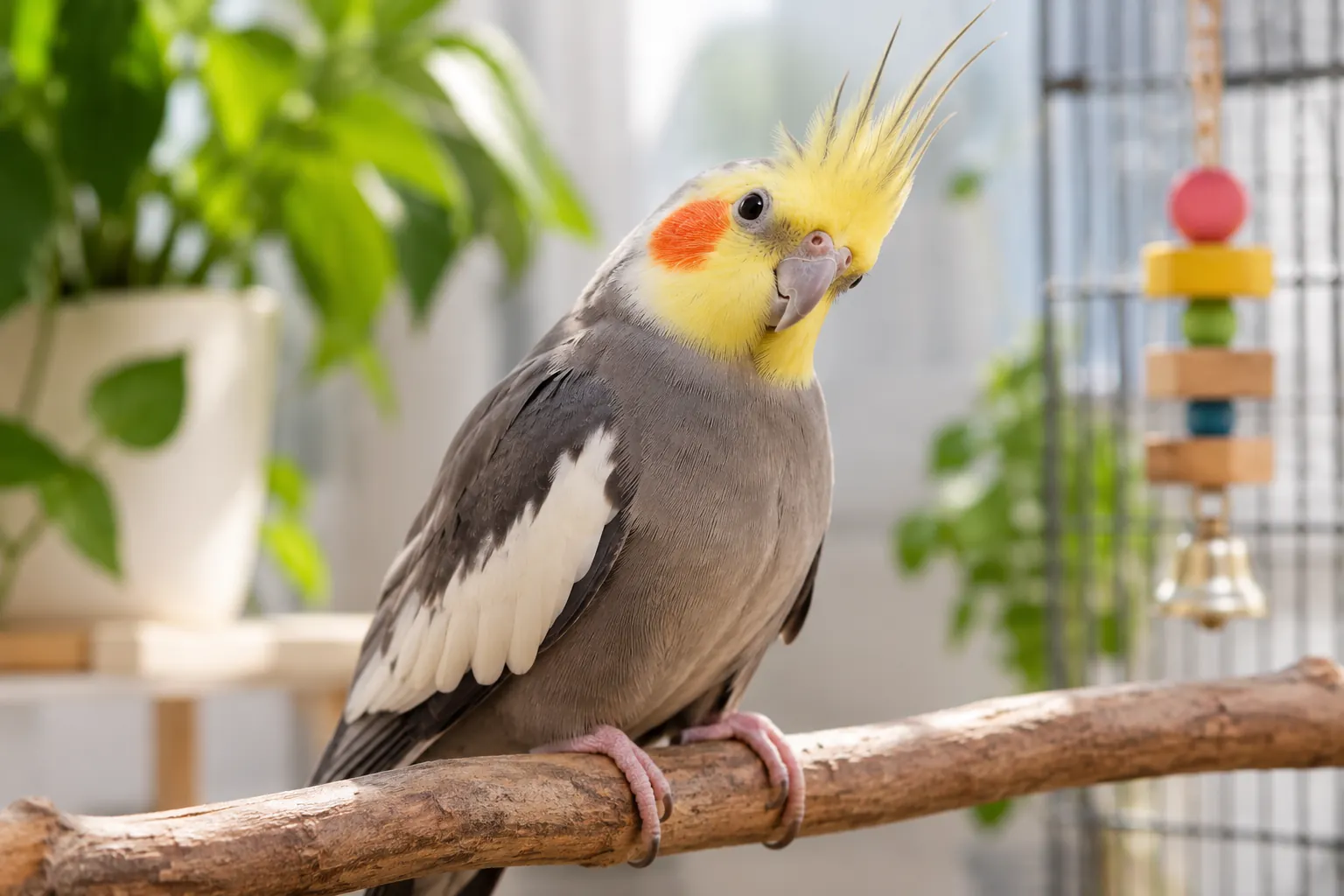
The cockatiel’s movable crest is one of its most visible signals. A tall crest often accompanies heightened attention. Your bird may have spotted a new toy, heard a noise, or noticed someone entering the room.
Look for relaxed feet, smooth feathers, and curious movements. If the bird is leaning away, freezing, or trying to flee, the same raised crest may indicate fear instead of excitement.
2. Crest Flattened Back: Check for Tension
A tightly flattened crest combined with a stiff body, open beak, or lunging can mean a cockatiel wants space. Stop reaching toward the bird and let it move away. A crest that rests slightly back during relaxed grooming or sleep is different from a rigid, defensive posture.
Learning these combinations makes cockatiel body language much easier to interpret than watching the crest alone.
3. Gentle Beak Grinding: Often a Resting Signal
Many cockatiels make a soft grinding sound with their beaks when settling down for a nap or bedtime. A comfortable perch, partially closed eyes, and relaxed posture support the interpretation that the bird is winding down.
Grinding is not the same as breathing noises. Clicking, wheezing, or open-mouth breathing needs veterinary attention, especially if the bird seems weak.
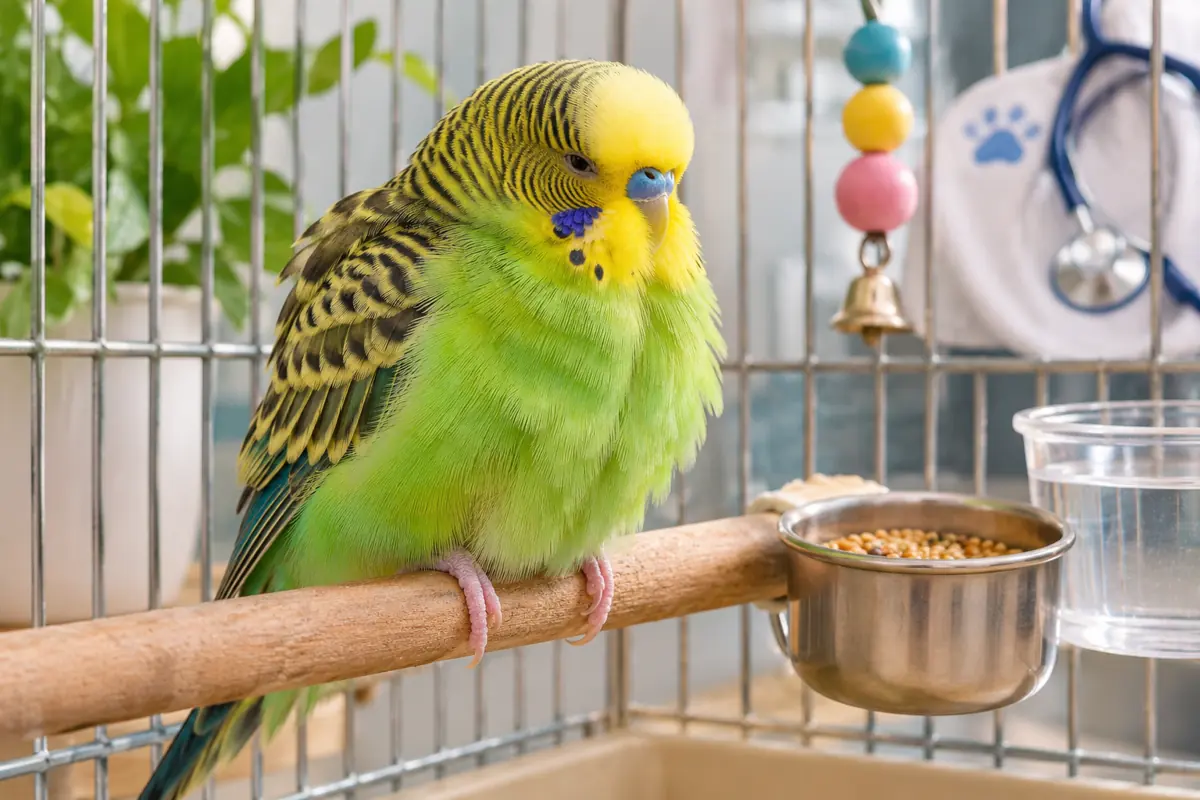
4. Fluffed Feathers: Comfortable or Unwell?
A brief fluff followed by normal preening, activity, or sleep can be ordinary. Birds also fluff to adjust their feathers and conserve warmth. But a cockatiel that stays puffed up for long periods while inactive, sleepy, or eating less may be sick.
Do not assume persistent fluffing is a sign of affection. Monitor appetite and droppings and contact an avian veterinarian promptly if the behavior is unusual.
5. Hissing, Lunging, or an Open Beak: Give Space
A hiss or defensive lunge is a clear request to back off. Your cockatiel may be guarding a favorite spot, feeling cornered, or frightened by a hand. Avoid punishing the bird or forcing contact.
Step back, lower the intensity of the interaction, and let the bird choose whether to approach. Consistent, gentle handling builds trust more effectively than ignoring warning signals.
6. Whistling, Chirping, and Calling
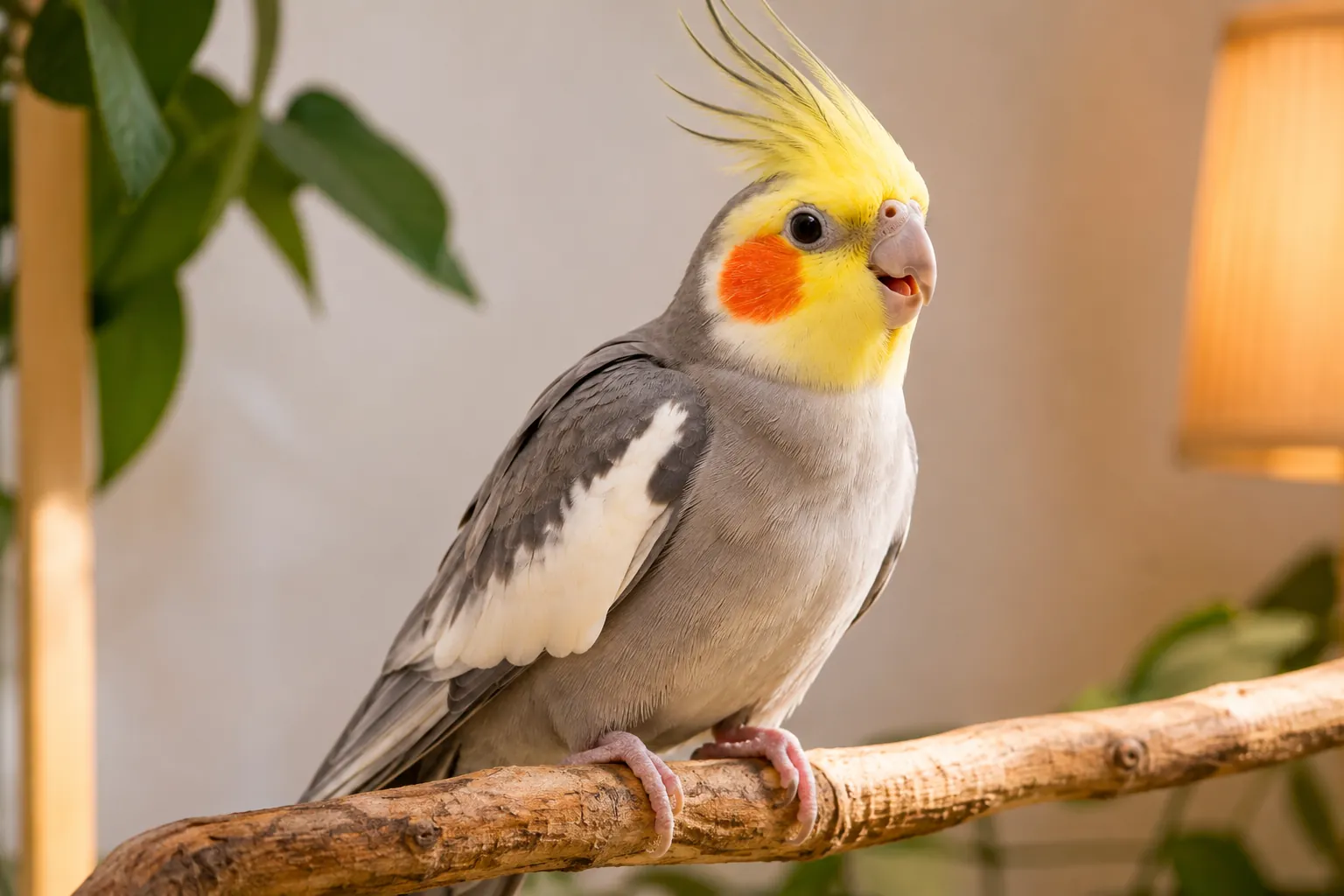
Cockatiels vocalize to communicate, seek contact, and react to their surroundings. Familiar whistles and conversational chirps can occur during relaxed social moments. Loud contact calls may happen when a favored person leaves the room.
Sudden, repeated screaming can also reflect boredom, stress, fear, or a change in routine. Review sleep, enrichment, and social opportunities before assuming your bird is simply being difficult.
7. Head Lowered Toward You: An Invitation?
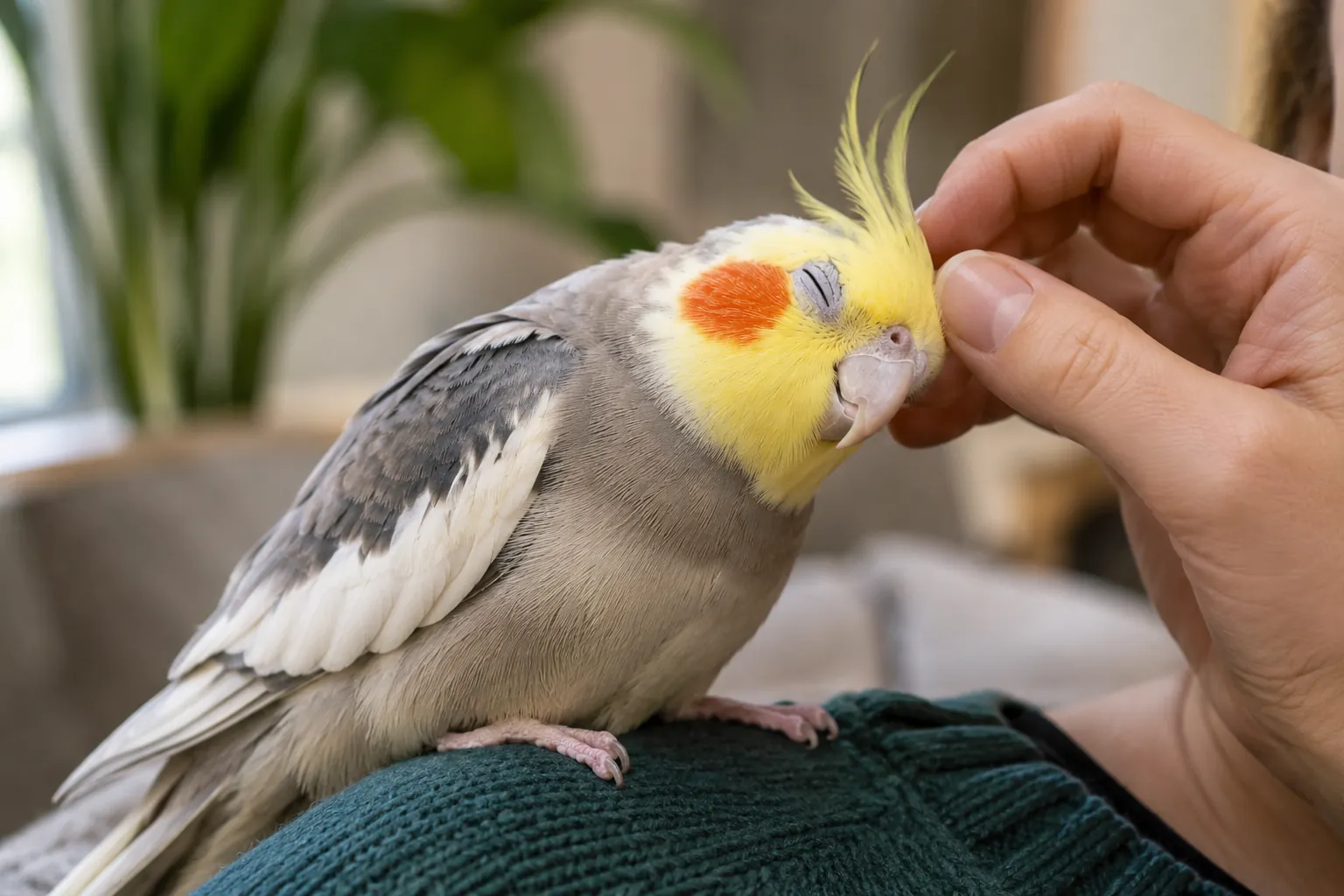
Some cockatiels lower their head and present the crown or neck when they want gentle scratches. The bird should approach willingly and remain relaxed. If it pulls away, hisses, or stiffens, stop.
Keep petting to the head and neck. Stroking the back, wings, or underside can encourage hormonal behavior in some pet birds.
8. Wing Stretching and One-Legged Resting
A relaxed cockatiel may stretch one wing and the corresponding leg, then return to normal posture. Resting on one foot can also be typical, especially during quiet periods. These are reassuring only when the bird is otherwise alert, balanced, and eating normally.
Repeated loss of balance, inability to perch, or a drooping wing after an injury is not ordinary cockatiel body language and should be assessed by a veterinarian.
9. Tail Movement: Watch the Breathing
A tail that moves gently with ordinary body movement is not necessarily a problem. However, pronounced tail bobbing synchronized with each breath—especially with open-mouth breathing, unusual sounds, or lethargy—can indicate respiratory distress.
Birds can deteriorate quickly. Seek urgent veterinary advice for breathing difficulty rather than waiting to see if it passes.
10. Preening and Feather Care
Normal preening helps keep feathers aligned and clean. A bird may preen while feeling secure, but preening alone cannot prove happiness. Watch for bald patches, skin injury, broken feathers, or compulsive feather damage.
If you see persistent feather picking, consult an avian veterinarian to investigate medical and environmental causes instead of assuming the behavior is purely emotional.
11. Pacing, Freezing, or Trying to Escape
A bird pacing a cage, repeatedly retreating from hands, or freezing when approached may be overwhelmed. Reduce noise, allow predictable routines, and offer a safe place to retreat. Introduce new objects gradually rather than placing unfamiliar items right beside the bird without warning.
Respecting a cockatiel’s choice to move away is an important part of building a positive relationship.
12. Courtship Displays and Hormonal Behavior
Heart-shaped wings, rhythmic tapping, special whistles, or regurgitation toward a favorite person or object can occur during courtship. Hormonal behaviors vary by bird and situation.
Provide a consistent sleep schedule and avoid dark, nest-like spaces if breeding is not intended. If regurgitation is frequent or resembles vomiting, get veterinary advice rather than labeling it courtship automatically.
When Cockatiel Body Language Signals a Health Problem
Contact an avian veterinarian promptly for a sudden drop in appetite, changes in droppings, prolonged fluffing, weakness, persistent inactivity, repeated vomiting, or a marked change in normal behavior. Breathing trouble, collapse, or inability to perch is urgent.
For broader pet-bird behavior clues, see our guide to signs a budgie is happy. Species differ, but the principle of observing patterns rather than one isolated gesture still applies. For professional bird-care information, consult VCA Animal Hospitals’ veterinary education library.
Frequently Asked Questions
Why does my cockatiel raise its crest when it sees me?
It may be interested or excited to see you, but look at its body tension and movements to distinguish curiosity from alarm.
Does beak grinding mean my cockatiel is happy?
Soft grinding often occurs during relaxation, but consider the full context and your bird’s normal behavior.
Why does my cockatiel hiss at my hand?
Hissing is usually a warning to give space. Pause handling and rebuild comfort gradually.
How can I learn my bird’s signals?
Keep brief notes about posture, vocalizations, and what happened immediately before and after each behavior.
Final Thoughts
Understanding cockatiel body language takes patience. A raised crest, a quiet whistle, or a lowered head can be meaningful, but the combination of posture, environment, and daily habits tells the fuller story. Respect warning signals, reward voluntary interaction, and ask an avian veterinarian about sudden changes.