How to Introduce a New Kitten to an Older Cat: 6 Safe Steps
Wondering how to introduce a new kitten to an older cat without turning your home upside down? A gradual introduction can reduce stress and give both cats time to adjust. The goal is not to make them cuddle immediately; it is to help them feel safe sharing a home.
This practical guide explains how to introduce a new kitten to an older cat through six manageable stages, including what to do if the resident cat hisses, hides, or avoids the newcomer.
How to Introduce a New Kitten to an Older Cat Slowly
An older cat may see a lively kitten as an unexpected visitor in established territory. The resident cat already has preferred sleeping places, litter boxes, and routines, while a kitten may approach too quickly or ignore social signals. Hissing at first does not automatically mean the introduction has failed.
When learning how to introduce a new kitten to an older cat, aim for calm, voluntary interactions rather than instant friendship. Some pairs become comfortable in days; others need several weeks or longer. Their individual personalities matter more than a fixed timetable.
Step 1: Prepare a Separate Kitten Room
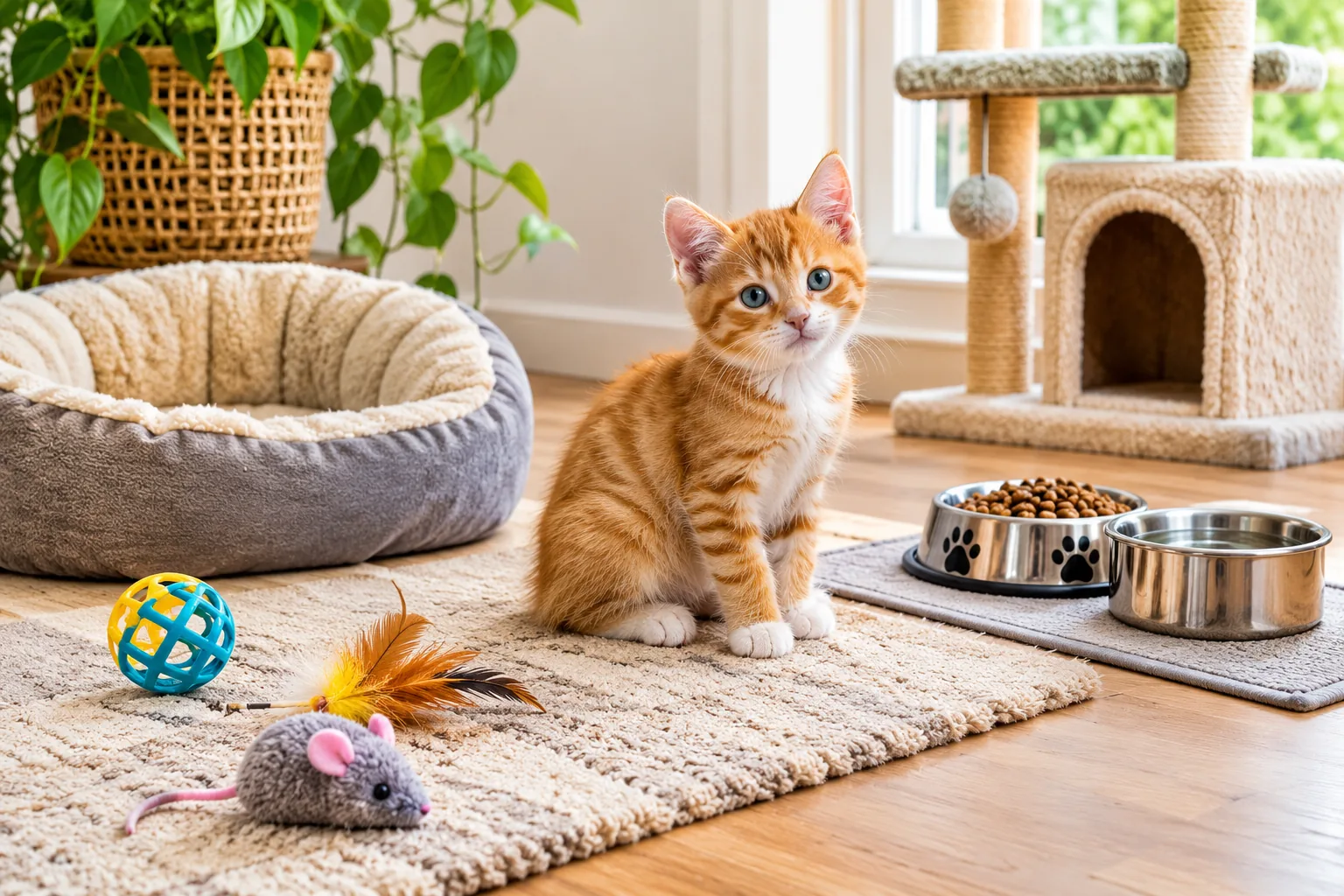
Before the kitten arrives, set up a quiet room with food, water, a litter box, a scratching surface, a bed, hiding places, and toys. Keep the door closed so the older cat can continue its normal routine. This room gives the kitten a predictable place to settle and prevents unsupervised confrontations.
Make sure each cat has access to its own essentials. A useful starting guideline is one litter box per cat plus one extra, placed in separate accessible locations. Our new cat owner checklist covers additional supplies and home preparation.
Arrange a veterinary check for the newcomer, including age-appropriate vaccinations, parasite prevention, and discussion of any infectious-disease concerns. Ask your veterinarian when direct contact is appropriate for your household.
Step 2: Let the Cats Learn Each Other’s Scent
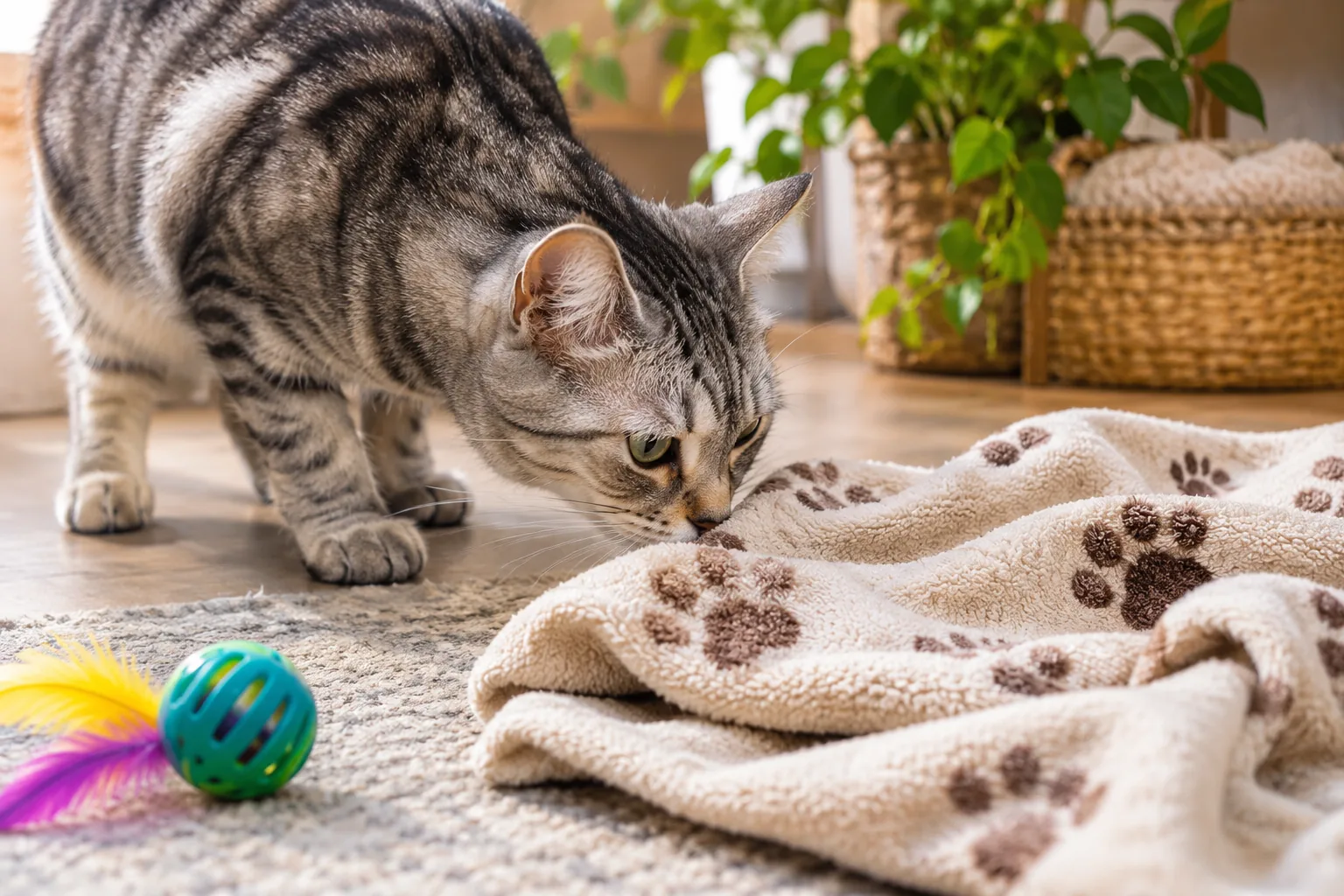
Scent comes before sight in a low-pressure introduction. Exchange blankets or soft bedding between the two areas, allowing each cat to sniff and walk away. You can also gently rub a clean cloth against a cat’s cheek, then leave it near the other cat’s resting area without forcing interaction.
Pair the new scent with something pleasant, such as treats or play, if both cats remain relaxed. Do not hold a scented cloth against a cat’s nose. The goal is to make the other animal’s smell familiar, not overwhelming.
For owners asking how to introduce a new kitten to an older cat without fights, this scent stage is one of the easiest opportunities to slow down before tension escalates.
Step 3: Build Positive Associations at the Door
Offer meals or small treats on opposite sides of the closed door, starting far enough away that both cats can eat comfortably. Gradually move bowls closer over several sessions only if neither cat shows signs of stress. Never withhold food to make a cat participate.
Keep each session brief and stop while both cats are comfortable. A little curiosity, sniffing, or occasional vocalizing can be normal. Repeated growling, swatting under the door, refusing food, or persistent hiding means you should increase the distance and spend more time on scent exchanges.
Step 4: Allow Brief, Protected Visual Contact
When both cats remain calm near the door, use a secure baby gate, screen, or slightly opened door that prevents either cat from rushing through. Watch closely: small kittens can squeeze through surprisingly narrow gaps, and some cats can jump over gates.
Keep early viewing sessions short and reward relaxed behavior. End the session before either cat becomes agitated. Relaxed ears, loose bodies, normal eating, and the ability to look away are more useful signs than expecting the cats to touch noses immediately.
The safest way to approach how to introduce a new kitten to an older cat is to move forward only when the previous stage feels routine for both pets.
Step 5: Supervise Short Face-to-Face Meetings

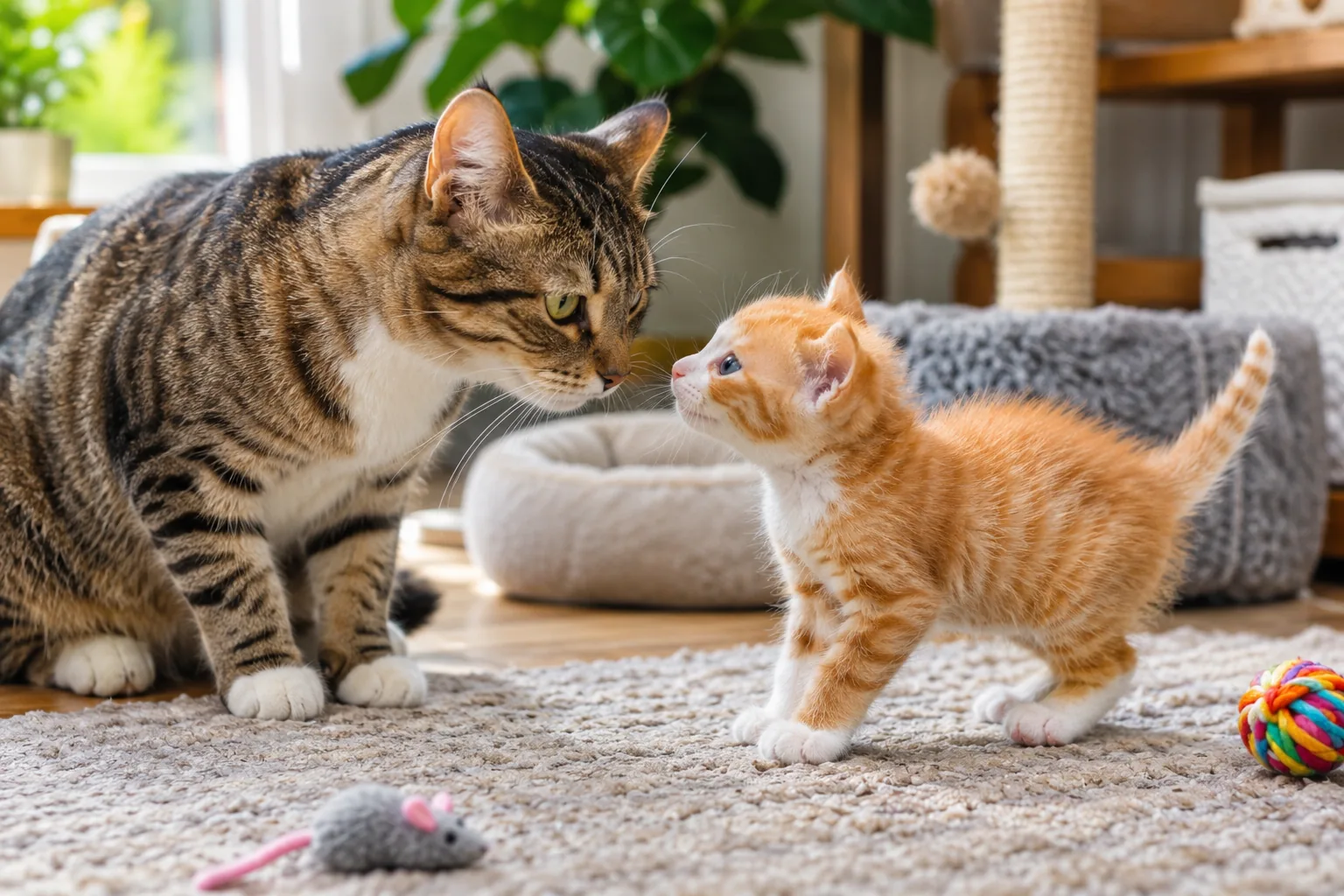
Choose a spacious room with multiple exits, high perches, and hiding places. Begin with a few minutes of supervised contact while offering wand-toy play or treats at a comfortable distance. Give the older cat an easy route to leave; never trap it in a corner.
Keep hands away from cats that are fighting. If a serious confrontation starts, use a barrier such as a cushion or large piece of cardboard to separate them safely, then return to an earlier introduction stage. If either cat is bitten or injured, seek veterinary care promptly. Do not punish hissing or force the animals together.
For especially energetic kittens, schedule playtime before meetings. A kitten that has already chased a toy may be less likely to pounce repeatedly on a senior cat.
Step 6: Protect Your Older Cat’s Routine
Older cats often appreciate predictable mealtimes, quiet naps, and familiar spaces. Keep those routines steady and provide kitten-free resting areas. Give each cat separate food and water stations, scratching posts, and elevated places to retreat.
An older cat with arthritis or reduced mobility may have less tolerance for an active kitten. Provide easy-access beds and litter boxes and discuss pain or mobility concerns with a veterinarian. If your resident cat becomes unusually restless, our article on helping a hyper cat settle includes practical enrichment ideas.
How to introduce a new kitten to an older cat successfully often depends as much on protecting the resident cat’s comfort as on helping the newcomer feel welcome.
What Is Normal, and What Is a Warning Sign?
Brief hissing, cautious watching, or moving away can be normal boundary-setting. More concerning signs include persistent stalking, blocking access to food or litter boxes, repeated chasing, physical fights, or one cat hiding for long periods.
Also monitor appetite, grooming, toileting, and activity. If either cat stops using the litter box, begins urine marking, or repeatedly blocks the other cat from essential resources, pause face-to-face meetings and reassess the setup. Stress can affect these routines, but illness can produce similar changes. If your cat stops eating, review our cat not eating guide and contact your veterinarian promptly.
A qualified feline behavior professional or veterinarian can help if the cats remain distressed despite careful management. For general guidance on feline behavior, see ASPCA cat behavior resources.
How Long Does It Take for an Older Cat to Accept a Kitten?
There is no reliable universal timeline. A confident resident cat may adjust quickly, while a shy, territorial, or medically fragile cat may need weeks or months. Some cats eventually share beds; others simply coexist peacefully with personal space.
Do not judge progress only by cuddling. Being able to eat, sleep, play, and use the litter box without conflict is meaningful success. If either cat becomes stressed, return to the last comfortable step.
Frequently Asked Questions
Should I let my older cat hiss at the kitten? A brief hiss can communicate a boundary. Give both cats space and interrupt the interaction calmly if tension escalates into chasing or fighting.
Can a kitten and an older cat share a litter box? They may choose to, but provide multiple boxes in separate locations to reduce competition and make avoidance less likely.
Should the kitten sleep with the older cat right away? No. Keep them separated when you cannot supervise until they have demonstrated consistently peaceful interactions.
What if my older cat never likes the kitten? Peaceful coexistence is a valid outcome. Consult your veterinarian or a feline behavior specialist if either cat remains distressed.
Final Thoughts
Learning how to introduce a new kitten to an older cat takes patience, thoughtful preparation, and respect for both animals. Start with separate spaces, move through scent and protected visual contact, and supervise brief meetings before considering more freedom.
A calm introduction is not a race. Protect the older cat’s routines, give the kitten appropriate play and enrichment, and allow each cat to choose when to approach. These habits give the household the best chance of settling into a comfortable rhythm.