Why Does My Cat Have Bad Breath? 7 Causes and When to See a Vet
Why does my cat have bad breath? Occasional food odors are one thing, but persistent bad breath may signal painful dental disease or another health problem. Learn seven possible causes, warning signs, and safe steps to protect your cat’s oral health.
Why Does My Cat Have Bad Breath?
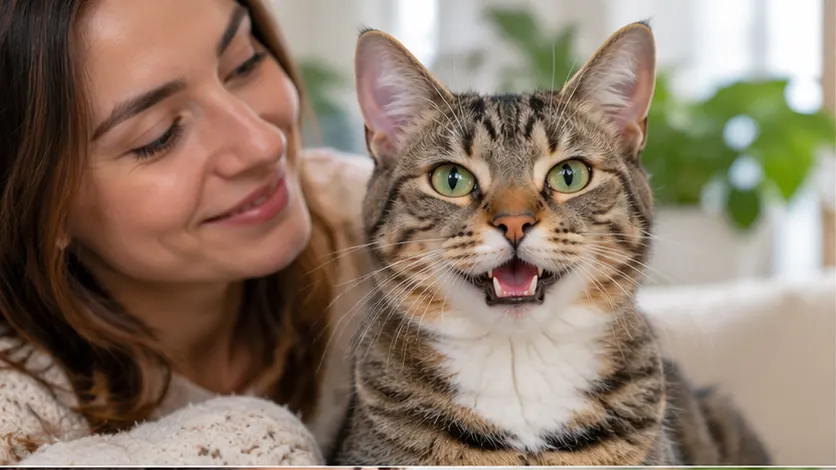
If you are wondering why does my cat have bad breath, start with an important distinction: a brief food-related odor is different from persistent, strong, unpleasant breath. Healthy cat breath is not necessarily minty, but it should not smell consistently foul. When owners ask, why does my cat have bad breath, a persistent odor is a useful reason to schedule a dental check. Bad breath—also called halitosis—often points to a problem in the mouth, especially inflammation around the teeth and gums. Sometimes a medical condition elsewhere in the body contributes. Because cats can hide pain, changes in breath deserve attention even when your cat seems otherwise comfortable.
7 Possible Causes of Bad Breath in Cats
1. Plaque and tartar buildup
Bacteria form plaque on teeth. If plaque is not removed, it can harden into tartar, which makes dental cleaning more difficult and contributes to gum irritation. Visible yellow-brown deposits may appear near the gumline.
2. Gingivitis and periodontal disease
Inflamed gums and infection around tooth-supporting tissues are common reasons for unpleasant breath. Signs may include red gums, drooling, difficulty chewing, or avoiding hard food. Cats can have painful dental disease without obvious changes in appetite.
3. Tooth resorption
Feline tooth resorption is a painful condition in which tooth structures break down. It may be hidden below the gumline and require dental radiographs to identify. Affected cats sometimes chew on one side or drop food, but some show few outward signs.
4. Stomatitis or oral inflammation
Severe inflammation inside the mouth can cause strong odor, pain, drooling, and difficulty eating. A veterinarian needs to examine the mouth and discuss treatment tailored to the cause.
5. Food trapped in the mouth or an oral injury
Food debris, a foreign object, or an injury may produce an unusual smell. Never force open a painful cat’s mouth or pull on string seen under the tongue; contact a veterinarian.
6. Kidney disease or diabetes
Some systemic illnesses can change breath odor. Advanced kidney disease may be associated with an ammonia-like smell, while poorly controlled diabetes can sometimes produce a sweet or fruity odor. Smell alone cannot diagnose either condition.
7. An oral growth or infection
Abscesses, infected wounds, and oral masses can lead to bad breath. Bleeding, facial swelling, difficulty swallowing, or unexplained weight loss should prompt a veterinary appointment.
Bad Breath Causes: Symptoms and Next Steps
| Possible cause | Other signs | What to do |
|---|---|---|
| Plaque or tartar | Yellow-brown buildup near gums | Arrange a dental assessment |
| Gum disease | Red gums, drooling, chewing changes | Book a veterinary exam |
| Tooth resorption | Pain, dropping food, sometimes no obvious signs | Ask about dental examination and X-rays |
| Stomatitis | Marked oral pain and inflammation | Seek prompt veterinary care |
| Systemic illness | Weight loss, increased thirst, appetite changes | Discuss blood and urine testing |
| Injury or oral mass | Bleeding, swelling, trouble swallowing | Arrange urgent assessment |
These patterns overlap. If you are asking why does my cat have bad breath, this table can guide what you observe, but it cannot replace an oral examination.
When Is Cat Bad Breath an Emergency?
Persistent bad breath deserves a veterinary appointment, particularly when accompanied by red gums, drooling, pawing at the mouth, reluctance to eat, or weight loss. The question why does my cat have bad breath becomes more urgent when any of these symptoms appear. Seek urgent veterinary advice if your cat has facial swelling, significant bleeding, severe pain, or cannot eat or drink normally.
Breathing difficulty, collapse, or extreme weakness requires emergency care. A cat that strains to urinate without producing urine also needs emergency treatment, regardless of its breath odor. Do not wait for the smell to become stronger before seeking help.
If your cat has stopped eating, see our guide to a cat not eating. Cats that eat very little can become seriously ill, so reduced appetite should not be dismissed as picky behavior.
What Happens at a Veterinary Dental Examination?
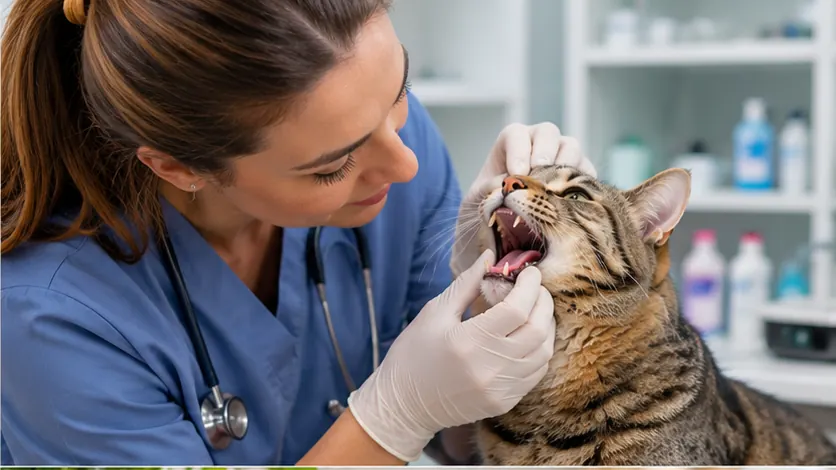
Your veterinarian will ask how long the odor has been present, what your cat eats, and whether you have noticed drooling, chewing changes, vomiting, or increased thirst. They may inspect the mouth while your cat is awake, but a complete assessment often requires anesthesia because painful or hidden areas cannot be examined reliably in an alert cat.
When indicated, a professional dental procedure includes examination, cleaning above and below the gumline, and dental radiographs. X-rays can reveal problems beneath the gums, including tooth resorption and bone loss. The veterinarian will discuss any needed extractions, pain relief, and follow-up care. Anesthesia carries risks, but appropriate pre-anesthetic evaluation and monitoring help the veterinary team plan a safe procedure.
How to Improve Your Cat’s Breath Safely at Home
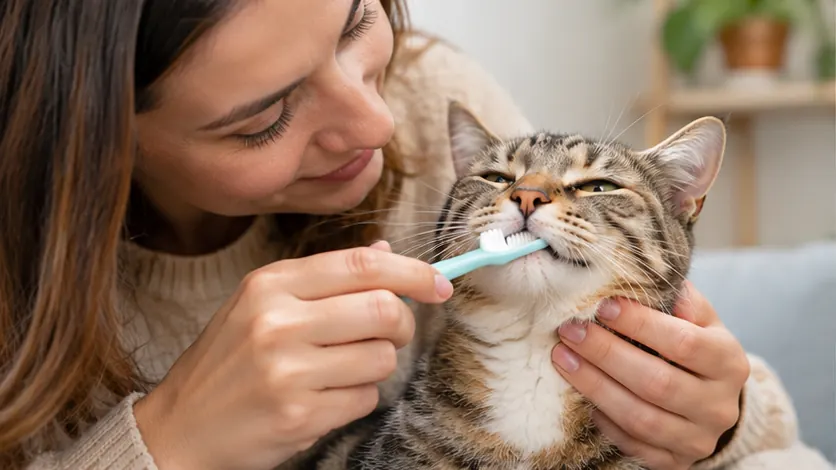
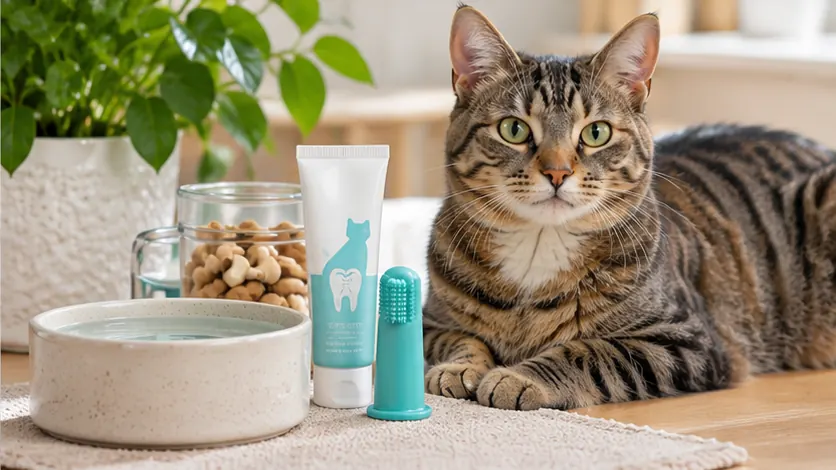
If you keep asking why does my cat have bad breath, do not try to cover the smell with flavored products. The goal is to protect oral health and identify disease early. Once your veterinarian confirms that brushing is appropriate, introduce a cat-safe toothbrush or finger brush slowly. Let your cat sniff it, reward calm behavior, and work toward gentle brushing of the outer tooth surfaces.
Use only toothpaste formulated for cats. Human toothpaste may contain ingredients that are unsafe for pets, and human mouthwash should never be used. Do not scrape tartar with household tools or force brushing when gums are painful.
Some dental diets, treats, and water additives can help reduce plaque when used correctly, but their effectiveness varies. Look for products accepted by the Veterinary Oral Health Council (VOHC), and ask your veterinarian which options suit your cat. These products support dental care; they do not replace treatment for existing painful disease.
A Simple Cat Dental-Care Routine
Daily or as tolerated
Offer fresh water and observe eating habits. If your cat accepts brushing comfortably, regular gentle brushing is one of the most effective home habits for plaque control. Stop if your cat becomes distressed or shows pain.
Weekly observation
Notice changes in breath, drooling, food dropping, or reluctance to chew. If your cat calmly permits a brief look, check for visible redness or tartar without prying its mouth open. Track changes rather than relying on one sniff.
Veterinary follow-up
Ask your veterinarian how often your cat needs oral examinations and whether professional dental care is indicated. The right schedule depends on age, oral health, medical history, and previous dental findings. Senior cats may benefit from closer monitoring.
Does the Type of Breath Odor Tell You the Cause?
When researching why does my cat have bad breath, owners sometimes describe fishy, rotten, ammonia-like, or sweet breath. These descriptions can be useful to tell your veterinarian, but they are not reliable diagnostic tests. Food may temporarily affect odor, while dental bacteria can produce a strong unpleasant smell. Unusual breath combined with increased thirst or urination deserves prompt medical evaluation.
If your cat is drinking more than usual, read why a cat may drink too much water for other signs worth tracking. The most useful clues are the complete pattern of symptoms, not the smell alone.
Frequently Asked Questions About Cat Bad Breath
Is it normal for my cat’s breath to smell like fish?
A temporary odor after a fish-based meal can happen, but persistent bad breath should not be considered normal. Schedule a dental check if it continues.
Can bad breath mean my cat has kidney disease?
It can occur with some systemic illnesses, including kidney disease, but most bad breath needs an oral assessment first. Blood and urine tests may be appropriate depending on other symptoms.
Will dental treats cure bad breath?
Dental products may help reduce plaque, but they cannot cure an infected tooth, advanced gum disease, or painful tooth resorption. Veterinary care is needed for those conditions.
Why does my cat have bad breath even though it eats normally?
Cats often continue eating despite oral pain. Normal appetite does not rule out dental disease, so persistent odor still warrants an examination.
Final Thoughts: Take Persistent Bad Breath Seriously
So, why does my cat have bad breath? Dental plaque, gum disease, and painful tooth conditions are frequent explanations, although injuries and other illnesses are also possible. Pay attention to changes in eating, drooling, thirst, and behavior. Avoid unsafe home remedies, build a gentle dental-care routine, and let your veterinarian assess ongoing odor. Early attention can improve comfort and prevent treatable problems from progressing.
Further reading: American Veterinary Medical Association: Pet Dental Care; Veterinary Oral Health Council: Accepted Products.