Why Do Cats Lick You? What Your Cat Is Trying to Tell You
Why do cats lick you when you are relaxing on the couch or reaching out to pet them? A few gentle licks can be part of a friendly interaction, but licking has several possible explanations. Understanding the circumstances helps you respond without encouraging uncomfortable or unsafe habits.
Why Do Cats Lick You During Quiet Moments?
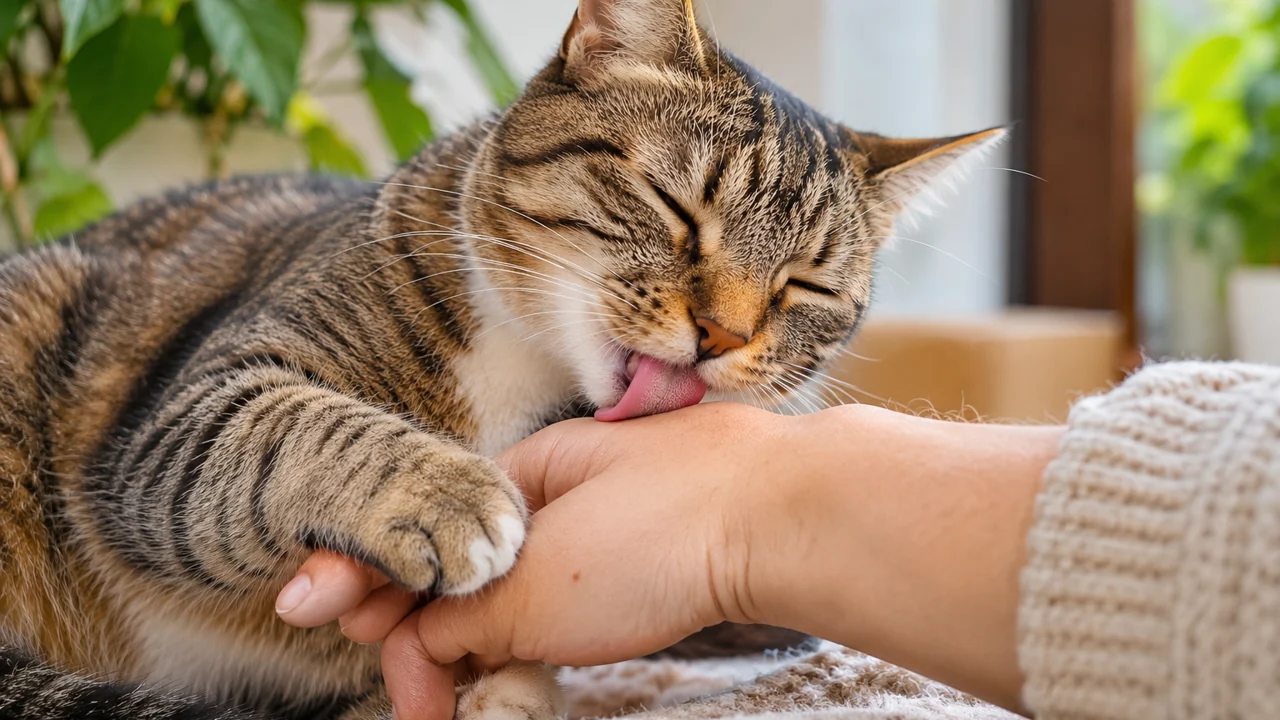
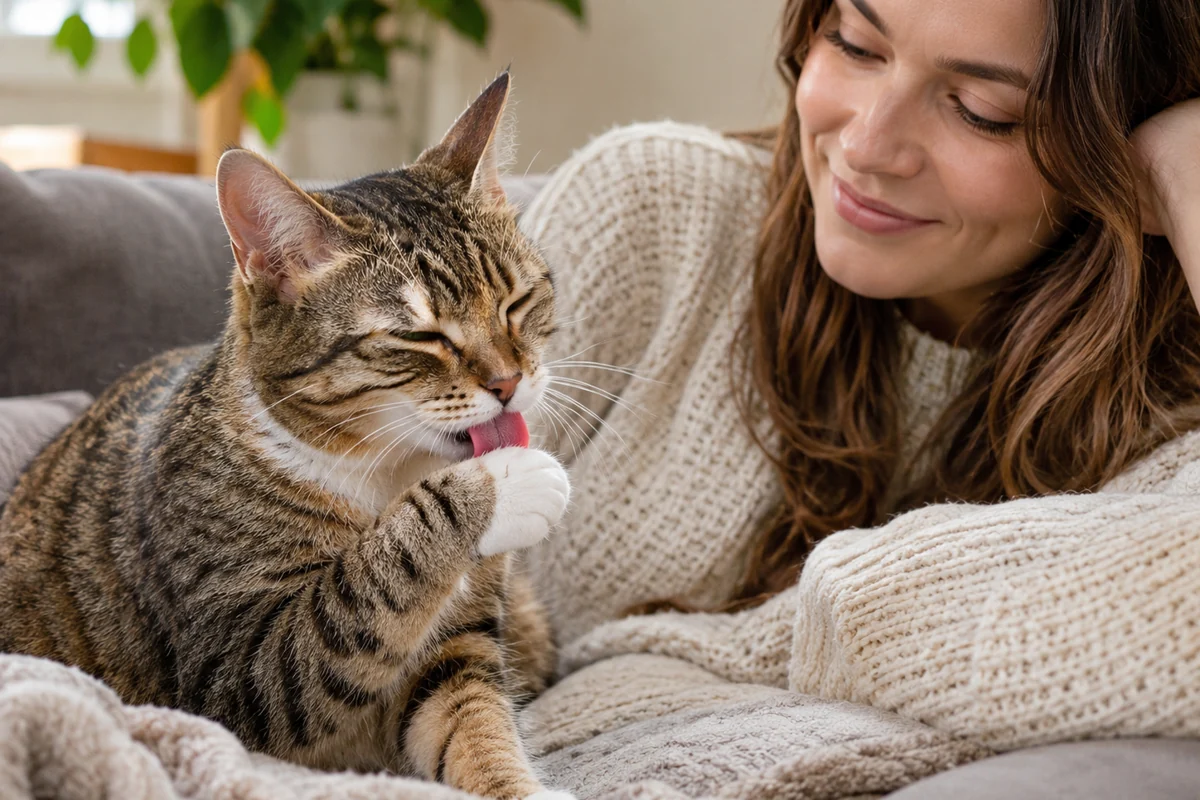
Cats groom themselves and sometimes groom familiar companions. Licking your hand while resting beside you may be an extension of this social behavior. Look for relaxed ears, loose muscles and a willingness to remain nearby. These clues suggest that the interaction is comfortable, although licking alone cannot prove affection. Let your cat decide when to approach and when to leave. Some cats prefer sitting beside their people without making physical contact, and that is perfectly normal.
Your Skin Has an Interesting Taste
Sweat, food residue and unfamiliar smells may attract a curious tongue. Why do cats lick you after exercise or cooking? The taste or scent may be more interesting than the social interaction itself. Wash your hands after handling food, cleaning products or medication. Never encourage licking skin treated with topical medicines, essential oils or other products that could be harmful if swallowed. Contact your veterinarian if you suspect exposure to a toxic substance.
Licking Can Become a Learned Request
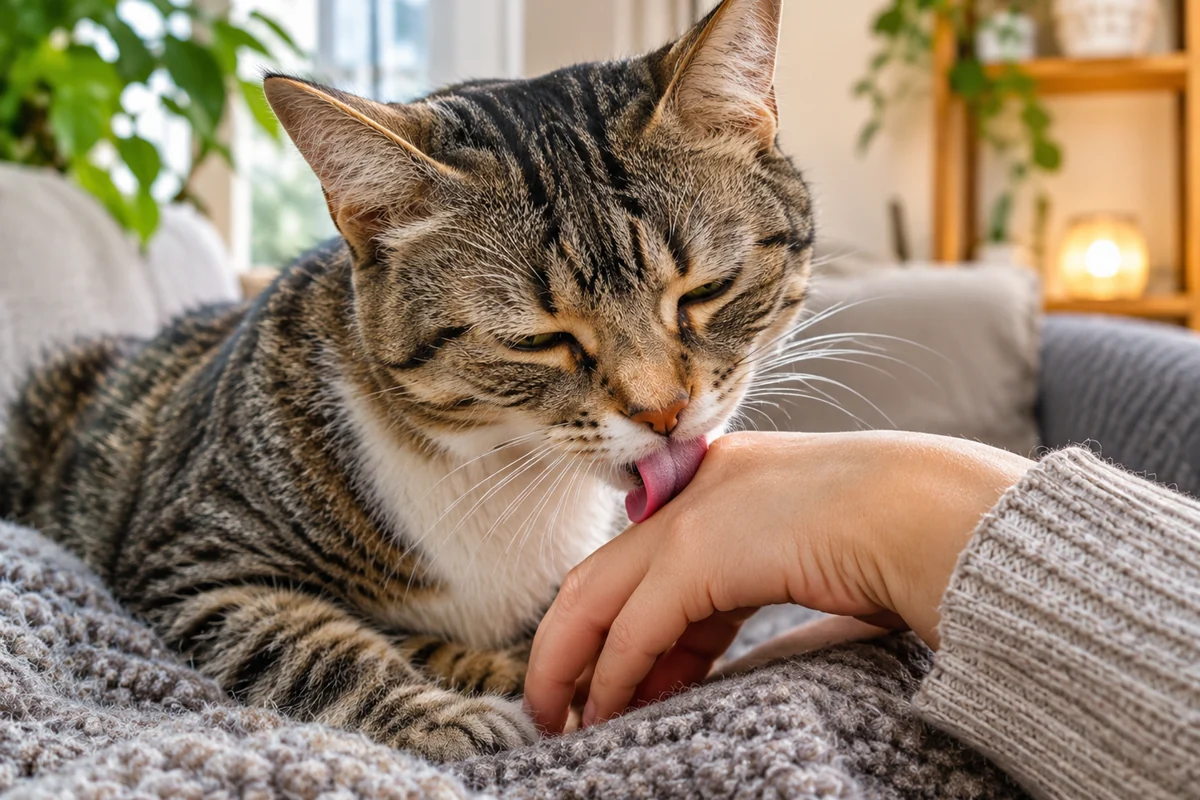
If licking reliably produces petting, conversation or a snack, your cat may repeat it. Observe what happens immediately before and after the behavior. If you prefer less licking, offer attention when your cat is sitting calmly instead. Quietly move your hand away when licking starts, without shouting or pushing the cat. Consistency matters more than a dramatic response. Everyone in the household should follow the same approach so the cat receives predictable signals.
Grooming and Comfort
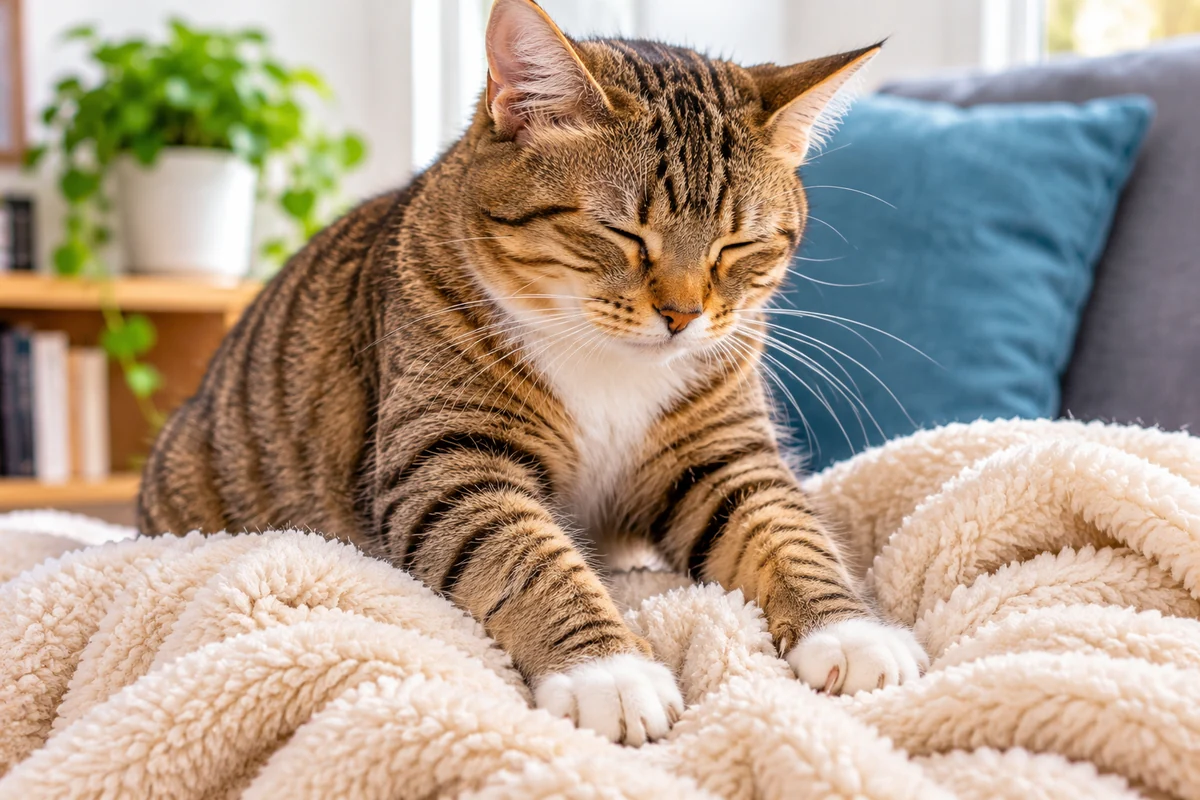
Why do cats lick you while kneading a blanket? Familiar textures and repetitive movements can accompany a relaxed routine. Some cats also lick when they are unsettled. The difference is easier to recognize when you consider the entire situation: a loose posture and restful surroundings differ from pacing, hiding or tense movements. Provide a quiet resting area where your cat can retreat without interruption. Read our guide to why cats knead for more context about this familiar behavior.
When Licking Turns Into Nipping
A cat may alternate licking with gentle mouthing, but teeth against skin are a reason to end the interaction calmly. Watch for tail flicking, skin twitching, ears turning sideways or a sudden change in posture. These signals may indicate that your cat has had enough contact. Avoid using fingers as toys. A wand toy allows your cat to chase and pounce without practicing biting hands. Wash any broken skin promptly and seek medical advice for a cat bite, especially a puncture wound.
How to Respond Without Punishment
Why do cats lick you repeatedly even when you move away? The habit may have been reinforced over time, or the cat may be seeking something else. Try a short interactive play session before your usual evening relaxation period. Offer appropriate scratching surfaces, safe toys and predictable meals. Reward calm behavior with attention your cat enjoys. If licking resumes, gently withdraw the area being licked. Avoid bitter sprays on your skin unless a veterinarian confirms that the product is safe for this use.
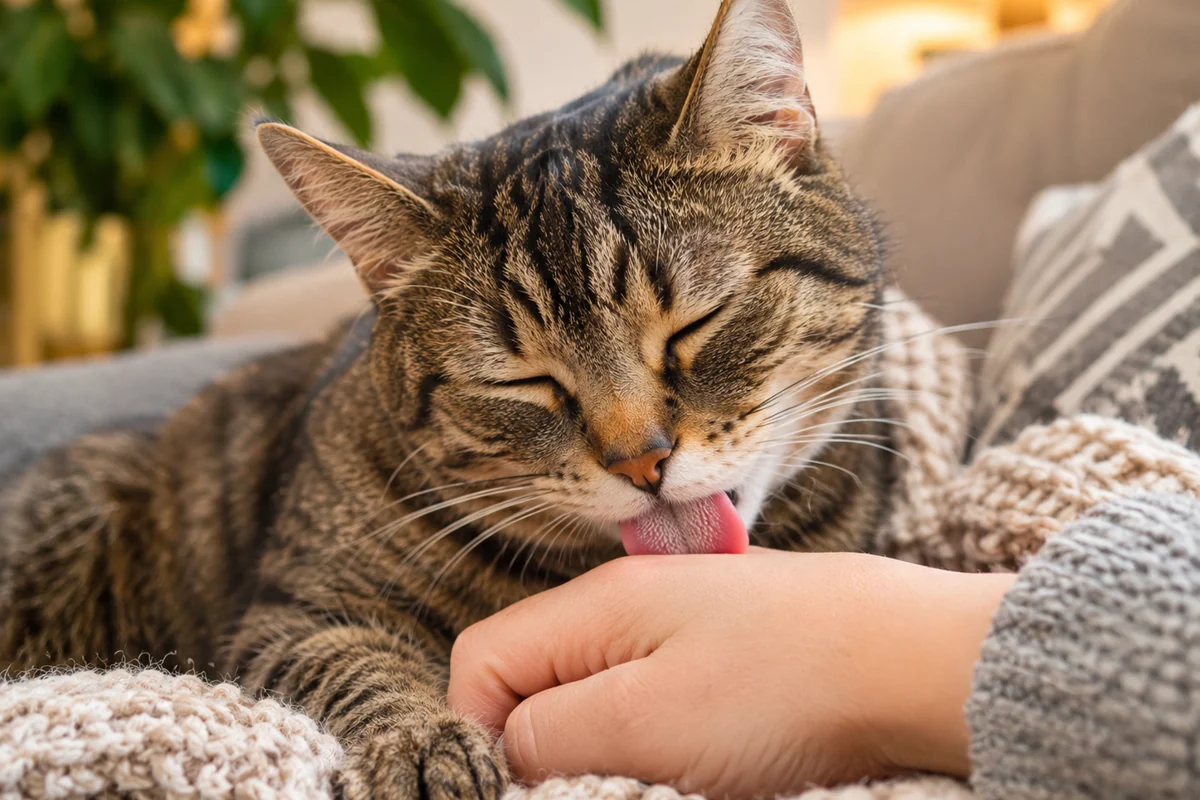
For a week, note the time, location and activity associated with each licking episode. For example, licking only after you return from a walk suggests a different trigger from licking whenever you stop petting. Change one routine at a time so you can see whether the behavior changes. This simple observation exercise is more useful than guessing what your cat feels.
When a Veterinary Check Is Appropriate
Occasional licking of a person is usually not concerning by itself. A sudden change in behavior, persistent licking of objects, excessive self-grooming, bald patches, drooling or appetite changes deserves veterinary attention. Do not assume that repetitive behavior is simply boredom or anxiety; discomfort and medical conditions may contribute. Keep a short record of when licking occurs and any other symptoms. A video can help your veterinarian understand what you are seeing at home. The Cornell Feline Health Center provides additional feline health information.
Frequently Asked Questions
Why do cats lick you and then bite? The interaction may shift from grooming to play or overstimulation. Stop contact and give your cat space. Should I let my cat lick my face? Avoid licking near your eyes, mouth and open wounds, and wash exposed skin. Does a cat that never licks me dislike me? No. Cats communicate in many ways, including resting nearby and rubbing against familiar people. Our guide to why cats stare at you explains another common social signal.
Final Thoughts
Why do cats lick you? The answer depends on the individual cat and the moment. Social grooming, interesting tastes and learned attention-seeking are all possibilities. Observe the pattern rather than assigning a single meaning to every lick. Respect your cat’s boundaries, maintain good hygiene and seek veterinary guidance when behavior changes suddenly. A comfortable relationship does not require your cat to lick you at all.