Why Do Cats Stare at You? 7 Possible Meanings Behind That Look
Why do cats stare at you from across the room, beside your bed or while you prepare dinner? A long feline gaze can feel mysterious, but it is not a secret code with one fixed meaning. The context, posture and behavior that follow the stare can help you understand what your cat might need.
1. Why Do Cats Stare at You When They Want Food?
Cats learn patterns in household routines. If you usually prepare breakfast after entering the kitchen, your cat may watch you closely at that time. It might then approach its bowl or vocalize. Check whether the gaze coincides with normal feeding times rather than assuming every stare means hunger. Maintain a consistent feeding routine and measure portions appropriate for your cat. A sudden increase in hunger, especially with weight loss or increased thirst, warrants veterinary advice.
2. Curiosity About Your Movements
Cats often monitor activity in their surroundings. Typing, folding laundry or moving a bag may attract their attention. A relaxed cat may watch from a perch without wanting to interact. Offer safe observation spots and opportunities for exploration. Do not force a cat to engage just because it looks interested. Sometimes watching is the activity itself, and the cat may settle down once the movement stops.
3. Seeking Social Interaction
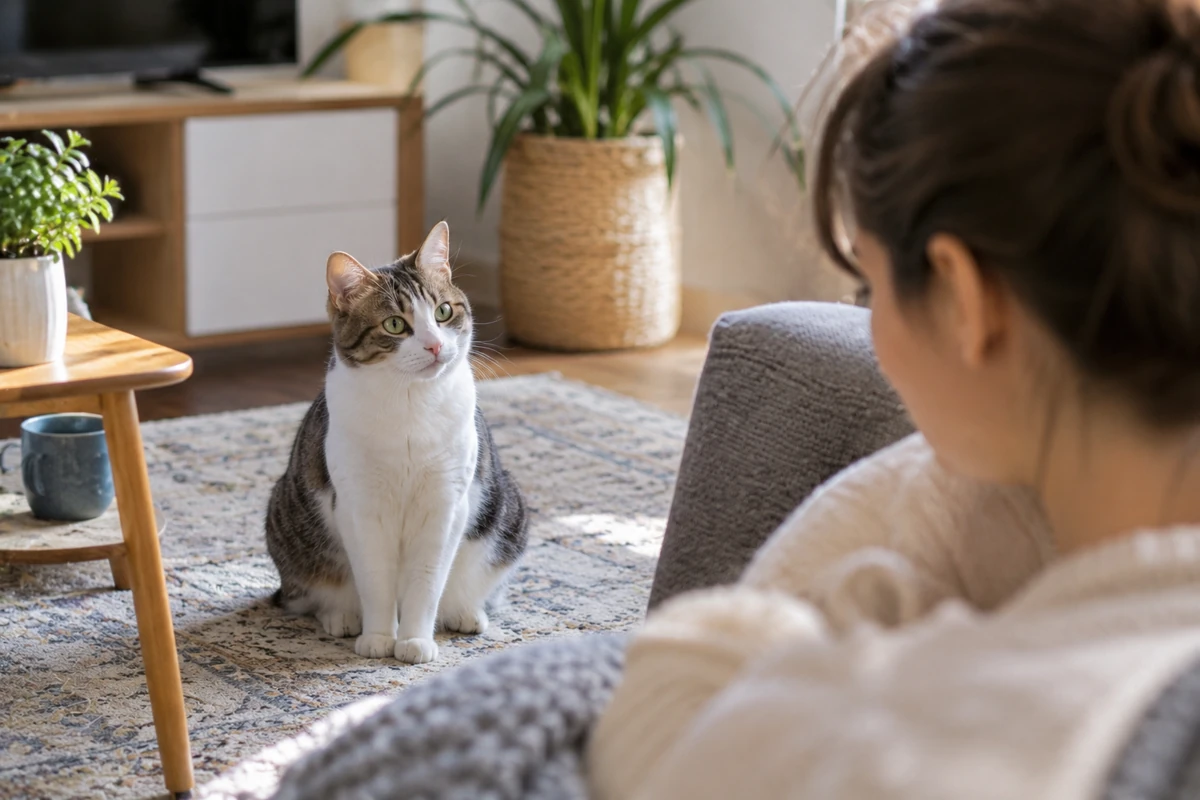
A cat may look at you before approaching, rubbing against your legs or settling nearby. Why do cats stare at you when you sit on the couch? They may be anticipating a familiar interaction. Offer a hand at a comfortable distance and let the cat choose whether to approach. Stop petting if it turns away, tenses or flicks its tail repeatedly. Respecting these signals helps keep interactions comfortable for both of you.
4. Relaxation and Slow Blinking
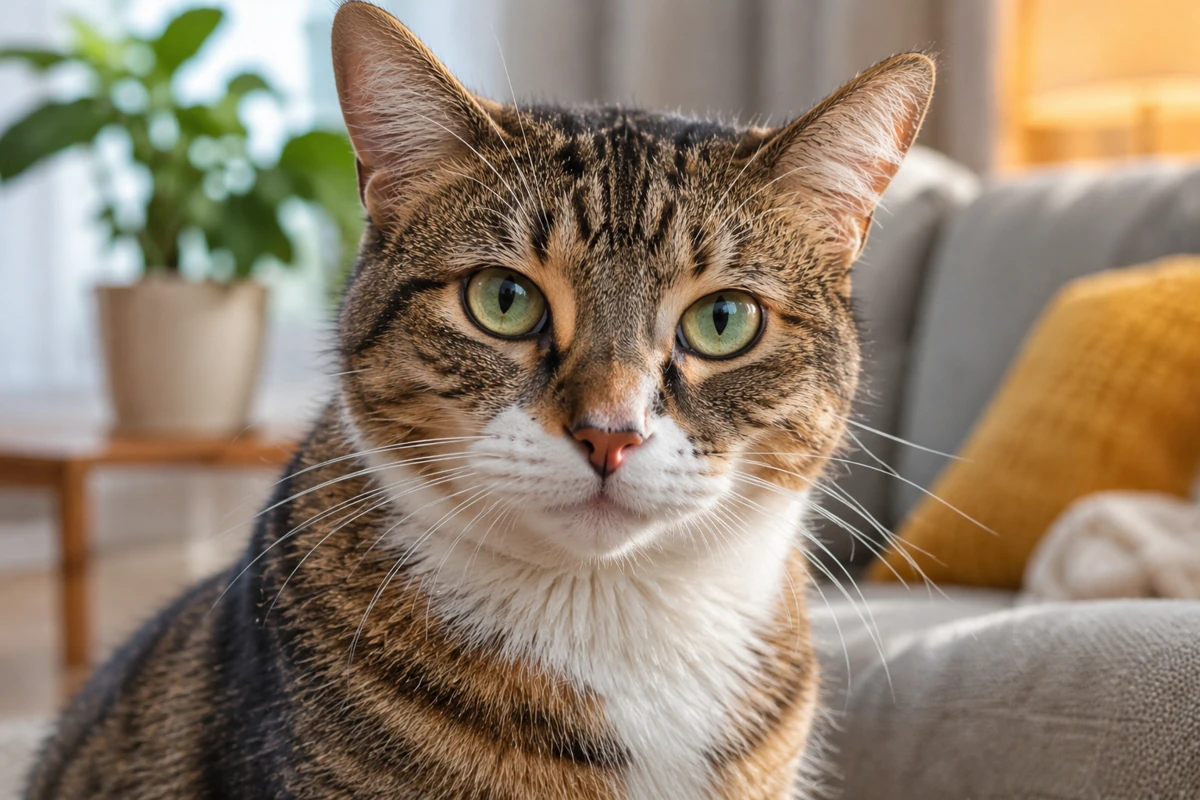
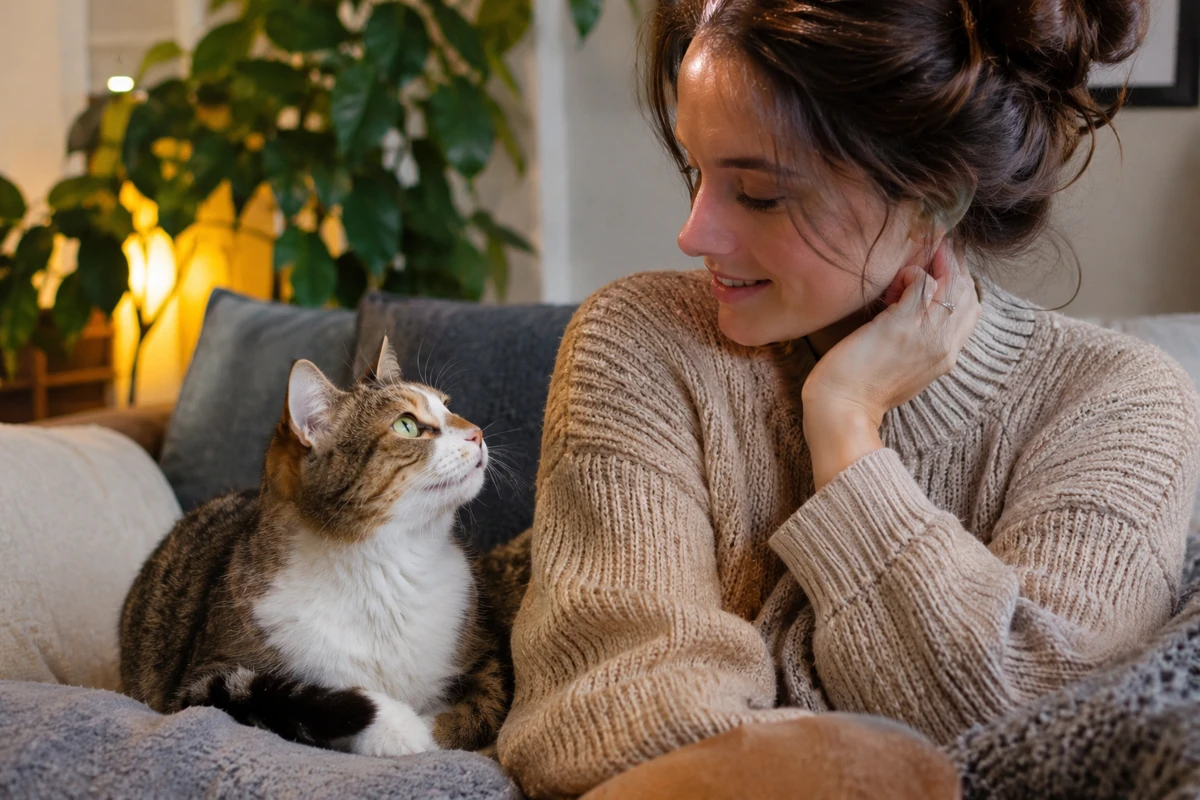
Soft eyes and slow blinking can occur during relaxed social interactions. Experimental research suggests that slow-blink exchanges may support positive communication between cats and people. Try gently narrowing your eyes and looking away rather than holding a hard stare. Not every cat responds, and a lack of response is not evidence of dislike. A cat’s whole posture is more informative than a single eye movement.
5. Anticipating Play
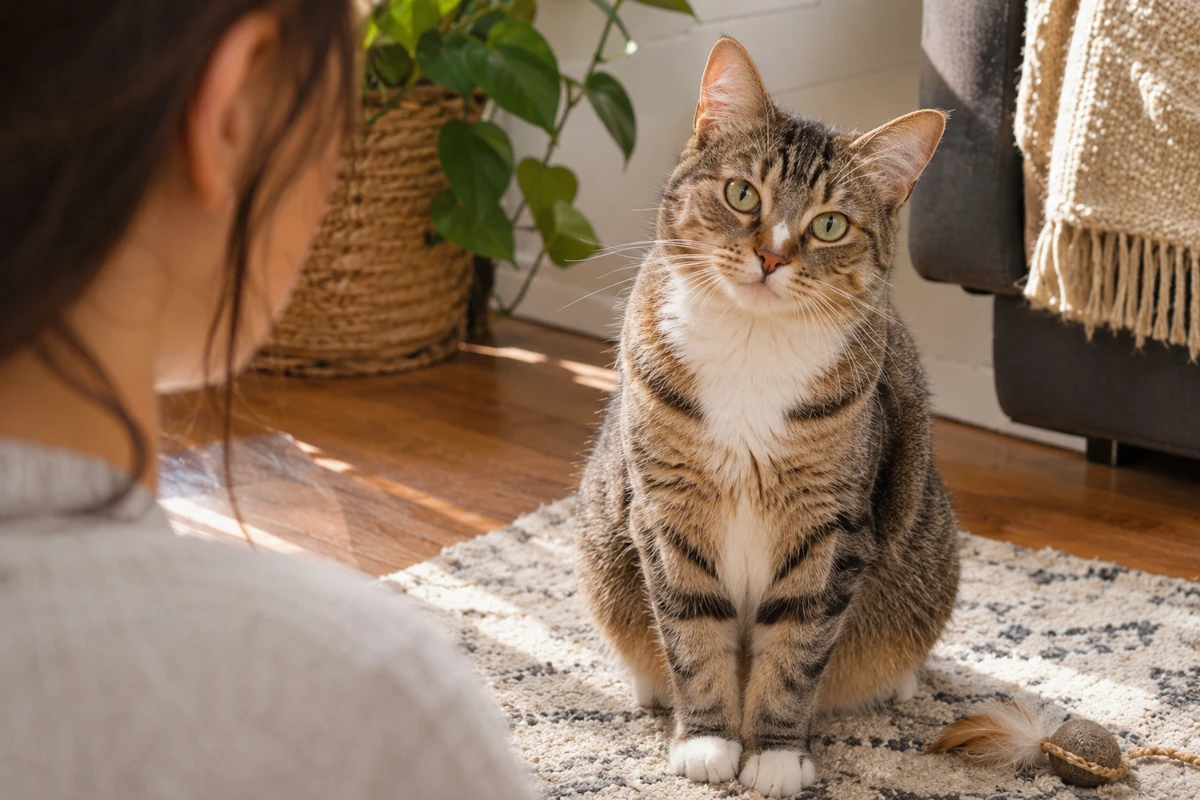
A focused gaze may precede a playful pounce, particularly if your hands or feet are moving. Why do cats stare at you before running across the room? They may be tracking movement or preparing to play. Redirect attention toward a wand toy instead of encouraging attacks on skin. Allow your cat to catch the toy periodically and end the session calmly. Store strings and small detachable toy parts safely afterward.
6. Uncertainty or Fear
A fixed gaze accompanied by a crouched body, flattened ears, a tense tail or hiding can indicate discomfort. Give the cat an escape route and avoid reaching toward it. Pupil size alone is not reliable because it also changes with lighting. If a new visitor or animal is present, allow gradual introductions at the cat’s pace. For practical advice, read our guide to introducing a new kitten to an older cat.
7. Waiting for a Familiar Routine
Cats may watch people before a door opens, a favorite blanket appears or a regular play session begins. These patterns can develop through repeated experience. Why do cats stare at you at the same time every evening? Keep a short record of what usually happens afterward. If the behavior is relaxed, you may discover an ordinary household cue rather than a mysterious motive. Provide predictable opportunities for play, rest and social contact.
How to Read the Whole Picture
A relaxed gaze with loose posture suggests a different context from a hard stare with a rigid body. A cat looking toward a bowl may be anticipating food, while a cat watching a toy may be ready to play. Avoid interpreting any signal in isolation. Observe what happens before and after the gaze. If the cat approaches, offer gentle interaction; if it retreats, provide space. The ASPCA cat care guide offers general guidance on meeting feline needs.
When Staring Is a Health Concern
Ordinary staring is usually not a medical problem. However, sudden disorientation, unusual unresponsiveness, bumping into objects, unequal pupils or apparent vision changes require veterinary attention. Sudden vision loss, collapse or seizure-like activity warrants urgent care. In older cats, changes in nighttime activity or awareness can have several medical explanations. Do not assume they are simply part of aging. Record a video if safe and note when the behavior began.
Frequently Asked Questions and Final Thoughts
Why do cats stare at you while you sleep? They may be awake, monitoring movement or anticipating interaction. Is staring a sign of love? It can occur in friendly contexts, but it is not proof by itself. Should I stare back? Avoid prolonged intense eye contact; a soft gaze and looking away may be more comfortable. Why do cats stare at you? Look for patterns, respect their boundaries and enjoy their individual habits. Discover another familiar behavior in why cats knead.