
Why Do Dogs Howl at Sirens? The Meaning Behind This Curious Behavior
Why do dogs howl at sirens while other dogs barely lift their heads? The sound of an ambulance or fire engine can trigger a striking vocal response. Howling may reflect communication, sensitivity to a sound or distress, depending on the dog and the circumstances.
Why Do Dogs Howl at Sirens?
Howling is part of the canine vocal repertoire. A siren produces a sustained, changing tone that may prompt some dogs to vocalize in response. It is tempting to imagine that the dog believes another dog is calling, but we cannot know that from the howl alone. Some dogs respond to musical instruments or recordings as well. The important distinction is whether your dog remains comfortable or shows signs of fear.

Sound Sensitivity and Individual Differences
Dogs can detect sounds across a wider range of frequencies than humans. However, that does not mean every siren hurts their ears. Volume, distance, duration and previous experiences all influence the response. A dog that howls at a distant emergency vehicle and then resumes resting may be reacting differently from one that trembles and hides. Avoid testing your dog’s hearing by deliberately playing loud noises. A quiet response is just as normal as a vocal one.
Communication Rather Than a Single Instinct
Why do dogs howl at sirens in groups? One dog’s vocalization may prompt another to join. Social facilitation can influence behavior, but it does not establish exactly what each dog is communicating. Domestic dogs vary greatly in their vocal habits. Breed tendencies, learning and individual temperament may all contribute. Our guide to understanding dog behavior and needs offers more ways to interpret everyday signals.
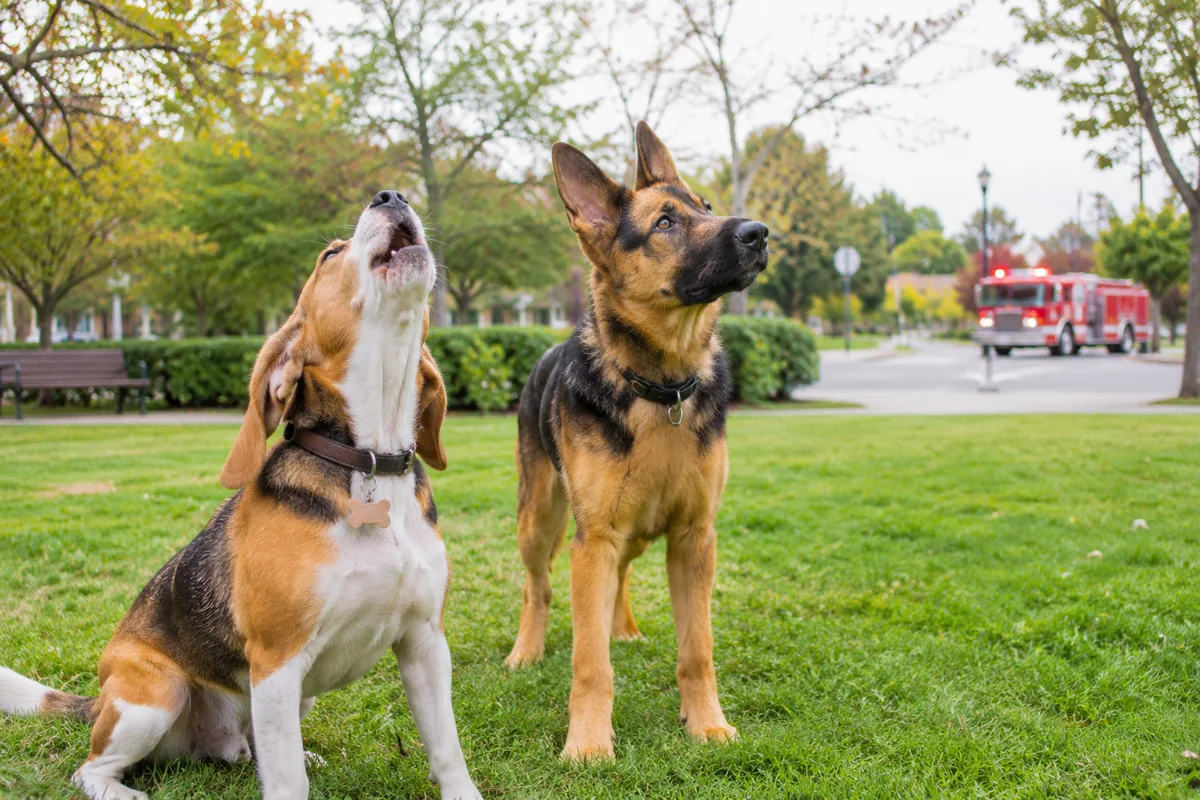
Is Your Dog Relaxed or Frightened?
Watch what your dog does before, during and after the sound. A loose body, normal movement and quick recovery suggest a different experience from trembling, panting, tucked tail, frantic escape attempts or prolonged hiding. A dog may also refuse a normally desirable treat when frightened. Do not rely on tail wagging alone as evidence of comfort. Note whether the dog can settle again once the siren passes. This information is useful when discussing noise sensitivity with a veterinarian.
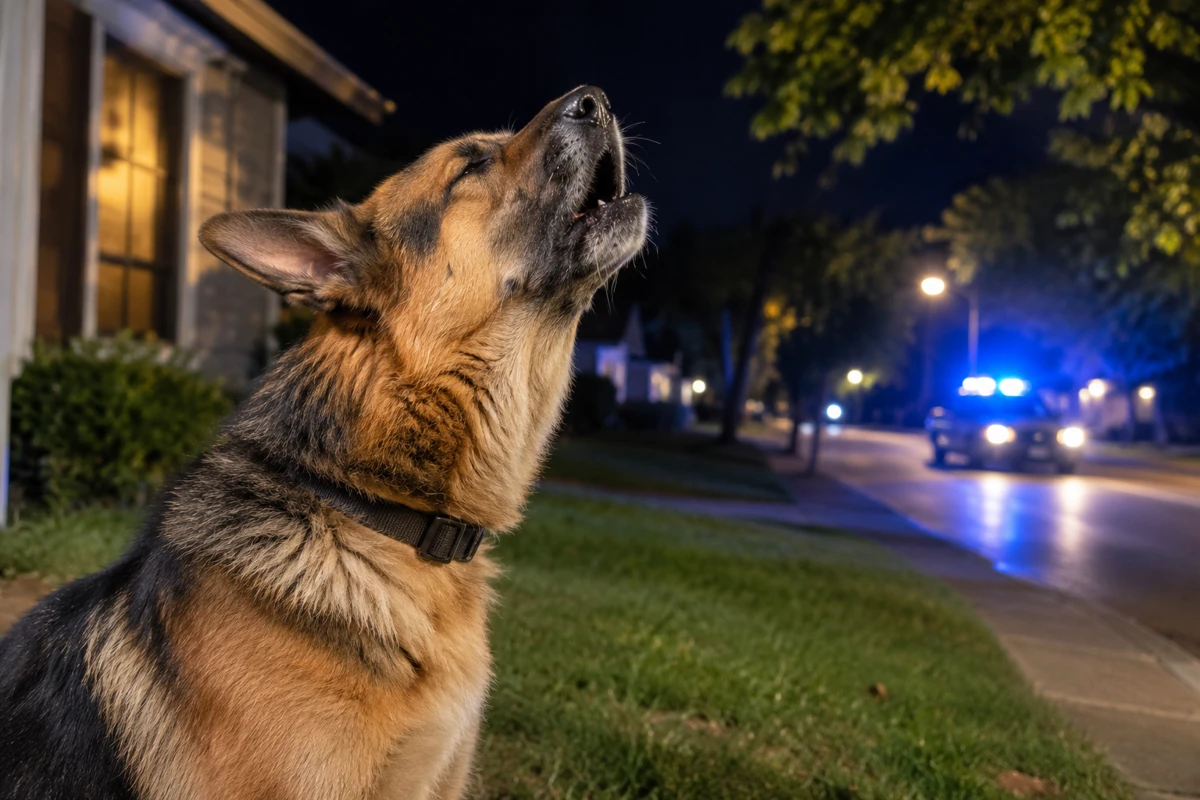
What to Do When a Siren Passes
Why do dogs howl at sirens even when their owners are nearby? Your presence does not necessarily prevent a sound-triggered response. If your dog is comfortable, you can calmly redirect attention to a familiar activity. If the dog is frightened, allow access to a safe indoor resting place. Close windows when practical and use ordinary background sound at a comfortable volume. Keep doors and gates secure. Never punish a dog for vocalizing or force it to remain near a frightening noise.
Teaching a Calmer Alternative
Start by teaching a simple behavior such as settling on a mat when the environment is quiet. Reward relaxed responses with small treats or another reward your dog values. For mild sound sensitivity, carefully controlled recordings at a barely audible level may help build positive associations, provided your dog remains relaxed. Increase difficulty only gradually and stop if distress appears. Dogs with significant noise fear need an individualized plan from a qualified professional. The American Veterinary Society of Animal Behavior supports reward-based training approaches.
For a practical starting point, record three details after each naturally occurring siren: where your dog was, which body language signals appeared, and how long recovery took. Compare episodes over several days rather than deliberately exposing your dog to more noise. If your dog willingly moves away from the window and settles on a mat, reward that choice. If the dog cannot disengage, prioritize reducing exposure instead of asking for obedience.
When Howling Needs Professional Attention
Why do dogs howl at sirens and continue long after the noise stops? Persistent distress may indicate a broader noise-related problem. Seek veterinary guidance if your dog injures itself trying to escape, cannot settle, refuses food during frequent episodes or develops sudden sensitivity to ordinary sounds. Medical issues and changes associated with aging can affect behavior. Keep a diary of triggers and recovery times. Do not give human sedatives or supplements without veterinary guidance. If your dog also reacts to activity outside the home, see how to manage window barking.
Frequently Asked Questions
Why do dogs howl at sirens but not music? Different sounds have different patterns, volumes and associations. Does howling mean pain? Not necessarily; observe the dog’s posture and recovery, and consult a veterinarian if you suspect pain. Should I howl along? If your goal is quieter behavior, avoid encouraging the vocal response. Reward calm alternatives instead. Is it normal if my dog never howls? Yes. Individual dogs respond differently to the same sounds.
Final Thoughts
Why do dogs howl at sirens? A sound-triggered vocal response can have several explanations, and the dog’s overall behavior matters more than the howl itself. Respect your dog’s comfort, avoid punishment and provide a safe place during noisy events. If fear interferes with daily life, professional help can make a meaningful difference.